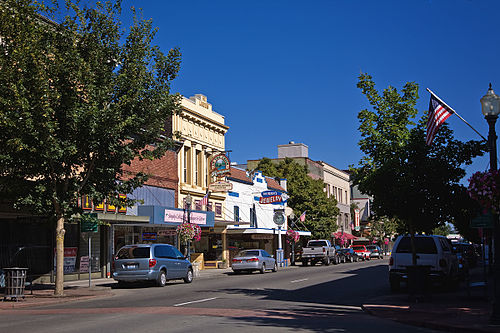
Washington - Lewis County
Lewis County Washington has 35 places on the National Register of Historic Places including 7 places of National significance and 8 places of Statewide significance. Significant places include Everest, Wesley, Gravesite, Jackson, John R., House, La Wis Wis Guard Station No. 1165, North Fork Guard Station No. 1142 and Randle Ranger Station--Work Center.

Prehistoric cultural affiliation(s) include American,Agricultural and Kwalioqua dating back to 1000.

Many famous people are associated with these Lewis County historic places including Wesley Everest, John R. Jackson, Obadiah D. McFadden, Ben Olsen, Osmern K. Palmer and Francis B. Hubbard.

Some of the country's most noteable architects helped create the Lewis County places including Civilian Conservation Corps, USDA Forest Svce. Architecture Group, Alonzo Victor Lewis, Carl J. Setterberg, James Donahue, Chi.,Milwkee,St.Paul & Pacific RR Co, Jacob Ort, C.A. Haynes, C.E. Troutman and Louis A. Simon. Prominent architectural styles found in Lewis Country are Bungalow/Craftsman, Colonial Revival and Queen Anne.

Birge, George E., House (added 1986 - - #86003375)
715 E St. , Centralia
Jon Roanhaus, CC BY-SA 3.0, via Wikimedia Commons
Historic Significance:
Architecture/Engineering
Architect, builder, or engineer:
Unknown
Architectural Style:
Queen Anne
Area of Significance:
Architecture
Period of Significance:
1875-1899
Owner:
Private
Historic Function:
Domestic
Historic Sub-function:
Single Dwelling
Current Function:
Domestic
Current Sub-function:
Single Dwelling
More Information:
Boistfort High School (added 1987 - - #87001335)
983 Boistfort Rd. , Curtis
Jon Roanhaus, CC BY-SA 3.0, via Wikimedia Commons
Historic Significance:
Event
Area of Significance:
Education
Period of Significance:
1925-1949, 1900-1924
Owner:
Local
Historic Function:
Education
Historic Sub-function:
School
Current Function:
Vacant/Not In Use
More Information:
Borst, Joseph, House (added 1977 - - #77001345)
302 Bryden Ave. , Centralia
Senapa, CC BY-SA 3.0, via Wikimedia Commons
Historic Significance:
Person, Architecture/Engineering
Architect, builder, or engineer:
Ort,Jacob
Architectural Style:
Greek Revival
Historic Person:
Borst,Joseph
Significant Year:
1857
Area of Significance:
Exploration/Settlement, Architecture
Period of Significance:
1850-1874
Owner:
Local
Historic Function:
Domestic
Historic Sub-function:
Single Dwelling
Current Function:
Domestic
Current Sub-function:
Single Dwelling
More Information:
Burlington Northern Depot (added 1974 - - #74001967)
Also known as Chehalis Passenger Station
Off U.S. 99 , Chehalis
Senapa, CC BY-SA 3.0, via Wikimedia Commons
Historic Significance:
Event
Area of Significance:
Transportation, Commerce
Period of Significance:
1900-1924
Owner:
Private
Historic Function:
Transportation
Historic Sub-function:
Rail-Related
Current Function:
Vacant/Not In Use
More Information:
Centralia Downtown Historic District (added 2003 - - #03000164)
Roughly bounded by Center St., Burlington Northern right-of-way, Walnut st., and Pearl St. , Centralia
Senapa, CC BY-SA 3.0, via Wikimedia Commons
Historic Significance:
Event, Architecture/Engineering
Architect, builder, or engineer:
Wohleb, Joseph, Bebb and Gould
Architectural Style:
Late 19th And Early 20th Century American Movements
Area of Significance:
Social History, Commerce, Architecture
Period of Significance:
1950-1974, 1925-1949, 1900-1924, 1875-1899
Owner:
Private, Local
Historic Function:
Commerce/Trade
Historic Sub-function:
Business
Current Function:
Commerce/Trade
Current Sub-function:
Business
More Information:
Centralia Union Depot (added 1988 - - #88000608)
210 Railroad St. , Centralia
Senapa, CC BY-SA 3.0, via Wikimedia Commons
Historic Significance:
Event
Area of Significance:
Transportation
Period of Significance:
1925-1949, 1900-1924
Owner:
Private
Historic Function:
Transportation
Historic Sub-function:
Rail-Related
Current Function:
Transportation
Current Sub-function:
Rail-Related
More Information:
Chehalis Downtown Historic District (added 1997 - - #97001407)
Also known as Thrid Civic Center of Chehalis
Roughly bounded by Park, and Front Sts., Washington and Cascade Aves. , Chehalis
Lpinn, CC BY-SA 3.0, via Wikimedia Commons
Historic Significance:
Event, Architecture/Engineering
Architectural Style:
Early Commercial, Colonial Revival
Area of Significance:
Entertainment/Recreation, Architecture, Archeology
Period of Significance:
1925-1949, 1900-1924, 1875-1899
Owner:
Private
Historic Function:
Commerce/Trade, Domestic, Recreation And Culture
Historic Sub-function:
Business, Department Store, Hotel, Multiple Dwelling, Specialty Store, Theater
Current Function:
Commerce/Trade, Domestic, Recreation And Culture
Current Sub-function:
Business, Department Store, Hotel, Multiple Dwelling, Specialty Store, Theater
More Information:
Claquato Church (added 1973 - - #73001882)
Off WA 12 , Claquato
Martin H., Public domain, via Wikimedia Commons
Historic Significance:
Event
Area of Significance:
Exploration/Settlement, Religion
Period of Significance:
1850-1874
Owner:
Local
Historic Function:
Religion
Historic Sub-function:
Religious Structure
Current Function:
Vacant/Not In Use
More Information:
Doty Bridge (added 1990 - - #82004260)
Spans Chehalis River , Doty
send us a photo to share
Historic Significance:
Event, Architecture/Engineering
Architect, builder, or engineer:
Chi.,Milwkee,St.Paul & Pacific RR Co
Architectural Style:
No Style Listed
Area of Significance:
Transportation, Engineering
Period of Significance:
1925-1949, 1900-1924
Owner:
Private
Historic Function:
Transportation
Historic Sub-function:
Rail-Related
Current Function:
Vacant/Not In Use
Everest, Wesley, Gravesite (added 1991 - - #91001781)
Sticklin--Greenwood Memorial Park, 1905 Johnson Rd. , Centralia
Jmabel, CC BY-SA 3.0, via Wikimedia Commons
Historic Significance:
Event, Person
Historic Person:
Everest,Wesley
Significant Year:
1939, 1932
Area of Significance:
Social History
Period of Significance:
1925-1949, 1900-1924
Owner:
Local
Historic Function:
Funerary
Historic Sub-function:
Graves/Burials
Current Function:
Funerary
Current Sub-function:
Graves/Burials
More Information:
The Wesley Everest Gravesite, located in the Greenwood Memorial Park in Centralia, Washington, is a site of profound national significance reflecting the violent labor struggles and anti-radical hysteria of the post-World War I "Red Scare." Wesley Everest was an Industrial Workers of the World (IWW) organizer and a decorated World War I veteran who became the central victim of the Centralia Massacre on Armistice Day, November 11, 1919. Following a violent clash between members of the local American Legion and the IWW at the union's hall, Everest was arrested, dragged from his jail cell by an angry mob, brutally mutilated, and lynched from a nearby bridge over the Chehalis River. His extrajudicial murder remains one of the most notorious incidents of anti-labor violence in Pacific Northwest history, illustrating the extreme tensions between radical labor unions and conservative establishment forces during this volatile era.

Listed on the National Register of Historic Places in 1991, the gravesite serves as a somber monument to Everest's martyrdom and the broader struggles of the American labor movement. Following his lynching, local undertakers refused to handle his body, and Everest was ultimately buried in an unmarked pauper's grave by four fellow IWW prisoners under armed guard. For decades, the site remained a quiet focal point for labor activists, eventually receiving a permanent headstone marked "Wobbly" to honor his commitment to the union. Today, the gravesite stands as a physical testament to the tragic events of 1919, preserving the memory of a controversial conflict that shaped the region's social, political, and labor landscape.
Grace Evangelical Church of Vader (added 2003 - - #03000162)
Also known as Grace United Methodist Church of Vader
618 D St. , Vader
Jon Roanhaus, CC BY-SA 3.0, via Wikimedia Commons
Historic Significance:
Architecture/Engineering, Event
Architect, builder, or engineer:
Arnold, Jack, Hitchcock, Pat
Architectural Style:
Gothic
Area of Significance:
Architecture
Period of Significance:
1925-1949, 1900-1924
Owner:
Private
Historic Function:
Religion
Historic Sub-function:
Religious Structure
Current Function:
Religion
Current Sub-function:
Religious Structure
More Information:
Hillside Historic District (added 1996 - - #96000841)
Roughly bounded by Jefferson Ave., Hill St., Washington Ave., and 9th St. , Chehalis
Jon Roanhaus, CC BY-SA 3.0, via Wikimedia Commons
Historic Significance:
Architecture/Engineering, Event
Architect, builder, or engineer:
unknown
Architectural Style:
Queen Anne, Colonial Revival, Bungalow/Craftsman
Area of Significance:
Exploration/Settlement, Architecture
Period of Significance:
1925-1949, 1900-1924, 1875-1899
Owner:
Private
Historic Function:
Domestic
Historic Sub-function:
Multiple Dwelling, Single Dwelling
Current Function:
Domestic
Current Sub-function:
Multiple Dwelling, Single Dwelling
More Information:
Holy Cross Polish National Catholic Church (added 1987 - - #87001456)
Third and Queen , Pe Ell
Jon Roanhaus, CC BY-SA 3.0, via Wikimedia Commons
Historic Significance:
Event, Architecture/Engineering
Architect, builder, or engineer:
Unknown
Architectural Style:
Late Gothic Revival
Area of Significance:
European, Architecture, Religion
Period of Significance:
1925-1949, 1900-1924
Owner:
Private
Historic Function:
Religion
Historic Sub-function:
Religious Structure
Current Function:
Religion
Current Sub-function:
Religious Structure
More Information:
Hubbard Bungalow (added 2005 - - #05000922)
Also known as Hubbard, Francis and Mina House
717 N. Washington Ave. , Centralia
Jmabel, CC BY-SA 3.0, via Wikimedia Commons
Historic Significance:
Person, Architecture/Engineering
Architect, builder, or engineer:
Bullard, George W., Dickson, J.C.
Architectural Style:
Bungalow/Craftsman
Historic Person:
Hubbard, Francis B.
Significant Year:
1908
Area of Significance:
Architecture, Social History
Period of Significance:
1925-1949, 1900-1924
Owner:
Private
Historic Function:
Domestic
Historic Sub-function:
Single Dwelling
Current Function:
Domestic
Current Sub-function:
Single Dwelling
More Information:
Jackson, John R., House (added 1974 - - #74001968)
Also known as Jackson Court House
At Mary's Corner, 11 mi. S of Chehalis on Jackson Hwy. , Chehalis
KLOTZ, CC BY-SA 3.0, via Wikimedia Commons
Historic Significance:
Person
Historic Person:
Jackson,John R.
Significant Year:
1845
Area of Significance:
Exploration/Settlement, Politics/Government
Period of Significance:
1850-1874, 1825-1849
Owner:
State
Historic Function:
Domestic
Historic Sub-function:
Single Dwelling
Current Function:
Landscape
Current Sub-function:
Park
The John R. Jackson House, constructed circa 1845 near present-day Toledo, Washington, stands as one of the oldest surviving American pioneer structures north of the Columbia River. Built by English immigrant John R. Jackson, this single-story, hewn-log cabin represents a pivotal moment in the American settlement of the Oregon Territory. Situated strategically along the Cowlitz Trail-the primary overland route connecting the Columbia River to Puget Sound-the homestead served as a vital haven, inn, and staging ground for early settlers, prospectors, and travelers navigating the rugged Pacific Northwest wilderness.

Beyond its residential and commercial utility, the Jackson House is of paramount political and civic significance to the history of Washington State. In 1850, it became the site of the first court session held north of the Columbia River, effectively establishing formal American jurisprudence in the region, and it subsequently served as the first U.S. post office in the territory. The cabin also hosted numerous prominent historical figures, including Territorial Governor Isaac Stevens, who utilized the home as a temporary headquarters while organizing the new territory. Preserved and reconstructed in 1915, the cabin remains a celebrated monument to the pioneer era and the birth of Washington's civil government.
La Wis Wis Guard Station No. 1165 (added 1986 - - #86000813)
Gifford Pinchot National Forest , Packwood
Jon Roanhaus, CC BY-SA 3.0, via Wikimedia Commons
Historic Significance:
Event, Architecture/Engineering
Architect, builder, or engineer:
Civilian Conservation Corps, USDA Forest Svce. Architecture Group
Architectural Style:
Other
Area of Significance:
Conservation, Politics/Government, Architecture
Period of Significance:
1925-1949
Owner:
Federal
Historic Function:
Domestic
Historic Sub-function:
Single Dwelling
Current Function:
Domestic
Current Sub-function:
Single Dwelling
More Information:
Built in 1937 by the Civilian Conservation Corps (CCC), the La Wis Wis Guard Station No. 1165 is historically significant for its direct association with the expansion of the United States Forest Service (USFS) administrative and protective infrastructure during the Great Depression. Located near the confluence of the Ohanapecosh and Cowlitz rivers within the Gifford Pinchot National Forest (formerly the Columbia National Forest), the station served as an essential outpost for forest rangers patrolling the region. From this strategic location, rangers managed timber resources, monitored trail and road construction, and provided vital forest fire prevention and suppression services in the remote and rugged upper Cowlitz River valley. The station stands as a testament to the profound impact of New Deal public works programs on the development, management, and conservation of federal lands in the Pacific Northwest.

Architecturally, the guard station is an outstanding and highly intact example of the USDA Forest Service's classic "rustic" design style, which was meticulously developed during the 1930s to harmonize with the natural landscape. Constructed using local materials, the single-story building features peeled log walls with saddle-notched corners, a prominent chimney built from native river rock, and a steeply pitched wood-shingled roof with overhanging eaves. This aesthetic, often referred to as "government rustic," emphasized hand-crafted, natural elements that minimized the visual impact of human structures on the wilderness. The preservation of La Wis Wis Guard Station No. 1165 offers a tangible link to the early conservation movement and the distinctive architectural legacy of the CCC in Washington State.
Lewis County Courthouse (added 2014 - - #14000501)
351 NW. North St., Chehalis
Senapa, CC BY-SA 3.0, via Wikimedia Commons
McFadden, O. B., House (added 1975 - - #75001861)
1639 Chehalis Ave. , Chehalis
Jon Roanhaus, CC BY-SA 3.0, via Wikimedia Commons
Historic Significance:
Person, Architecture/Engineering
Architect, builder, or engineer:
Unknown
Architectural Style:
Other
Historic Person:
McFadden,Obadiah D.
Significant Year:
1918, 1859
Area of Significance:
Politics/Government, Architecture
Period of Significance:
1850-1874
Owner:
Private
Historic Function:
Domestic
Historic Sub-function:
Single Dwelling
Current Function:
Domestic
Current Sub-function:
Single Dwelling
More Information:
Mineral Log Lodge (added 1975 - - #75001862)
E side of Mineral Lake on Hill Rd. , Mineral
Jon Roanhaus, CC BY-SA 3.0, via Wikimedia Commons
Historic Significance:
Architecture/Engineering
Architect, builder, or engineer:
Unknown
Architectural Style:
No Style Listed
Area of Significance:
Architecture
Period of Significance:
1900-1924
Owner:
Private
Historic Function:
Domestic
Historic Sub-function:
Hotel
Current Function:
Domestic
More Information:
North Fork Guard Station No. 1142 (added 1986 - - #86000815)
Randle Ranger Station, Gifford Pinchot National Forest , Randle
Ipoellet, CC BY-SA 4.0, via Wikimedia Commons
Historic Significance:
Event, Architecture/Engineering
Architect, builder, or engineer:
Civilian Conservation Corps, USDA Forest Svce. Architecture Group
Architectural Style:
Other
Area of Significance:
Politics/Government, Conservation, Architecture
Period of Significance:
1925-1949
Owner:
Federal
Historic Function:
Domestic
Historic Sub-function:
Secondary Structure, Single Dwelling
Current Function:
Domestic
Current Sub-function:
Secondary Structure, Single Dwelling
More Information:
The North Fork Guard Station No. 1142, nestled within the Gifford Pinchot National Forest in Lewis County, Washington, is historically significant for its direct association with the expansion of the U.S. Forest Service's administrative and fire protection infrastructure during the New Deal era. Constructed in 1935 by the Civilian Conservation Corps (CCC) out of Camp Randle, the guard station was established to facilitate forest management, fire detection, and trail maintenance in the rugged upper Cispus River watershed. The site represents the monumental efforts of the CCC in developing the nation's public lands, showcasing how federal emergency relief programs successfully addressed natural resource conservation and wilderness management during the Great Depression.

Architecturally, the guard station is a premier example of the U.S. Forest Service's Pacific Northwest Region (Region 6) rustic design style. Built using standard agency plans, the structure was crafted to blend seamlessly into its natural forest surroundings through the use of native materials, featuring a sturdy wood-frame construction, rustic horizontal siding, and a prominent stone chimney. Designed to withstand the harsh winters of the Cascade Range, the station's functional layout and aesthetic appeal reflect the high-quality craftsmanship of CCC laborers and the preservation of early 20th-century wilderness administration design.
Ohanapecosh Comfort Station No. O-302 (added 1991 - - #91000203)
Also known as O-302
Mt. Rainier National Park , Ohanapecosh
Jon Roanhaus, CC BY-SA 3.0, via Wikimedia Commons
Historic Significance:
Architecture/Engineering, Event
Architect, builder, or engineer:
Unknown
Architectural Style:
Other
Area of Significance:
Politics/Government, Architecture
Period of Significance:
1925-1949
Owner:
Federal
Historic Function:
Recreation And Culture
Historic Sub-function:
Outdoor Recreation
Current Function:
Recreation And Culture
Current Sub-function:
Outdoor Recreation
More Information:
Ohanapecosh Comfort Station No. O-303 (added 1991 - - #91000204)
Also known as O-303
Mt. Rainier National Park , Ohanapecosh
Jon Roanhaus, CC BY-SA 3.0, via Wikimedia Commons
Historic Significance:
Architecture/Engineering, Event
Architect, builder, or engineer:
Unknown
Architectural Style:
Other
Area of Significance:
Politics/Government, Architecture
Period of Significance:
1925-1949
Owner:
Federal
Historic Function:
Recreation And Culture
Historic Sub-function:
Outdoor Recreation
Current Function:
Recreation And Culture
Current Sub-function:
Outdoor Recreation
More Information:
Olsen, Ben, House (added 1976 - - #76001897)
Also known as Vermeren Home
S end of D St. , Vader
Jon Roanhaus, CC BY-SA 3.0, via Wikimedia Commons
Historic Significance:
Person, Architecture/Engineering
Architect, builder, or engineer:
Unknown
Architectural Style:
Queen Anne
Historic Person:
Olsen,Ben
Significant Year:
1913, 1905
Area of Significance:
Architecture, Industry
Period of Significance:
1900-1924
Owner:
Private
Historic Function:
Domestic
Historic Sub-function:
Single Dwelling
Current Function:
Vacant/Not In Use, Work In Progress
More Information:
Olympic Club Saloon (added 1980 - - #80004006)
Also known as Olympic Club
112 N. Tower St. , Centralia
Cropbot, CC BY-SA 3.0, via Wikimedia Commons
Historic Significance:
Event, Architecture/Engineering
Architect, builder, or engineer:
Unknown
Architectural Style:
No Style Listed
Area of Significance:
Art, Commerce
Period of Significance:
1900-1924
Owner:
Private
Historic Function:
Commerce/Trade
Historic Sub-function:
Restaurant
Current Function:
Commerce/Trade
Current Sub-function:
Restaurant
More Information:
Palmer, O. K., House (added 1986 - - #86001067)
673 N.W. Pennsylvania , Chehalis
Lpinn, CC BY-SA 3.0, via Wikimedia Commons
Historic Significance:
Person, Architecture/Engineering
Architect, builder, or engineer:
Unknown
Architectural Style:
Other
Historic Person:
Palmer,Osmern K.
Significant Year:
1935, 1910
Area of Significance:
Industry, Architecture
Period of Significance:
1925-1949, 1900-1924
Owner:
Private
Historic Function:
Domestic
Historic Sub-function:
Secondary Structure, Single Dwelling
Current Function:
Domestic
Current Sub-function:
Secondary Structure, Single Dwelling
More Information:
Pennsylvania Avenue--West Side Historic District (added 1991 - - #91001721)
Also known as West Side Historic District
600 block NW. St. Helens and 440--723 Pennsylvania Aves. , Chehalis
Lpinn, CC BY-SA 3.0, via Wikimedia Commons
Historic Significance:
Person, Architecture/Engineering
Architect, builder, or engineer:
Griffin,Jack
Architectural Style:
Bungalow/Craftsman, Late 19th And 20th Century Revivals, Late Victorian
Historic Person:
Multiple
Area of Significance:
Commerce, Architecture
Period of Significance:
1925-1949, 1900-1924, 1875-1899
Owner:
Private
Historic Function:
Domestic
Historic Sub-function:
Single Dwelling
Current Function:
Domestic
Current Sub-function:
Single Dwelling
More Information:
Randle Ranger Station--Work Center (added 1986 - - #86000816)
Gifford Pinchot National Forest , Randle
Martin H., Public domain, via Wikimedia Commons
Historic Significance:
Event, Architecture/Engineering
Architect, builder, or engineer:
Civilian Conservation Corps, USDA Forest Svce. Architecture Group
Architectural Style:
Other
Area of Significance:
Conservation, Politics/Government, Architecture
Period of Significance:
1875-1899
Owner:
Federal
Historic Function:
Commerce/Trade, Domestic, Government
Historic Sub-function:
Fire Station, Secondary Structure, Single Dwelling, Warehouse
Current Function:
Commerce/Trade, Domestic, Government
Current Sub-function:
Fire Station, Secondary Structure, Single Dwelling, Warehouse
More Information:
The Randle Ranger Station?Work Center, located in Lewis County, Washington, is historically significant as an outstanding example of the administrative and infrastructure development undertaken by the United States Forest Service during the New Deal era. Established in 1935 within the Columbia National Forest (now the Gifford Pinchot National Forest), the facility was largely constructed by the Civilian Conservation Corps (CCC) Camp Randle. The station served as a critical operational hub for forest management, fire prevention, and resource conservation in the Pacific Northwest. Its development reflects the federal government's massive investment in public lands during the Great Depression, which greatly expanded the capabilities of the Forest Service while providing vital economic relief and vocational training to young men during a period of national crisis.

Architecturally, the Randle Ranger Station exemplifies the "USDA Forest Service Rustic" style, which was specifically designed to harmonize with the rugged natural landscape of the region. The complex features a cohesive collection of wood-frame buildings-including office spaces, residences, warehouses, and utility structures-characterized by their horizontal wood siding, heavy timber framing, prominent stone chimneys constructed from local river rock, and multi-paned windows. This rustic aesthetic, championed by regional Forest Service architects, aimed to project a welcoming, non-intrusive presence in the wilderness. Listed on the National Register of Historic Places in 1986, the work center remains a remarkably intact representation of mid-1930s conservation architecture and the enduring legacy of the CCC in Washington State.
Scout Lodge (added 2004 - - #04001007)
278 SE Adams Ave. , Chehalis
Lpinn, CC BY-SA 3.0, via Wikimedia Commons
Historic Significance:
Architecture/Engineering, Event
Architectural Style:
Other
Area of Significance:
Politics/Government, Architecture
Period of Significance:
1925-1949
Owner:
Local
Historic Function:
Social
Historic Sub-function:
Civic, Clubhouse, Meeting Hall
Current Function:
Social
Current Sub-function:
Civic, Clubhouse, Meeting Hall
More Information:
St. Helens Hotel (added 1991 - - #91001497)
Also known as St. Helens Inn
440 N. Market Blvd. , Chehalis
Senapa, CC BY-SA 3.0, via Wikimedia Commons
Historic Significance:
Architecture/Engineering, Event
Architect, builder, or engineer:
Troutman,Charles E.
Architectural Style:
Classical Revival
Area of Significance:
Architecture, Commerce
Period of Significance:
1925-1949, 1900-1924
Owner:
Private
Historic Function:
Commerce/Trade, Domestic
Historic Sub-function:
Hotel, Institutional Housing, Restaurant
Current Function:
Commerce/Trade, Domestic
Current Sub-function:
Multiple Dwelling, Restaurant, Specialty Store
More Information:
The Sentinel (added 1991 - - #91001782)
Washington Park, bounded by Main, Pearl, Locust and Silver , Centralia
Senapa, CC BY-SA 3.0, via Wikimedia Commons
Historic Significance:
Event, Architecture/Engineering
Architect, builder, or engineer:
Lewis,Alonzo Victor
Area of Significance:
Art, Social History
Period of Significance:
1900-1924
Owner:
Local
Historic Function:
Recreation And Culture
Historic Sub-function:
Monument/Marker
Current Function:
Recreation And Culture
Current Sub-function:
Monument/Marker
More Information:
"The Sentinel," located in Washington Park in Centralia, Washington, is a striking bronze monument designed by prominent Seattle sculptor Alonzo Victor Lewis and dedicated on June 15, 1924. Standing atop a massive granite pedestal, the larger-than-life sculpture depicts a World War I "doughboy" soldier in full uniform, gazing resolutely into the distance. The monument was commissioned by the American Legion to commemorate the four Legionnaires-Warren O. Grimm, Ben Casagranda, Ernest Hubley, and Arthur McElfresh-who were shot and killed during the Centralia Massacre on November 11, 1919, during a parade celebrating the first anniversary of Armistice Day.

Historically, "The Sentinel" is highly significant as a physical touchstone of the Centralia Massacre (or Centralia Conspiracy), one of the most violent and defining labor conflicts in Pacific Northwest history. The tragedy, which erupted from a deadly shootout between members of the local American Legion and the radical Industrial Workers of the World (IWW), epitomized the intense social friction of the post-World War I "First Red Scare." The monument's classical, patriotic imagery and its partisan inscription reflect the era's fierce anti-radical hysteria and conservative nationalism. Listed on the National Register of Historic Places in 1991, the monument stands as both a memorial to the fallen soldiers and a powerful cultural artifact of the deep political and economic divisions that fractured the region's labor and civic communities during the early twentieth century.
Three Lakes Patrol Cabin (added 1991 - - #91000189)
Also known as O-053
Mt. Rainier National Park , Ohanapecosh
BMacZeroBot, Public domain, via Wikimedia Commons
Historic Significance:
Architecture/Engineering, Event
Architect, builder, or engineer:
Unknown
Architectural Style:
Other
Area of Significance:
Politics/Government, Architecture
Period of Significance:
1925-1949
Owner:
Federal
Historic Function:
Domestic, Recreation And Culture
Historic Sub-function:
Camp, Outdoor Recreation
Current Function:
Domestic, Recreation And Culture
Current Sub-function:
Camp, Outdoor Recreation
More Information:
US Post Office--Centralia Main (added 1991 - - #91000640)
214 W. Locust , Centralia
Jmabel, CC BY-SA 3.0, via Wikimedia Commons
Historic Significance:
Architecture/Engineering, Event
Architect, builder, or engineer:
Callahan,Kenneth L., Simon,Louis A.
Architectural Style:
Moderne
Area of Significance:
Art, Politics/Government
Period of Significance:
1925-1949
Owner:
Federal
Historic Function:
Government
Historic Sub-function:
Post Office
Current Function:
Government
Current Sub-function:
Post Office
More Information:
US Post Office--Chehalis Main (added 1991 - - #91000641)
1031 NW. Cascade , Chehalis
Lpinn, CC BY-SA 3.0, via Wikimedia Commons
Historic Significance:
Event, Architecture/Engineering
Architect, builder, or engineer:
Wetmore,James A.
Architectural Style:
Other, Colonial Revival
Area of Significance:
Politics/Government, Architecture
Period of Significance:
1925-1949
Owner:
Federal
Historic Function:
Government
Historic Sub-function:
Post Office
Current Function:
Government
Current Sub-function:
Post Office
More Information:
Weyerhaeuser Pe Ell Bridge (added 1990 - - #82004261)
S of Pe Ell, Spans Chehalis River , Pe Ell
send us a photo to share
Historic Significance:
Event, Architecture/Engineering
Architect, builder, or engineer:
Donahue,James
Architectural Style:
Other
Area of Significance:
Transportation, Engineering
Period of Significance:
1925-1949
Owner:
Private
Historic Function:
Industry/Processing/Extraction, Transportation
Historic Sub-function:
Pedestrian Related, Water Works
Current Function:
Industry/Processing/Extraction, Transportation
Current Sub-function:
Pedestrian Related, Water Works
Wolfenbarger Site (added 1977 - - #77001346)
Also known as 45LE127
Address Restricted , Curtis
send us a photo to share
Historic Significance:
Information Potential
Area of Significance:
Historic - Non-Aboriginal, Prehistoric, Historic - Aboriginal
Cultural Affiliation:
American,Agricultural, Kwalioqua
Period of Significance:
1900-1924, 1499-1000 AD
Owner:
Local, Private
Historic Function:
Agriculture/Subsistence, Domestic
Historic Sub-function:
Agricultural Fields, Village Site
Current Function:
Landscape
The Wolfenbarger Site (designated archaeologically as 45-LE-117) is a highly significant prehistoric archaeological site located in the Cowlitz River valley of Lewis County, Washington. Listed on the National Register of Historic Places in 1977, the site represents a crucial locus of indigenous habitation and resource processing within the traditional territory of the Upper Cowlitz (Taidnapam) people. It was extensively documented during salvage archaeology campaigns in the mid-to-late 20th century, which sought to preserve vital cultural resources prior to the inundation of the valley by hydroelectric reservoir projects, such as the creation of Riffe Lake.

The historical significance of the Wolfenbarger Site lies in its rich stratified deposits, which provide a deep chronological record of Native American land-use patterns in the southern Cascade foothills. Archaeological excavations at the site have yielded a diverse assemblage of lithic tools, projectile points, debitage, and fire-cracked rock features, reflecting millennia of seasonal exploitation of riverine, forest, and upland resources. Analysis of these materials has greatly enhanced researchers' understanding of regional technological adaptations, subsistence strategies, and trade networks, positioning the Wolfenbarger Site as a key reference point for reconstructing the pre-contact cultural history of western Washington.
Return to Top
Select a Different Washington County (map)
Adams
Asotin
Benton
Chelan
Clallam
Clark
Columbia
Cowlitz
Douglas
Ferry
Franklin
Garfield
Grant
Grays Harbor
Island
Jefferson
King
Kitsap
Kittitas
Klickitat
Lewis
Lincoln
Mason
Okanogan
Pacific
Pend Oreille
Pierce
San Juan
Skagit
Skamania
Snohomish
Spokane
Stevens
Thurston
Wahkiakum
Walla Walla
Whatcom
Whitman
Yakima
Select a Different State (map)
Alabama
Alaska
Arizona
Arkansas
California
Colorado
Connecticut
Delaware
District Of Columbia
Florida
Georgia
Hawaii
Idaho
Illinois
Indiana
Iowa
Kansas
Kentucky
Louisiana
Maine
Maryland
Massachusetts
Michigan
Minnesota
Mississippi
Missouri
Montana
Nebraska
Nevada
New Hampshire
New Jersey
New Mexico
New York
North Carolina
North Dakota
Ohio
Oklahoma
Oregon
Pennsylvania
Rhode Island
South Carolina
South Dakota
Tennessee
Texas
Utah
Vermont
Virginia
Washington
West Virginia
Wisconsin
Wyoming
Return to Home Page