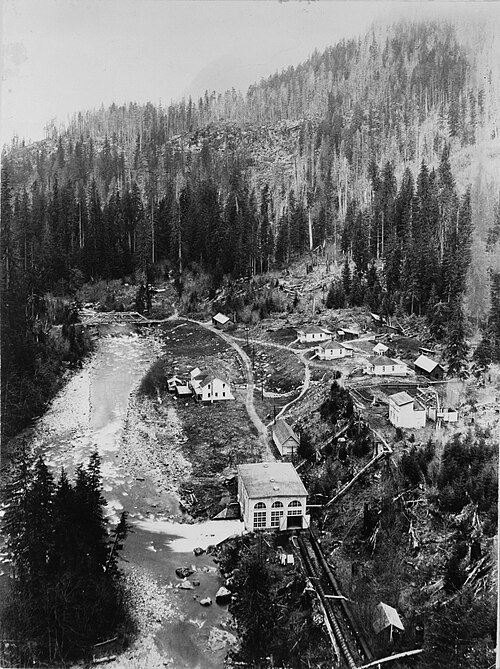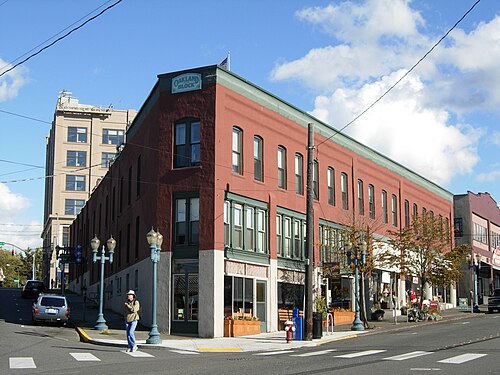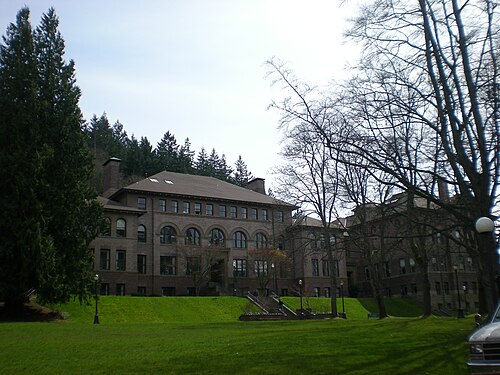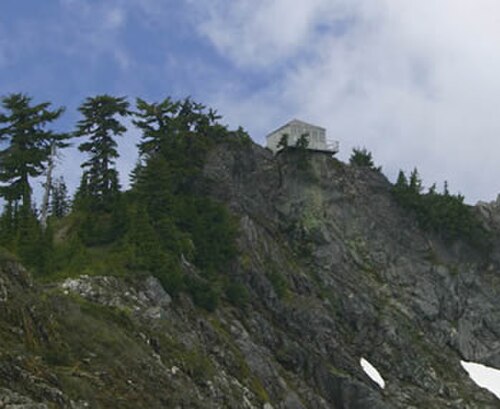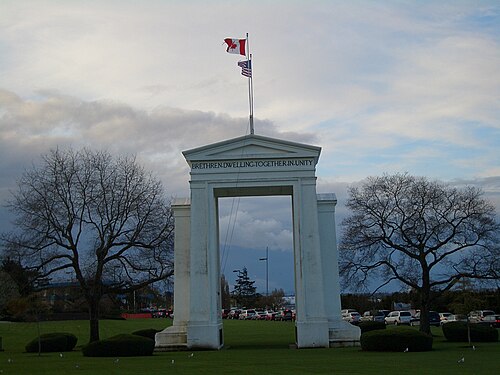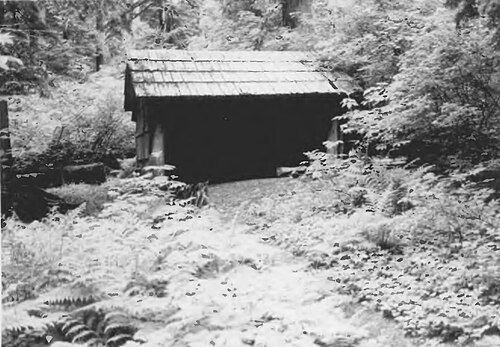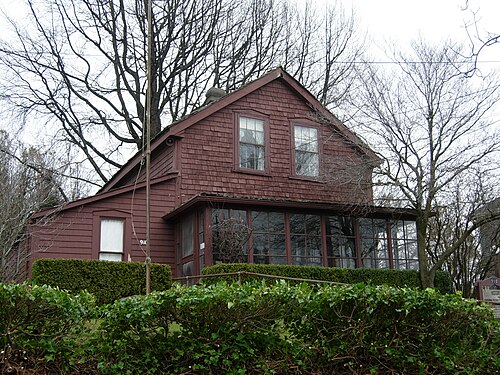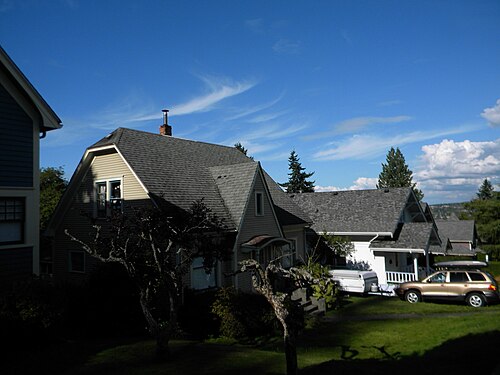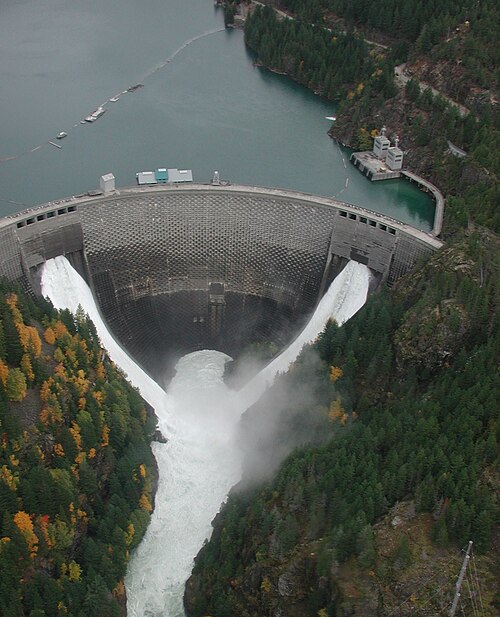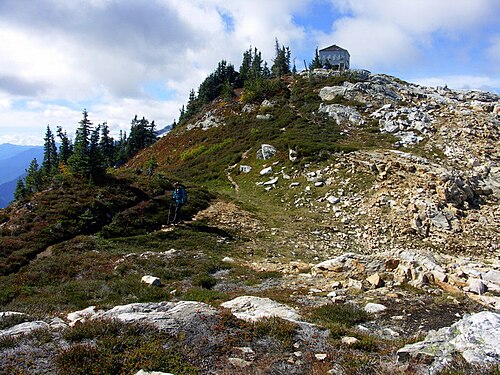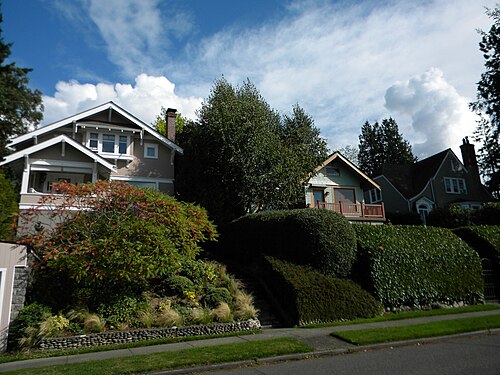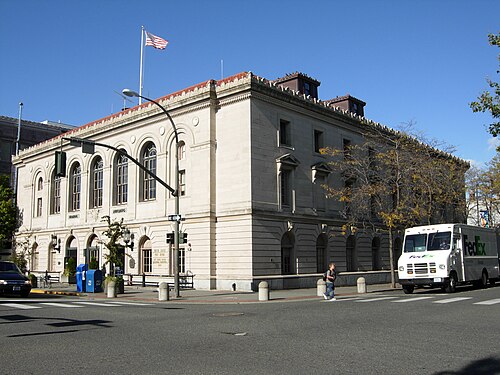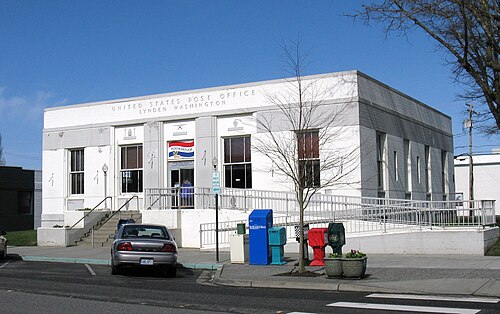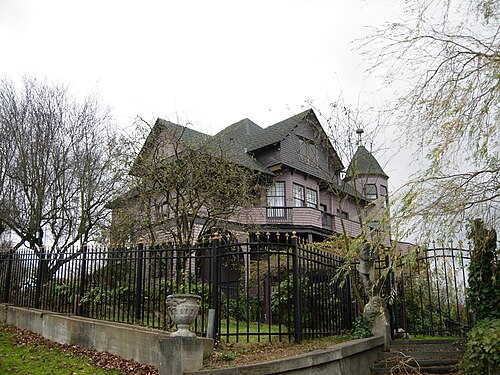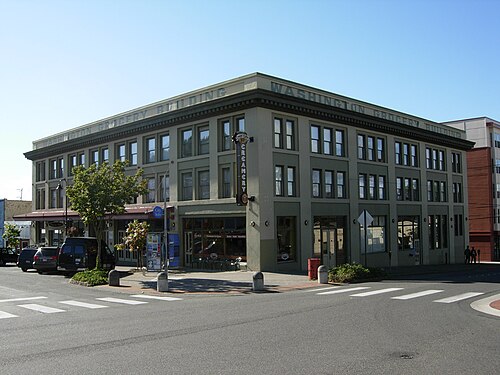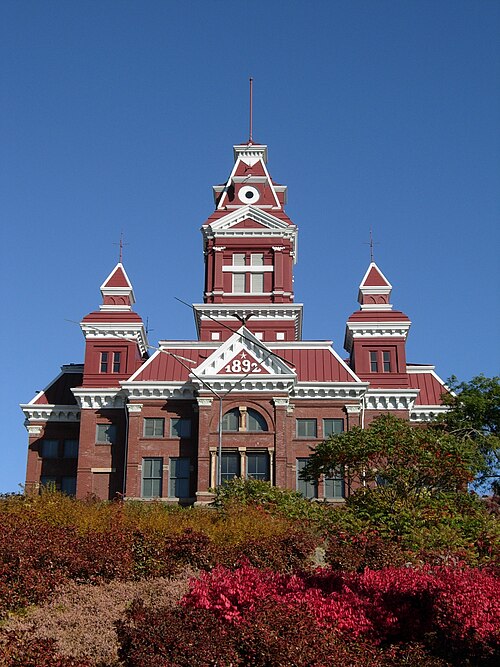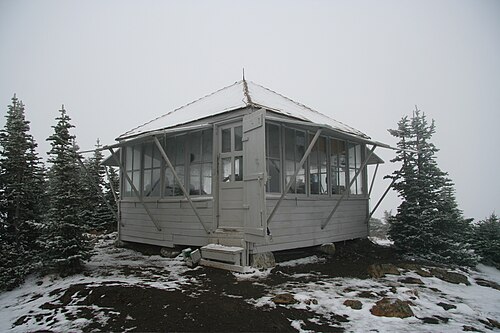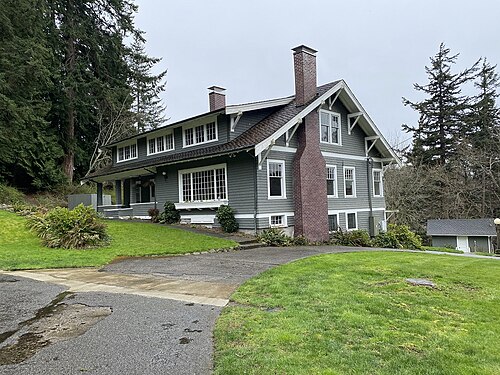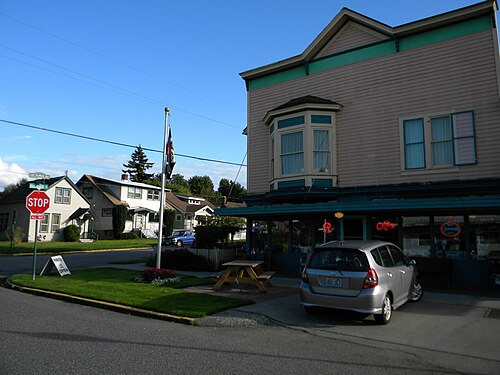
Whatcom County Washington (Page 2) has 30 places on the National Register of Historic Places including 1 place of National significance and 11 places of Statewide significance. Significant places include Pickett House, Nooksack Falls Hydroelectric Power Plant, Old Main, Western Washington State College, Park Butte Lookout and Peace Arch.
Prehistoric cultural affiliation(s) include Northern Straits dating back to 9999 BC.
Many famous people are associated with these Whatcom County historic places including Gen. George E. Pickett, James F. Wardner, Charlotte T. Roeder Roth, James Delmage Ross, Victor Roeder and Stephen A.D. Glascock.
Some of the country's most noteable architects helped create the Whatcom County places including Harvey Wiley Corbett, Skillings & Corner, C.A. Larsen, Kirtland K. Cutter, Lars Jorgenson, Seattle Engineering Dept., John Barkost, James A. Wetmore, Alfred Lee and Albert Lee. Prominent architectural styles found in Whatcom Country are Classical Revival, Bungalow/Craftsman and Colonial Revival.
Historic Significance:
Person
Historic Person:
Pickett,Gen. George E.
Significant Year:
1859, 1856
Area of Significance:
Military, Social History
Period of Significance:
1850-1874
Historic Function:
Domestic
Historic Sub-function:
Single Dwelling
Current Function:
Recreation And Culture
Current Sub-function:
Museum
The Pickett House, constructed in 1856 in Bellingham (formerly Whatcom), Washington, is historically significant as the oldest documented wooden structure in the state of Washington remaining on its original foundation. The home is intimately associated with its builder and first resident, Captain George E. Pickett, who later achieved national notoriety as a Confederate Major General during the American Civil War. Commissioned by the U.S. Army to construct Fort Bellingham and protect local coal miners and settlers from regional conflicts, Pickett built this modest, two-story saltbox-style dwelling using rough-sawn Douglas fir lumber from the pioneering Roeder-Peabody mill. He inhabited the house until 1861, a period that also saw him command American troops during the tense "Pig War" boundary dispute on nearby San Juan Island.
Beyond its association with Pickett's pre-Civil War military career, the house stands as a premier example of mid-19th-century frontier architecture and early American settlement in the Pacific Northwest. Following Pickett's departure to join the Confederacy, the residence passed through several owners, including early Whatcom settler H.C. Barkhousen, before being acquired in 1936 by the Daughters of the Pioneers of Washington. Maintained as a historic house museum, the property was listed on the National Register of Historic Places in 1971, serving as a vital physical link to the territorial history, military presence, and pioneer heritage of Whatcom County.