Southeast Fairbanks County Alaska (Historic Districts) has 6 places on the National Register of Historic Places including 3 places of National significance. Significant places include Chisana Historic Mining Landscape, Eagle Historic District and Haines, John, Homestead, Big Delta Historic District and Chicken Historic District.
Several famous people are associated with these Southeast Fairbanks County historic places including John Meade Haines, William E. et.al. James and John B. Powers.
Some of the country's most noteable architects helped create the Southeast Fairbanks County places including John Meade Haines and Lawrence DeWitt. Prominent architectural styles found in Southeast Fairbanks Country are .
Historic Significance:
Person
Historic Person:
Haines, John Meade
Area of Significance:
Literature
Period of Significance:
1975-2000, 1950-1974, 1925-1949
Historic Function:
Domestic
Historic Sub-function:
Single Dwelling
Current Function:
Domestic
Current Sub-function:
Camp
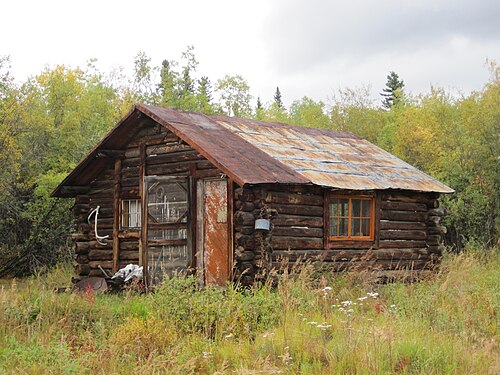
John Haines did not just write about the Alaskan cold. He lived it. In 1947, the World War II veteran claimed 160 acres off Mile 68 of the Richardson Highway, near Tenderfoot Creek. He built a rudimentary log cabin with his own hands. No running water. No electricity. Temperatures routinely plummeted to fifty below zero. Haines spent over two decades in this sparse wilderness, hunting moose, trapping fur, and chopping endless cords of spruce just to survive. This grueling, hand-to-mouth existence birthed his stark, muscular poetry. His debut collection, Winter News, came straight out of those frozen walls. So, the homestead is not just some old pile of logs. It represents the physical crucible that shaped one of the subarctic's most powerful literary voices.
But the site holds historical weight beyond the poetry. It stands as a rare, intact survivor of the post-WWII homesteading boom. Uncle Sam was practically giving away land to veterans back then, provided they could "prove up" by clearing fields and building a home within five years. Many tried. Most failed and fled back south, broken by the isolation. Haines stayed. His homestead remains a physical record of that grit. The simple root cellar, the outbuildings, and the main cabin still sit in the birch woods, largely unchanged since he walked away. It shows the sheer labor required to carve a life out of the territory before oil money tamed the frontier. A tough life, written in logs and sweat.