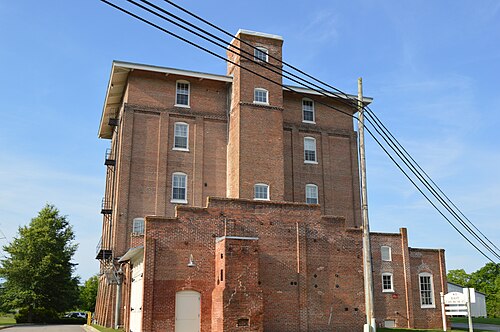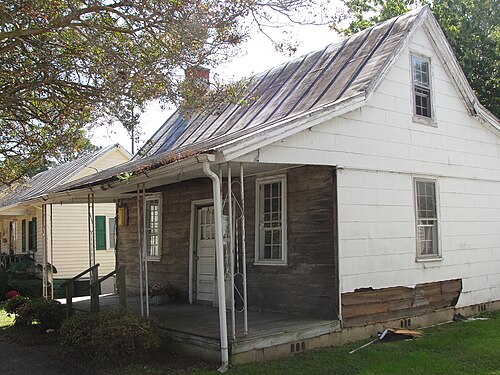
Chowan County North Carolina (Historic Districts) has 6 places on the National Register of Historic Places including 1 place of National significance and 2 places of Statewide significance. Significant places include Edenton Historic District, Edenton Cotton Mill Historic District and Edenton Station, United States Fish and Fisheries Commission, Edenton Historic District (Boundary Increase II) and Edenton Historic District (Boundary Increase).
Some of the country's most noteable architects helped create the Chowan County places including John Hawks, C.R. Makepeace, Public Works Administration, Commerce Dept. Bureau of Fisheries, George L. Borum, Badham, Hannibal,, Price, Joseph, et al., Frank Fred Muth, John Tyler Page and WPA. Prominent architectural styles found in Chowan Country are Bungalow/Craftsman, Colonial Revival and Greek Revival.
Historic Significance:
Information Potential, Event, Architecture/Engineering
Architect, builder, or engineer:
Et al., Hawks,John
Architectural Style:
Mixed (More Than 2 Styles From Different Periods)
Area of Significance:
Politics/Government, Historic - Non-Aboriginal, Industry, Architecture, Commerce
Cultural Affiliation:
Colonial,Industrial
Period of Significance:
1875-1899, 1850-1874, 1825-1849, 1800-1824, 1750-1799, 1700-1749
Historic Function:
Commerce/Trade, Domestic, Government, Industry/Processing/Extraction, Transportation
Historic Sub-function:
Manufacturing Facility, Single Dwelling, Water-Related
Current Function:
Commerce/Trade, Domestic, Government
Current Sub-function:
Single Dwelling
Established in 1712 and incorporated in 1722, Edenton served as an early capital of colonial North Carolina and grew into a vital political, cultural, and commercial port town on the Albemarle Sound. The Edenton Historic District is of exceptional historical significance for its association with key figures and events that shaped early American history. Notably, it was the site of the famous 1774 Edenton Tea Party, one of the earliest organized political actions by women in United States history, led by Penelope Barker. The town also holds profound significance in African American history as a major hub of the Maritime Underground Railroad and the home of Harriet Jacobs, an escaped enslaved woman who authored the seminal autobiography Incidents in the Life of a Slave Girl, which detailed her life and concealment in Edenton before her escape to the North.
Architecturally, the district represents one of the most intact and outstanding collections of 18th-, 19th-, and early 20th-century buildings in the American South. Spanning Georgian, Federal, Greek Revival, and Victorian styles, the district's tree-lined streets feature several National Historic Landmarks, including the 1767 Chowan County Courthouse-the oldest continuously used courthouse in the state-and the remarkably preserved 1758 Cupola House. Together with St. Paul's Episcopal Church (commenced in 1736) and a wealth of historic residential, commercial, and industrial structures, the Edenton Historic District offers an unparalleled material record of North Carolina's maritime heritage, early civic development, and evolving architectural tastes over more than two centuries.