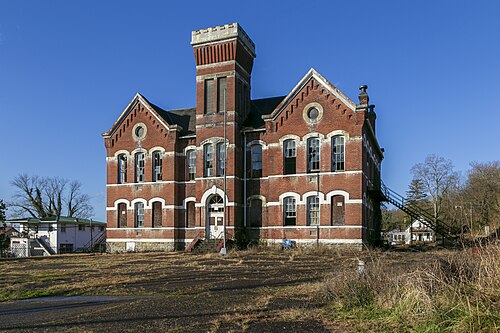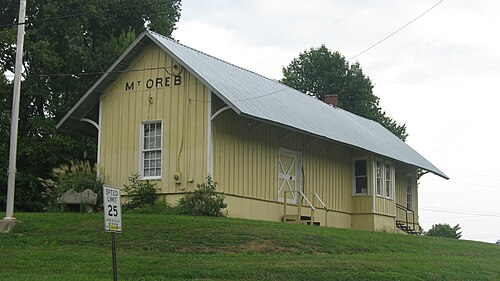
Brown County Ohio (Vacant / Not In Use) has 4 places on the National Register of Historic Places including 1 place of National significance. Significant places include Parker, John P., House, Higginsport School, Mount Orab Station, Sutton House.
The famous person John P. Parker is associated with one of more of the Brown County historic places.
Some of the country's most noteable architects helped create the Brown County places including Otho Sutton and Cincinnati & Eastern Railroad. Prominent architectural styles found in Brown Country are Federal and Italianate.
Historic Significance:
Person, Event
Historic Person:
Parker, John P.
Significant Year:
1865, 1850
Area of Significance:
Invention, Social History
Period of Significance:
1850-1874
Historic Function:
Domestic
Historic Sub-function:
Single Dwelling
Current Function:
Vacant/Not In Use
The John P. Parker House, situated along the Ohio River in Ripley, Ohio, is a site of national significance associated with one of the nineteenth century's most remarkable African American figures. Born into slavery in 1827, Parker successfully purchased his freedom, educated himself, and relocated to Ripley, where he became a highly successful industrialist, iron founder, and inventor. He established the Phoenix Foundry and built his two-story brick residence around 1853, living there until his death in 1900. Parker was one of the few African Americans to obtain U.S. patents before 1900, and his home and adjacent foundry site represent his extraordinary rise from bondage to prosperous, self-made business ownership in a highly turbulent era.
Beyond his industrial accomplishments, the house is globally recognized for its association with Parker's heroic and clandestine work as a key conductor on the Underground Railroad. Utilizing his home's strategic location on the border between the free state of Ohio and the slave state of Kentucky, Parker repeatedly risked his life and freedom by crossing the Ohio River to guide escaping enslaved people to safety. Collaborating with other local abolitionists like John Rankin, Parker is credited with personally helping hundreds of freedom seekers on their journey north. Designated a National Historic Landmark in 1997, the John P. Parker House stands as a vital monument to African American agency, resistance, and the dangerous fight against the institution of slavery.