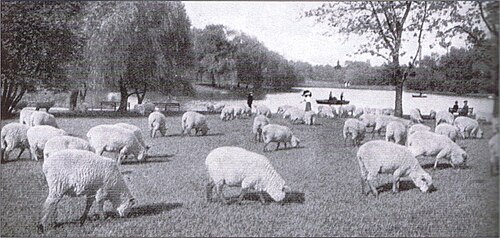
People think of Central Park when they hear about Frederick Law Olmsted. But his Chicago work runs deeper. Washington Park, officially listed as National Register site 04000871 in 2004, started as a soggy, mosquito-ridden marsh. Olmsted and Calvert Vaux dug in anyway. They envisioned a pastoral escape for tense urbanites, carving out a massive 150-acre lawn known simply as the Meadow. Burnham and Root added the architectural flair. They built the limestone stables in 1880, a structure that now houses the DuSable Museum of African American History. Go to the western edge. There, Lorado Tafts massive 1922 sculpture, Fountain of Time, looms with 97 dark concrete figures crumbling under the gaze of Father Time. Taft used a radical new concrete mix to build it. It worked.
The real story, though, belongs to the people who claimed these acres. During the Great Migration, Chicago's South Side exploded. Thousands of Black southerners moved in. They faced strict housing segregation, packed into the narrow strip of land called the Black Belt. Washington Park sat right on the edge of this pressure cooker. White locals tried to keep Black residents out, sometimes violently. But the neighborhood shifted. By the 1930s, the park became a vital civic stage. Soapbox speakers argued politics while families packed the picnic groves. In 1929, the Bud Billiken Parade started marching through, cementing the park as the beating heart of Black Chicago. It was survival.
So, why does the National Register listing matter It recognizes this dual identity. It honors both Olmsted's grand design and the gritty, triumphant history of the people who actually used it. The park isn't a museum. It is a battleground where Chicagoans fought for recreation, community, and basic rights. Go there on a Sunday and you will still feel that raw energy. The history is alive.