The Bronx was mostly farmland back then. When the Interborough Rapid Transit company pushed its tracks north, the sleepy dairy farms did not stand a chance. The Jackson Avenue station opened on November 26, 1904, as an elevated stop on the White Plains Road Line. It cost riders just a single nickel. Almost overnight, tens of thousands of working-class immigrants fled the cramped, dark tenements of Manhattan's Lower East Side to build new lives around Westchester Avenue. Brick buildings exploded across the neighborhood. Speculators bought up vacant lots, throwing up five-story apartment buildings to meet the sudden, desperate demand.
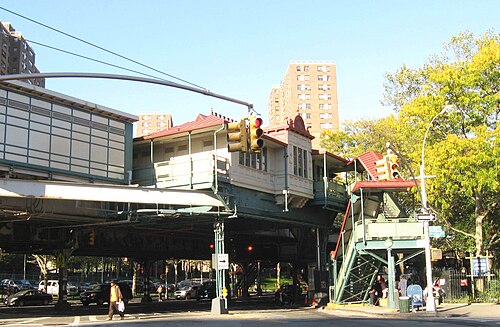
Most people ignore the architecture while rushing to catch the northbound 2 or 5 train. But look closer. The famous architectural firm Heins & LaFarge designed the station with an eye for civic pride, not just raw utility. They used heavy cast iron and ornamental brackets to elevate a basic transit platform. The elevated station house still features gorgeous, green-patinaed copper cladding. It remains one of the oldest surviving elevated structures in the entire metropolitan transit system. A real survivor.
Listing it on the National Register of Historic Places in 2004 was not just about aesthetics, though. It acknowledged how this steel-framed giant permanently reshaped New York's geography. Without it, the South Bronx doesn't exist. The station still serves commuters every single day, rattling as the steel wheels screech to a halt. It is loud. It is gritty. But it connects modern riders directly to the dawn of the subway era, standing as a working piece of history rather than a dusty museum exhibit.
- T Walker
What Makes Jackson Avenue Subway Station (IRT) Special: