William Edmund Scripps did not just run The Detroit News. He obsessed over the future. He championed early radio, flew experimental gliders, and loved gadgets. By 1916, Detroits industrial grime got to him. He needed an escape. So he bought up thousands of swampy, rolling acres in Orion Township, eventually creating a 3,800-acre empire called Wildwood Farms. This wasn't some quiet weekend cottage. It was a massive, self-sustaining agricultural playground. He imported prized Guernsey cattle. He built a private concrete runway so he could land his personal aircraft right on the property. He even constructed a state-of-the-art milking parlor.
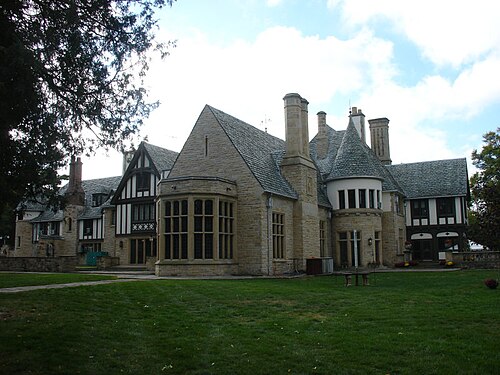
In 1927, Scripps and his wife, Nina, hired architect Robert O. Derrick to design the centerpiece. Derrick went all out. He drew up a sprawling, 30-room Norman Revival manor. Think thick slate roofs, hand-hewn oak beams, and leaded glass windows. They imported 17th-century French floor tiles. The house looked like it belonged in medieval Europe, but it ran on modern American muscle. It had its own utility plant. The basement featured a private shooting range and a vault for Scripps's gun collection. It cost nearly a million dollars to build. A staggering sum for the era.
Today, the estate remains a physical relic of Detroits Golden Age aristocracy. Wealthy tycoons loved playing at being country lords. Scripps got dirty. He tested new farming machinery and breeding techniques on site. After his death in 1952, the family sold the property. Oddly, a Catholic group bought the mansion. They used it as a rehabilitation facility for priests struggling with alcoholism. This odd transition actually saved the house. Developers never had the chance to gut the hand-carved wood. It survived untouched.
- T Walker
What Makes Scripps, William Edmund and Nina A. Downey, Estate Special: