Stark County Ohio has 50 places on the National Register of Historic Places including 1 place of National significance and 8 places of Statewide significance. Significant places include Hoover Farm, Bender's Restaurant--Belmont Buffet, Case Mansion, Dobkins, John and Syd, House and Fife, Harry E., House.
Several famous people are associated with these Stark County historic places including Mabel Hartzell and Col. William H. Morgan Sr..
Some of the country's most noteable architects helped create the Stark County places including Guy Tilden, Charles F. Schweinfurth, Frank Lloyd Wright, Frank O. Weary, Willard Hirsh, Wheeling & Lake Erie RR, Paul Searles, George Whike, Walker & Weeks and Philip & Walker. Prominent architectural styles found in Stark Country are Italianate, Romanesque and Late 19th And 20th Century Revivals.
Historic Significance:
Event, Architecture/Engineering
Architect, builder, or engineer:
Unknown
Architectural Style:
No Style Listed
Area of Significance:
Invention, Architecture
Period of Significance:
1850-1874, 1825-1849
Historic Function:
Agriculture/Subsistence, Domestic
Historic Sub-function:
Agricultural Outbuildings, Single Dwelling
Current Function:
Recreation And Culture
Current Sub-function:
Museum
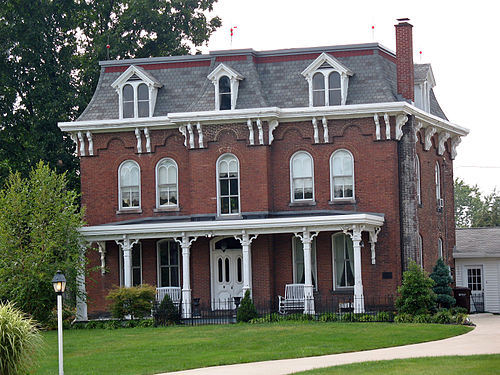
The Hoover Farm, located in North Canton (formerly New Berlin), Ohio, holds profound historical significance as the ancestral home of the Hoover family and the physical birthplace of the world-famous Hoover Company. Listed on the National Register of Historic Places in 1979, the property features a beautifully preserved Victorian-era Italianate farmhouse originally built in 1853, alongside several historic outbuildings. It was on this farmstead that William H. "Boss" Hoover spent his youth and subsequently established a successful family tannery and harness-making business in the late 19th century. This modest agricultural and leather-working enterprise laid the economic and entrepreneurial foundation for what would become a global manufacturing empire.
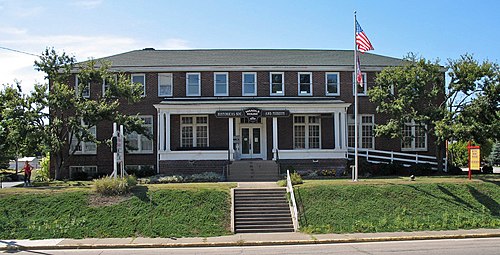
The site's primary national significance stems from its direct association with the birth and evolution of the electric vacuum cleaner industry. In 1908, William H. Hoover purchased the patent for an electric suction sweeper from his wife's cousin, James Murray Spangler, and began manufacturing the devices on the farm property. Under the leadership of "Boss" Hoover and his sons, the Hoover Company revolutionized domestic chores worldwide, transforming the vacuum cleaner from a luxury novelty into an essential household appliance. Today, owned and operated by Walsh University as the Hoover Historical Center, the farm serves as a monument to American industrial ingenuity, the evolution of twentieth-century domestic technology, and the profound economic legacy of the Hoover family in Stark County.



















.JPG)
.JPG)


.JPG)
.JPG)


.JPG)

.JPG)
.JPG)


.JPG)
.JPG)

.JPG)

.JPG)
.JPG)
.JPG)

.JPG)
.JPG)

.JPG)
.JPG)
.JPG)
.JPG)


.JPG)
.JPG)
.JPG)


.JPG)

.JPG)
.JPG)

