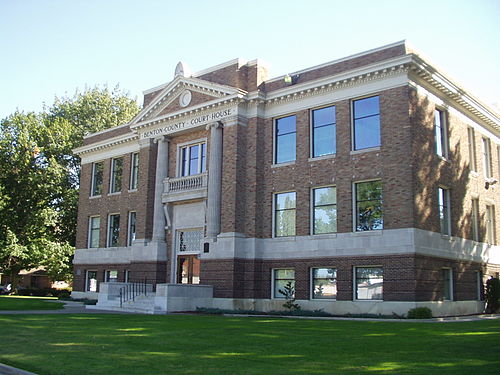
Benton County Washington has 18 places on the National Register of Historic Places including 10 places of National significance and 6 places of Statewide significance. Significant places include Glade Creek Site, Gold Coast Historic District, Hanford B Reactor, Hanford Island Archeological Site and Hanford North Archeological District.
Prehistoric cultural affiliation(s) include Cascade Phase, Windust Phase, Cold-Springs Subphase, Wanapum, Native American, Cayuse and Frenchman Springs dating back to 10999 BC.
Some of the country's most noteable architects helped create the Benton County places including Gustav Albin Pehrson, Smith, Hoffman and Wight Co., et al, DuPont de Nemours,E.I.,& Co., D.C. Maloney, Homer M. Hadley, George Rasquil, Everett McKellar, Ernest Norling and Louis A. Simon. Prominent architectural styles found in Benton Country are Classical Revival, Modern Movement and Moderne.
Historic Significance:
Information Potential
Area of Significance:
Prehistoric
Cultural Affiliation:
Cascade Phase, Windust Phase, Cold-Springs Subphase
Period of Significance:
9000-10999 BC, 7000-8999 BC, 3000-4999 BC
Historic Function:
Domestic
Historic Sub-function:
Camp
Current Function:
Landscape
Current Sub-function:
Underwater
The Glade Creek Site (designated archaeologically as 45BN12), situated near the confluence of Glade Creek and the Columbia River in Benton County, Washington, is a highly significant archaeological resource that offers critical insights into the deep history of human habitation along the Columbia Plateau. Listed on the National Register of Historic Places in 1977, the site encompasses a series of well-preserved cultural strata located on a prominent river terrace. This environmental setting, characterized by the intersection of a reliable freshwater tributary and the resource-rich Columbia River, served as an ideal seasonal encampment and resource-processing area for indigenous populations. The site's geographic positioning highlights the vital role that riverine corridors played in shaping the mobility, settlement patterns, and subsistence strategies of the region's early inhabitants over several thousand years.
Archaeological investigations at the Glade Creek Site have yielded a rich assemblage of cultural materials, including lithic debitage, diverse projectile points, tools, and faunal remains. These stratified deposits provide a chronological record of technological adaptation and cultural evolution in the Mid-Columbia region, spanning from the mid-Holocene through the Late Prehistoric period. The recovered artifacts document shifts in hunting, fishing, and foraging practices, reflecting how ancient peoples adapted to changing environmental conditions on the Plateau. As an invaluable repository of pre-contact history, the Glade Creek Site continues to yield crucial data regarding the socio-economic complexity, tool-manufacturing technologies, and cultural continuity of the Sahaptin-speaking peoples and their ancestors, who have inhabited the region since time immemorial.
Historic Significance:
Event
Area of Significance:
Military, Community Planning And Development
Period of Significance:
1925-1949
Historic Function:
Domestic, Landscape
Historic Sub-function:
Park, Single Dwelling
Current Function:
Domestic, Landscape
Current Sub-function:
Park, Single Dwelling
The Gold Coast Historic District, located along the Columbia River in Richland, Washington, is historically significant for its direct association with the Manhattan Project and the rapid transformation of Richland into a planned government community during World War II. Listed on the National Register of Historic Places in 2005, the district represents a critical chapter in American military and social history. In 1943, the federal government acquired the small farming town of Richland to house the thousands of workers employed at the nearby Hanford Engineer Works, which produced the plutonium used in the Trinity test and the "Fat Man" atomic bomb. Designed by Spokane architect Albin Pehrson under contract with the DuPont Company and the U.S. Army Corps of Engineers, the neighborhood is an outstanding example of a master-planned, federally built wartime community that reflects the urgency, secrecy, and scale of the nation's nuclear mobilization.
Architecturally, the Gold Coast Historic District is characterized by its intact collection of "alphabet houses"-standardized, pre-designed residential units designated by letters of the alphabet. The "Gold Coast" specifically earned its moniker because it contained the largest, most prestigious of these designs, such as the "F", "G", "H", "L", and "U" models, which were reserved for high-ranking Hanford administrators, scientists, and military officials. These homes were situated on prime real estate overlooking the river, featuring larger lots, curved streets, and mature landscaping designed to foster a sense of permanent suburban stability. Today, the district retains a remarkably high degree of historic and architectural integrity, serving as a physical monument to the socio-economic hierarchy of the wartime Hanford workforce and the mid-century suburban planning principles of the federal government.
Historic Significance:
Event
Area of Significance:
Military, Science, Politics/Government, Engineering
Period of Significance:
1925-1949
Historic Function:
Defense, Industry/Processing/Extraction
Historic Sub-function:
Energy Facility
Current Function:
Vacant/Not In Use
The B Reactor at the Hanford Site in Benton County, Washington, holds exceptional national significance as the world's first full-scale plutonium production reactor. Constructed during World War II as a critical component of the top-secret Manhattan Project, the reactor was built in an astonishingly brief period between 1943 and 1944 by the DuPont Company, utilizing experimental designs pioneered by Enrico Fermi and his team. The facility was designed to produce plutonium-239, a fissile isotope previously only created in microscopic laboratory quantities. The plutonium manufactured in the B Reactor core was used to fuel the "Gadget" detonated at the Trinity test in New Mexico-the world's first nuclear explosion-as well as the "Fat Man" atomic bomb dropped on Nagasaki, Japan, on August 9, 1945, which precipitously brought about the end of World War II.
As an engineering and scientific marvel of the twentieth century, the B Reactor represents a pivotal leap into the Atomic Age. The massive, graphite-moderated, water-cooled reactor proved the feasibility of large-scale nuclear transmutation and established technological precedents that guided both military and civilian nuclear development for decades. Beyond its technological achievements, the site stands as a physical testament to the unprecedented mobilization of wartime labor, resources, and scientific intellect. Designated a National Historic Landmark in 2008 and now preserved as a premier unit of the Manhattan Project National Historical Park, the B Reactor remains an unparalleled monument to the dawn of nuclear weapons, the Cold War, and modern global geopolitics.
Historic Significance:
Information Potential
Area of Significance:
Prehistoric, Historic - Aboriginal
Cultural Affiliation:
Wanapum
Period of Significance:
1875-1899, 1850-1874, 1825-1849, 1800-1824, 1499-1000 AD
Historic Function:
Domestic
Historic Sub-function:
Camp
Current Function:
Industry/Processing/Extraction
Current Sub-function:
Energy Facility
The Hanford Island Archeological Site, listed on the National Register of Historic Places in 1976, represents a highly significant archaeological resource located on an island in the Hanford Reach of the Columbia River in Benton County, Washington. For millennia, this region served as a vital cultural, spiritual, and economic hub for Indigenous peoples, including the Wanapum band, the Yakama, and other Columbia River tribes. The island's geography made it an ideal location for seasonal salmon fishing, root gathering, and temporary or semi-permanent winter encampments. Archaeological investigations and surveys of the site have revealed a rich concentration of cultural materials, including pithouse depressions, hearths, lithic scatters, and shell middens, which document thousands of years of continuous and seasonal Native American land use.
The historical significance of the Hanford Island Archeological Site is further elevated by its unique state of preservation. Unlike much of the Columbia River basin, which was dramatically altered or submerged by the construction of mid-twentieth-century hydroelectric dams, the Hanford Reach remains the last non-tidal, free-flowing stretch of the river in the United States. Furthermore, the establishment of the Hanford Engineer Works in 1943 restricted public access to the area, unintentionally shielding the island's archaeological deposits from urban development, agricultural disruption, and looting. Consequently, the site possesses extraordinary integrity and meets National Register Criterion D for its exceptional potential to yield critical scientific data regarding Plateau culture, prehistoric subsistence strategies, trade networks, and environmental adaptation over several thousand years.
Historic Significance:
Information Potential
Area of Significance:
Historic - Aboriginal, Prehistoric
Cultural Affiliation:
Wanapum
Period of Significance:
1875-1899, 1850-1874, 1825-1849, 1800-1824, 1499-1000 AD
Historic Function:
Agriculture/Subsistence, Domestic, Funerary
Historic Sub-function:
Camp, Fishing Facility Or Site, Graves/Burials
Current Function:
Industry/Processing/Extraction
Current Sub-function:
Energy Facility
Situated along the Hanford Reach of the Columbia River in Benton County, Washington, the Hanford North Archeological District is a highly significant cultural landscape containing an exceptionally well-preserved record of Indigenous occupation spanning thousands of years. This district owes its pristine condition largely to its inclusion within the security buffer of the Hanford Site established during the Manhattan Project in 1943. This federal restriction inadvertently shielded the area from the agricultural development, looting, and reservoir flooding from modern dams that destroyed similar archaeological records along other stretches of the Columbia River. Historically, this region served as a vital homeland, fishing ground, and wintering area for the Wanapum people and other Sahaptin-speaking tribes, who maintained a deep, enduring connection to this stretch of the river and its abundant resources.
Eligible for the National Register under Criterion D, the district holds immense scientific value for its potential to yield crucial information about the prehistory of the Columbia Plateau. The district encompasses numerous archaeological sites, including winter village settlements, temporary campsites, resource processing stations, and sacred areas. The physical evidence preserved within these sites-such as pit house depressions, shell middens, earth ovens, and diverse lithic assemblages-provides invaluable data regarding prehistoric subsistence patterns, technological evolution, and regional trade networks over a span of nearly 10,000 years. As one of the last free-flowing segments of the Columbia River, the Hanford North Archeological District remains a critical touchstone for understanding the complex history and environmental adaptation of the region's earliest inhabitants.
Historic Significance:
Information Potential
Area of Significance:
Prehistoric, Historic - Aboriginal
Cultural Affiliation:
Wanapum
Period of Significance:
1875-1899, 1850-1874, 1825-1849, 1800-1824, 1499-1000 AD
Historic Function:
Agriculture/Subsistence, Domestic, Funerary
Historic Sub-function:
Fishing Facility Or Site, Graves/Burials, Village Site
Current Function:
Industry/Processing/Extraction
Current Sub-function:
Energy Facility
The Locke Island Archaeological District, situated within the Hanford Reach of the Columbia River in Benton and Franklin counties, Washington, represents one of the most significant and well-preserved cultural landscapes in the Columbia Plateau. For thousands of years, the island and its immediate surroundings served as a vital hub for Native American groups, most notably the Wanapum and other Sahaptin-speaking peoples. These populations utilized the area for seasonal salmon fishing, freshwater mussel harvesting, and terrestrial hunting and gathering. The district's extraordinary preservation is largely a consequence of the establishment of the federal Hanford Site in 1943 the resulting security perimeter restricted public access, inadvertently shielding these irreplaceable cultural resources from the looting, agricultural cultivation, and urban development that destroyed similar sites throughout the region.
Listed on the National Register of Historic Places in 1976, the district contains an exceptionally rich density of archaeological features, including numerous semi-subterranean pithouse depressions, extensive shell middens, hearths, and lithic tool manufacturing debris. These features provide a virtually undisturbed stratigraphic record of Native American habitation, resource procurement, and social adaptation spanning from the prehistoric era through the protohistoric and early historic periods. As one of the few remaining undammed segments of the Columbia River, the district remains a deeply sacred landscape to contemporary regional tribes and continues to yield critical scientific insights into the long-term human history of the Pacific Northwest.
Historic Significance:
Information Potential
Area of Significance:
Prehistoric, Historic - Aboriginal
Cultural Affiliation:
Native American
Period of Significance:
7000-8999 BC, 5000-6999 BC, 1875-1899
Historic Function:
Domestic
Historic Sub-function:
Village Site
Current Function:
Education
Current Sub-function:
Research Facility
The Rattlesnake Springs Sites, located within the arid shrub-steppe landscape of Benton County, Washington, hold profound archaeological and ethnographic significance as a vital freshwater oasis in an otherwise dry basin. For thousands of years, the springs served as a crucial seasonal campsite and resource gathering hub for indigenous peoples, including the Wanapum, Yakama, and other Columbia River tribes. The archaeological deposits at the site yield rich evidence of prehistoric occupation, including stone tools, projectile points, and resource processing areas, reflecting the deep, enduring connection between Native American populations and this rare, dependable desert water source.
During the historic era, the springs transitioned into a critical landmark and watering hole for early explorers, fur traders, and American settlers navigating the Columbia Plateau. It became a prominent stop along the historic White Bluffs Road, one of the region's earliest packing and wagon routes, which connected the Columbia River to mining districts in the interior northwest. Listed on the National Register of Historic Places in 1976, the Rattlesnake Springs Sites are highly valued for their dual capacity to yield information about prehistoric lifeways and early historic overland transportation, all preserved in a remarkably pristine state due to their inclusion within the protective boundary of the Hanford Site.
Historic Significance:
Information Potential
Area of Significance:
Prehistoric
Cultural Affiliation:
Wanapum
Period of Significance:
1499-1000 AD
Historic Function:
Agriculture/Subsistence, Domestic, Funerary
Historic Sub-function:
Fishing Facility Or Site, Graves/Burials, Village Site
Current Function:
Industry/Processing/Extraction
Current Sub-function:
Energy Facility
The Ryegrass Archaeological District, listed on the National Register of Historic Places in 1976, is a highly significant cultural resource area located in Benton County, Washington, within the scenic and arid landscape of the Columbia Plateau. This expansive district contains a rich concentration of archaeological sites that document thousands of years of indigenous occupation, resource harvesting, and land use prior to Euro-American contact. Situated within the vital environmental corridor of the Columbia River basin, the district serves as a crucial record of how Native American groups-ancestral to the modern Columbia Plateau tribes-successfully adapted to and managed the diverse riverine and shrub-steppe ecosystems of the region over millennia.
Archaeological evidence within the Ryegrass District includes prehistoric seasonal campsites, lithic reduction stations, rock shelters, and resource-processing areas. The material culture preserved within these sites-such as stone tools, debitage, hearths, and faunal remains-provides invaluable scientific data regarding the subsistence strategies, technological developments, and seasonal migratory patterns of the region's early inhabitants. By preserving these highly sensitive and largely undisturbed deposits, the district remains a vital asset for understanding the complex social, economic, and ecological histories of the Columbia Plateau's indigenous peoples.
Historic Significance:
Information Potential
Area of Significance:
Prehistoric
Cultural Affiliation:
Native American
Period of Significance:
1499-1000 AD
Historic Function:
Agriculture/Subsistence, Domestic, Industry/Processing/Extraction
Historic Sub-function:
Agricultural Fields, Extractive Facility, Village Site
Current Function:
Education
Current Sub-function:
Research Facility
The Snively Canyon Archeological District is situated within the rugged Rattlesnake Hills of Benton County, Washington, located on the protected lands of what is now the Hanford Reach National Monument. Centered around a deeply cut canyon with rare perennial springs, this district served as a vital ecological oasis in the otherwise arid shrub-steppe environment of the Columbia Basin. The district encompasses a dense concentration of archaeological sites, including rockshelters, lithic manufacturing stations, hunting blinds, talus slope features, and campsites. These resources document thousands of years of seasonal land-use, resource procurement, and habitation by Indigenous Plateau peoples, particularly ancestors of the Yakama, Umatilla, and Nez Perce, who utilized the canyon for hunting game and gathering plant resources.
The historical significance of the Snively Canyon Archeological District lies in its extraordinary capacity to yield critical scientific data regarding the subsistence strategies, technological transitions, and settlement patterns of the region's inhabitants from the prehistoric era into the historic period. Because the area was absorbed into the secure boundaries of the Hanford Engineer Works in 1943, the canyon was shielded from the agricultural development, looting, and vandalism that compromised many other archaeological sites in the Columbia Basin. As a result, the district remains an exceptionally well-preserved cultural landscape that offers invaluable insights into the pre-contact history of the Pacific Northwest and continues to hold profound spiritual and cultural significance for contemporary tribal nations.
Historic Significance:
Information Potential
Area of Significance:
Historic - Aboriginal, Prehistoric
Cultural Affiliation:
Wanapum
Period of Significance:
1900-1750 AD, 1749-1500 AD
Historic Function:
Agriculture/Subsistence, Domestic
Historic Sub-function:
Camp, Fishing Facility Or Site
Current Function:
Industry/Processing/Extraction
The Wooded Island Archaeological District, listed on the National Register of Historic Places in 1976, is an exceptionally significant cultural resource located in the Hanford Reach of the Columbia River in Benton County, Washington. This district encompasses a rich concentration of pre-contact and protohistoric archaeological sites situated on and around Wooded Island, one of the last undammed, free-flowing segments of the Columbia River. For thousands of years, the island and its surrounding shoreline served as a vital locus of habitation, resource procurement, and social gathering for indigenous peoples of the Columbia Plateau, particularly the ancestors of the Wanapum, Yakama, and other Sahaptin-speaking tribes. Because the area was later protected by the security perimeter of the Hanford Site during the mid-20th century, the district has escaped the destructive development and reservoir flooding that compromised similar sites along the river.
The archaeological significance of the Wooded Island Archaeological District lies in its diverse and remarkably well-preserved cultural features, which include housepit depressions, hearths, tool-manufacturing lithic scatters, and extensive freshwater mussel shell middens. These resources provide invaluable stratified evidence of seasonal fishing, root-gathering, and hunting practices, as well as long-term shifts in technology, trade networks, and social organization prior to Euro-American contact. As a virtually undisturbed repository of Native American history, the district offers critical insights into the human ecology of the Columbia River basin and continues to hold profound cultural, historical, and spiritual importance for descendant tribal communities today.