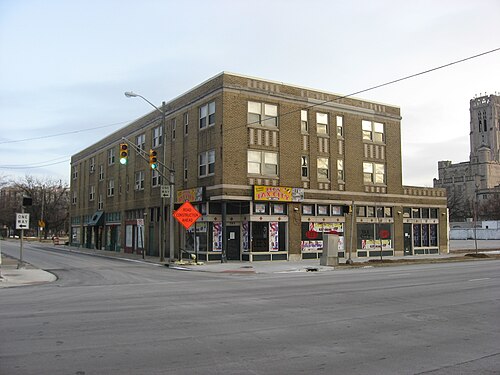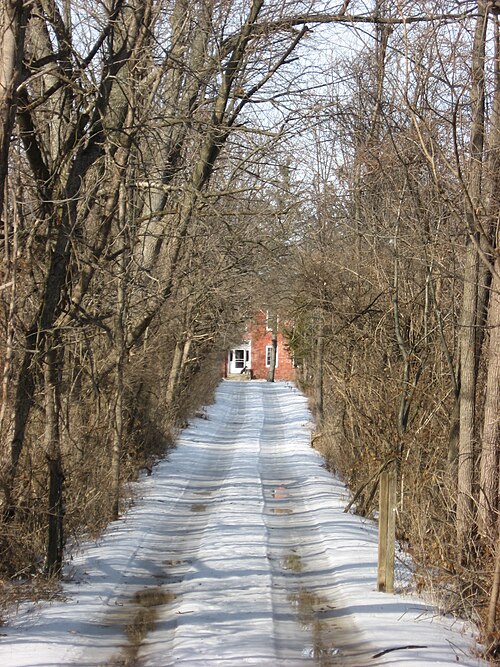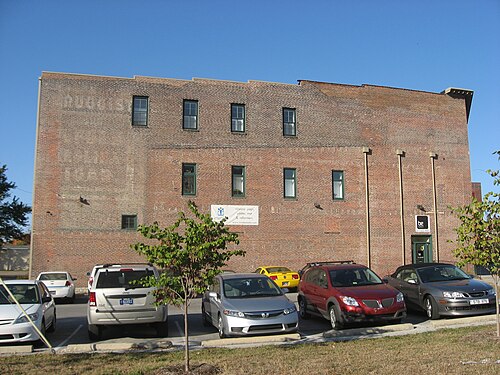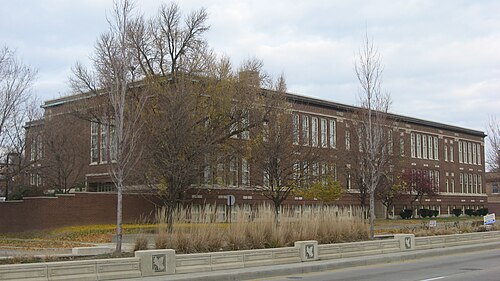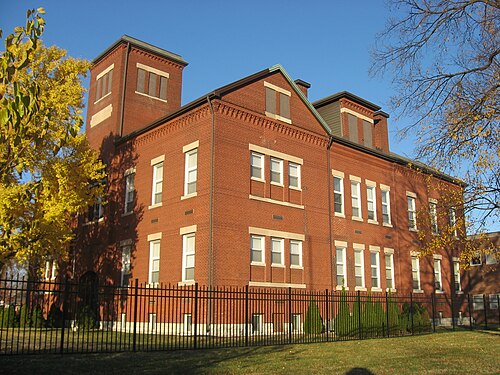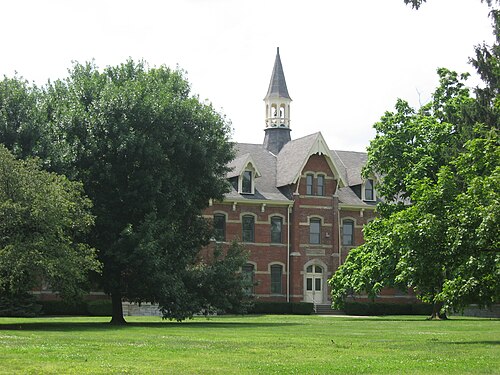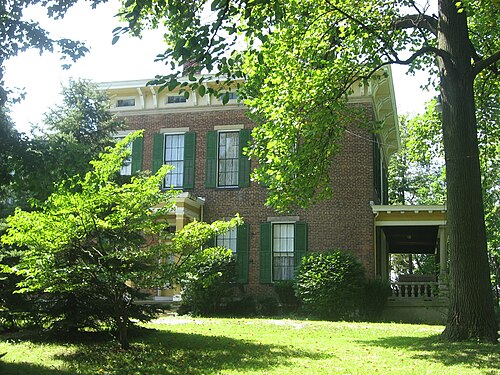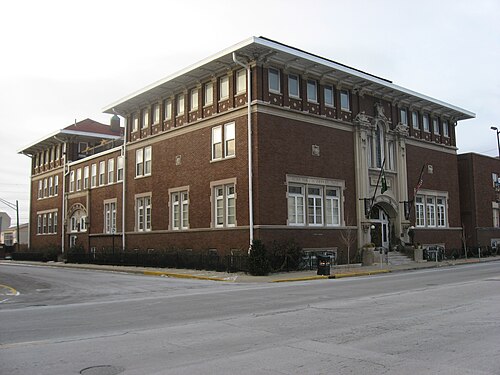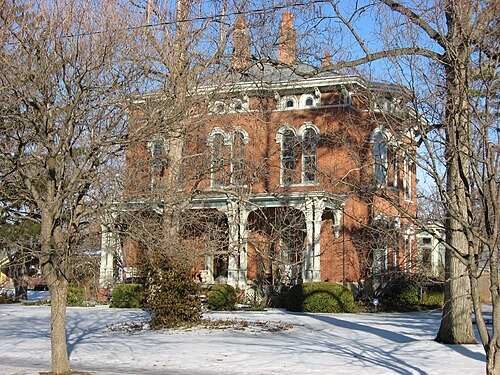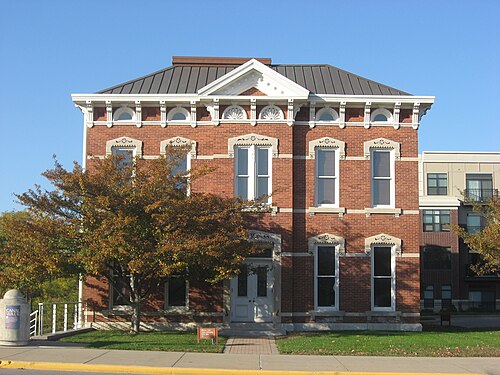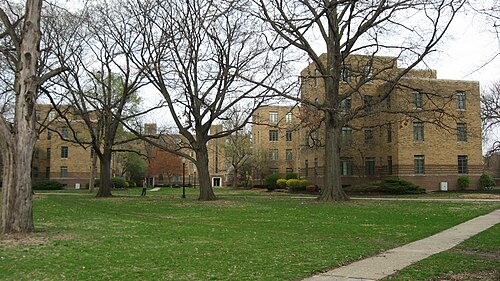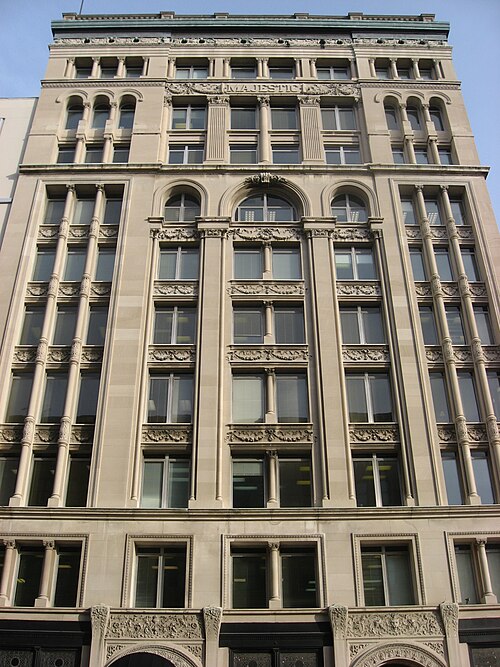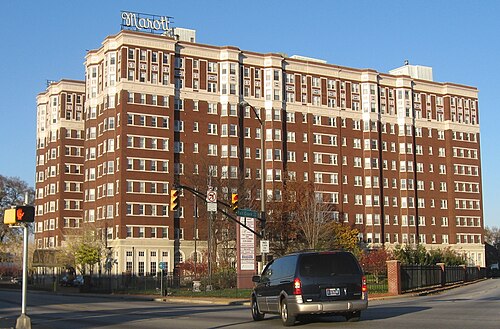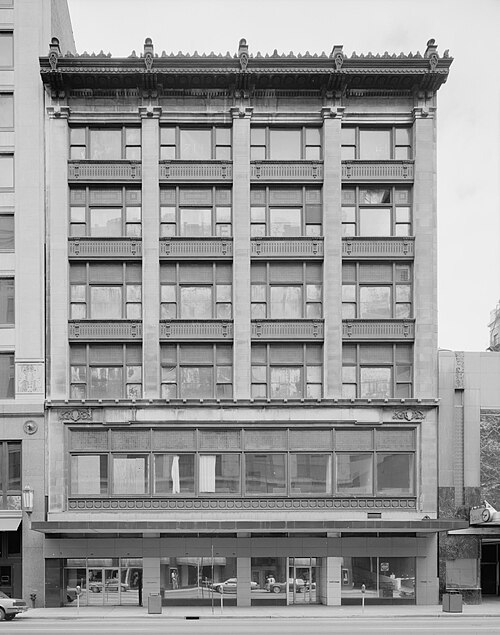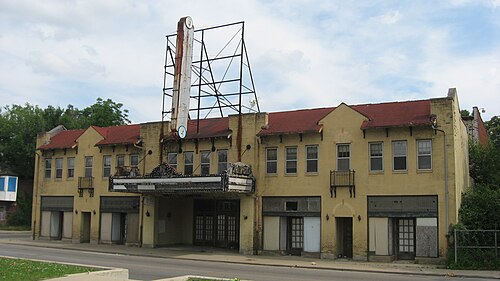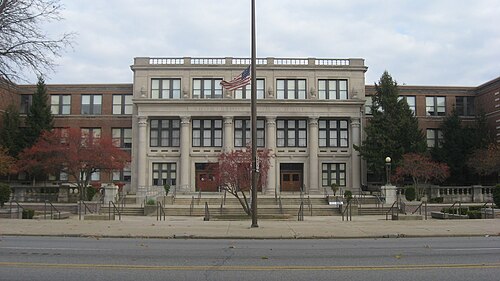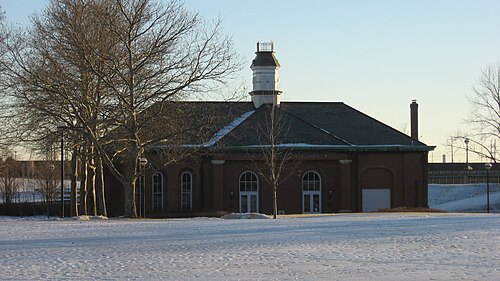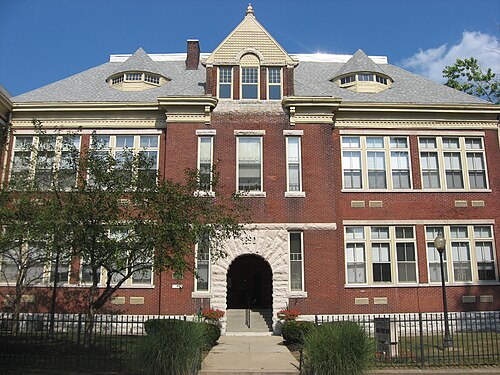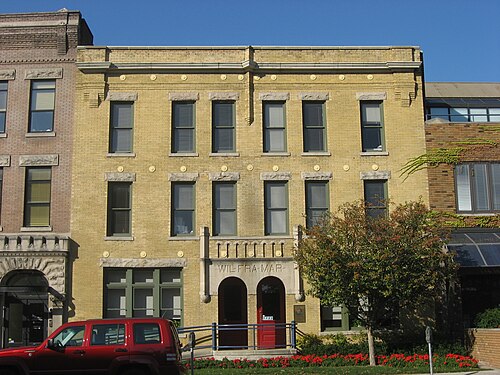
Marion County Indiana (Vacant / Not In Use) has 26 places on the National Register of Historic Places including 2 places of National significance and 2 places of Statewide significance. Significant places include Indiana Theatre, Nickel Plate Road Steam Locomotive No. 587, Maennerchor Building and Tee Pee Restaurant and Alameda.
Several famous people are associated with these Marion County historic places including George W. Julian and William Buschman.
Some of the country's most noteable architects helped create the Marion County places including Rubush & Hunter, Jungelaus,William P.,Company,In, Baldwin Locomotive Works, Adolph Sherrer, Maurice Thornton, William E. Russ, Adolf Scherrer, Walter Scholer, E. G. Spink and Lynn B. Millikan. Prominent architectural styles found in Marion Country are Italianate, Romanesque and Chicago.
Historic Significance:
Architecture/Engineering, Event
Architect, builder, or engineer:
Jungelaus,William P.,Company,In, Rubush & Hunter
Architectural Style:
Other
Area of Significance:
Art, Architecture, Performing Arts
Period of Significance:
1925-1949
Historic Function:
Commerce/Trade, Recreation And Culture, Social
Historic Sub-function:
Restaurant, Specialty Store, Sport Facility, Theater
Current Function:
Vacant/Not In Use
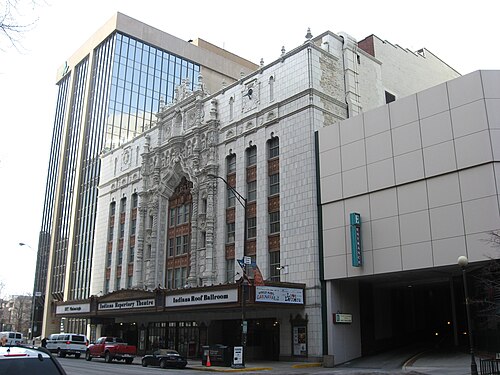
Opened in 1927, the Indiana Theatre in downtown Indianapolis is one of the state's most architecturally spectacular and culturally significant movie palaces. Designed by the renowned local architectural firm of Rubush & Hunter, the building is a masterpiece of the Spanish Baroque Revival, or Churrigueresque, style. Its most striking exterior feature is the soaring, intricately detailed white terra-cotta facade, which mimics an elaborate Spanish altarpiece and stands as a monument to the golden age of American cinema. Inside, the theatre originally boasted an opulent 3,200-seat auditorium designed to transport patrons to a fantasy world, as well as the famous Indiana Roof Ballroom on the top floor, which was meticulously designed to resemble a Spanish plaza under a simulated starlit night sky.
Beyond its architectural grandeur, the Indiana Theatre played a central role in the social and entertainment history of Marion County for decades. Initially operated by the Paramount-Publix chain as a venue for both motion pictures and live vaudeville acts, it stood as a premier downtown destination. Listed on the National Register of Historic Places in 1979, the building became a landmark success story for the preservation movement when it underwent a massive, award-winning rehabilitation in 1980. This adaptive reuse transformed the grand movie palace into the permanent home of the Indiana Repertory Theatre, saving a magnificent landmark from decay and serving as a vital anchor for the revitalization of downtown Indianapolis.
Historic Significance:
Event, Architecture/Engineering
Architect, builder, or engineer:
Baldwin Locomotive Works
Area of Significance:
Engineering, Transportation
Period of Significance:
1950-1974, 1925-1949, 1900-1924
Historic Function:
Transportation
Historic Sub-function:
Rail-Related
Current Function:
Vacant/Not In Use
Built in 1918 by the Baldwin Locomotive Works, Nickel Plate Road Steam Locomotive No. 587 is a highly significant example of a United States Railroad Administration (USRA) Light Mikado (2-8-2) wheel arrangement steam locomotive. Originally ordered for the Lake Erie and Western Railroad as No. 5541, it was renumbered to 587 after the line was absorbed by the New York, Chicago and St. Louis Railroad, popularly known as the "Nickel Plate Road." The locomotive represents a pivotal era in American transportation history when the federal government standardized locomotive designs during World War I to maximize efficiency and industrial mobilization. As one of the few surviving intact USRA Light Mikados, No. 587 stands as a testament to the engineering standards of early 20th-century freight transportation that helped fuel the nation's industrial growth.
After a loyal service life of nearly four decades hauling freight across the Midwest, the locomotive was retired in 1955 and donated to the city of Indianapolis, where it was placed on display in Broad Ripple Park. In 1983, a dedicated group of preservationists undertook a massive restoration effort, successfully returning the locomotive to operational status by 1988, after which it was utilized for excursion services. Listed on the National Register of Historic Places in 1984, Locomotive No. 587 is historically significant under Criterion C for its engineering integrity as a rare, unaltered survivor of the USRA standardized steam program, and under Criterion A for its association with the development of the railroad network in Indiana and the broader United States.