Oregon - Multnomah County - Historic Districts
Multnomah County Oregon (Historic Districts) has 28 places on the National Register of Historic Places including 4 places of National significance and 3 places of Statewide significance. Significant places include Bonneville Dam Historic District, Bonneville Dam Historic District (Boundary Increase), Columbia River Highway Historic District, Portland Skidmore/Old Town Historic District and Frank, M. Lloyd, Estate.

Several famous people are associated with these Multnomah County historic places including Wise, Dr. Jonah, et al., Amos King, William Sargent Ladd, Adams, Charles F. and et al..

Some of the country's most noteable architects helped create the Multnomah County places including U.S. Army Corps of Engineers, Oregon State Highway Department, Claussen & Claussen, Herman Brookman, Ellis F. and William Lawrence, Thomas B. et al. Winship, Campbell, Yost, Grube and Part, Charles Oliver, Isaac W. Smith and Louis Gustav Pfunder. Prominent architectural styles found in Multnomah Country are Late Victorian, Late 19th And 20th Century Revivals and Late 19th And Early 20th Century American Movements.

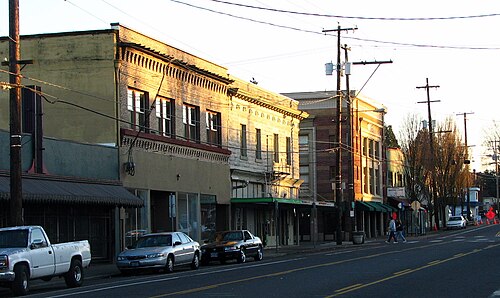
Alphabet Historic District (added 2000 - - #00001293)
Also known as Portland Nob Hill Historic District, Portland West EndHistoric District
Roughly bounded by NW Lovejoy St., NW Marshall St., NW 17th Ave., W. Burnside St., and NW 24th Ave. , Portland
Werewombat, CC BY-SA 3.0, via Wikimedia Commons
Historic Significance:
Event, Person, Architecture/Engineering
Architect, builder, or engineer:
Bell, William B., et.al.
Architectural Style:
Bungalow/Craftsman, Queen Anne
Historic Person:
Adams, Charles F., et al., Wise, Dr. Jonah, et al.
Area of Significance:
European, Social History, Architecture, Commerce
Period of Significance:
1925-1949, 1900-1924, 1875-1899
Owner:
Private, Local
Historic Function:
Commerce/Trade, Domestic, Religion, Social
Historic Sub-function:
Business, Civic, Multiple Dwelling, Religious Structure, Single Dwelling
Current Function:
Commerce/Trade, Domestic, Religion, Social, Vacant/Not In Use, Work In Progress
Current Sub-function:
Business, Civic, Professional, Professional, Religious Structure, Single Dwelling, Specialty Store
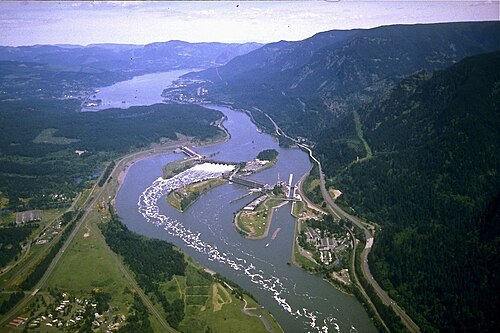
Bonneville Dam Historic District (added 1986 - - #86000727)
Also known as Powerhouse,Navigation Lock and Administrative Site;See Also:
Columbia River between Bradford and Cascade Islands off I-80 in Multnomah County, Oregon to WA 14 in Skamania County, WA, Bonneville
Mattes, CC BY-SA 3.0, via Wikimedia Commons
Historic Significance:
Event, Architecture/Engineering
Architect, builder, or engineer:
U.S. Army Corps of Engineers
Architectural Style:
Other
Area of Significance:
Politics/Government, Engineering, Transportation, Architecture, Landscape Architecture, Industry
Period of Significance:
1925-1949
Owner:
Federal
Historic Function:
Government, Industry/Processing/Extraction, Recreation And Culture, Transportation
Historic Sub-function:
Auditorium, Energy Facility, Government Office, Public Works, Water-Related
Current Function:
Government, Industry/Processing/Extraction, Recreation And Culture, Transportation
Current Sub-function:
Auditorium, Energy Facility, Government Office, Public Works, Water-Related
The Bonneville Dam Historic District, spanning the Columbia River between Skamania County, Washington, and Multnomah County, Oregon, is of outstanding national significance as the first federal hydroelectric and navigation project on the Columbia River. Authorized under the National Industrial Recovery Act of 1933 and constructed by the U.S. Army Corps of Engineers, the dam represents a monumental achievement of the New Deal era designed to stimulate the regional economy during the Great Depression. By harnessing the immense power of the Columbia River, the project provided cheap, abundant electricity that transformed the Pacific Northwest from a resource-extraction economy into a major industrial powerhouse, which proved critical for fueling the nation's aluminum production and shipbuilding industries during World War II. Additionally, the dam's state-of-the-art navigation lock successfully tamed the treacherous Cascade Rapids, opening the upper Columbia River to commercial barge traffic and establishing a vital inland shipping corridor.

Architecturally, the historic district is distinguished by its cohesive integration of massive concrete engineering structures with refined, stripped-down Art Deco and Classical Revival design elements, primarily executed under the direction of architect Clifton A. Hershey. The district encompasses key contributing features of the original complex, including the spillway dam, the first powerhouse, the original navigation lock, and a series of pioneering fish ladders designed to mitigate the dam's impact on the Columbia River's vital salmon runs. Beyond these industrial components, the district preserves the residential and administrative buildings constructed for the dam's operators, representing a fully realized, self-contained federal enclave. Designated a National Historic Landmark in 1986, the Bonneville Dam Historic District stands as an enduring monument to 1930s-era public works, engineering innovation, and regional economic transformation.
Bonneville Dam Historic District (Boundary Increase) (added 1987 - - #86003598)
Also known as Bonneville Hatchery;Central Hatchery;See Also:Bonneville Dam
Roughly bounded by Mitchell Creek Bypass, SW District boundary, Union Pacific right-of-way, and Hatchery Service Rd. , Bonneville
send us a photo to share
Historic Significance:
Event, Architecture/Engineering
Architect, builder, or engineer:
Claussen & Claussen
Architectural Style:
Colonial Revival
Area of Significance:
Conservation, Education, Politics/Government, Architecture
Period of Significance:
1925-1949, 1900-1924
Owner:
Federal
Historic Function:
Agriculture/Subsistence, Education, Government
Historic Sub-function:
Fishing Facility Or Site, Government Office, Research Facility
Current Function:
Agriculture/Subsistence, Education, Government
Current Sub-function:
Fishing Facility Or Site, Government Office, Research Facility
Columbia River Highway Historic District (added 1983 - - #83004168)
Roughly bounded by the Sandy River Bridge, Troutdale, Multnomah County on the West, the Chenoweth Creek Bridge, etc. , Troutdale
NE2, Public domain, via Wikimedia Commons
Historic Significance:
Event, Architecture/Engineering
Architect, builder, or engineer:
Oregon State Highway Department
Area of Significance:
Engineering, Transportation
Period of Significance:
1900-1924
Owner:
Mixed
Historic Function:
Transportation
Historic Sub-function:
Road-Related
Current Function:
Landscape, Transportation
Current Sub-function:
Park, Road-Related
East Portland Grand Avenue Historic District (added 1991 - - #91000126)
Also known as See Also:West, Nathaniel, Buildings;West's Block;New Logus B
Bounded by Main and Ankeny Sts., SE. 7th Ave. and SE. Martin Luther King, Jr. Blvd. (SE. Union Ave.) , Portland
Werewombat, CC BY-SA 3.0, via Wikimedia Commons
Historic Significance:
Event
Area of Significance:
Commerce
Period of Significance:
1925-1949, 1900-1924, 1875-1899
Owner:
Local, Private
Historic Function:
Commerce/Trade
Historic Sub-function:
Business, Financial Institution, Specialty Store
Current Function:
Commerce/Trade
Current Sub-function:
Business, Financial Institution, Specialty Store
East Portland Grand Avenue Historic District (Boundary Increase) (added 2013 - - #13001066)
200 SE. Martin Luther King Blvd., Portland
send us a photo to share
Eastmoreland Historic District (added 2022 - - #100008367)
Generally bounded by SE Woodstock Blvd., Eastmoreland Golf Course, Johnson Cr., and SE Crystal Springs Blvd., Portland
send us a photo to share
Area of Significance:
Architecture, Community Planning And Development
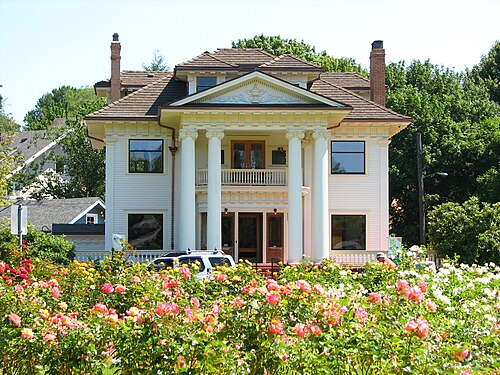
Frank, M. Lloyd, Estate (added 1979 - - #79002133)
Also known as Lewis and Clark College;Odell Manor
0615 SW Palatine Hill Rd. , Portland
Sloyola, CC BY 2.0, via Wikimedia Commons
Historic Significance:
Architecture/Engineering
Architect, builder, or engineer:
Brookman,Herman
Architectural Style:
Other
Area of Significance:
Landscape Architecture, Architecture
Period of Significance:
1925-1949, 1900-1924
Owner:
Private
Historic Function:
Domestic, Landscape
Historic Sub-function:
Forest, Secondary Structure, Single Dwelling
Current Function:
Education
Current Sub-function:
College
Halprin Open Space Sequence (added 2013 - - #13000058)
SW Open Spaces & Pedestrian Malls from Lincoln to Clay Sts., Portland
Steve Morgan, CC BY-SA 4.0, via Wikimedia Commons
Historic Significance:
Event, Architecture/Engineering
Architectural Style:
Modern Movement
Area of Significance:
Landscape Architecture, Community Planning And Development
Period of Significance:
1950-1974, 1925-1949
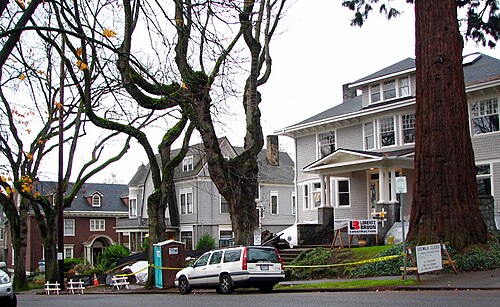
Irvington Historic District (added 2010 - - #10000850)
Roughly bounded by NE Fremont, NE 27th Ave, NE Broadway, NE 7th Ave, Portland
Ipoellet, CC BY-SA 4.0, via Wikimedia Commons
Historic Significance:
Event, Architecture/Engineering
Architectural Style:
Gothic, Late 19th And 20th Century Revivals
Area of Significance:
Architecture, Community Planning And Development
Period of Significance:
1925-1949, 1900-1924, 1875-1899
Kenton Commercial Historic District (added 2001 - - #01000934)
Roughly along Denver Ave., from N. Willis St. to N. Watts St. , Portland
Werewombat, CC BY-SA 3.0, via Wikimedia Commons
Historic Significance:
Event, Architecture/Engineering
Architectural Style:
Early Commercial, Exotic Revival
Area of Significance:
Architecture, Commerce
Period of Significance:
1925-1949, 1900-1924
Owner:
Private
Historic Function:
Commerce/Trade, Domestic, Government, Health Care, Recreation And Culture, Social
Historic Sub-function:
Business, Clinic, Financial Institution, Hotel, Meeting Hall, Post Office, Theater
Current Function:
Commerce/Trade, Domestic, Social
Current Sub-function:
Civic, Meeting Hall, Multiple Dwelling, Restaurant, Specialty Store
King's Hill Historic District (added 1991 - - #91000039)
Also known as See Also:80003367;87001496;88000093;78002319;78002322;880013
Bounded by W. Burnside St., SW Canyon Rd, SW 21st St. and Washington Park , Portland
Werewombat, CC BY-SA 4.0, via Wikimedia Commons
Historic Significance:
Architecture/Engineering, Person
Architect, builder, or engineer:
Multiple
Architectural Style:
Late 19th And Early 20th Century American Movements, Late 19th And 20th Century Revivals, Late Victorian
Historic Person:
King,Amos,et al.
Area of Significance:
Commerce, Social History, Industry, Performing Arts, Architecture
Period of Significance:
1925-1949, 1900-1924, 1875-1899
Owner:
Private
Historic Function:
Domestic
Historic Sub-function:
Multiple Dwelling, Single Dwelling
Current Function:
Commerce/Trade, Domestic
Current Sub-function:
Business, Multiple Dwelling, Professional, Single Dwelling
Ladd's Addition Historic District (added 1988 - - #88001310)
Also known as See Also:Mizpah Presbyterian Church
Bounded by S.E. Division, Hawthorne, Twelfth and Twentieth Sts. , Portland
Werewombat, CC BY-SA 3.0, via Wikimedia Commons
Historic Significance:
Event, Architecture/Engineering, Person
Architect, builder, or engineer:
Mische,E.T., Ladd Estate Co.
Architectural Style:
Bungalow/Craftsman, Other, Late 19th And 20th Century Revivals
Historic Person:
Ladd,William Sargent
Significant Year:
1908, 1905, 1891
Area of Significance:
Commerce, Architecture, Community Planning And Development, Landscape Architecture, Social History
Period of Significance:
1925-1949, 1900-1924, 1875-1899
Owner:
Local, Private
Historic Function:
Domestic, Landscape
Historic Sub-function:
Multiple Dwelling, Park, Secondary Structure, Single Dwelling
Current Function:
Domestic, Landscape
Current Sub-function:
Multiple Dwelling, Park, Secondary Structure, Single Dwelling
Laurelhurst Historic District (Additional Documentation) (added 2019 - - #100003462)
Roughly bounded by NE Stark, NE Senate. NE 44th & NE 32nd, Portland
send us a photo to share
Historic Significance:
Event, Architecture/Engineering
Architect, builder, or engineer:
Lawrence, Ellis F. and William, Bennes, John V. and Eric Hendricks, Winship, Thomas B. et al., Multiple
Architectural Style:
Colonial Revival, Georgian Revival, Other
Area of Significance:
Community Planning And Development, Architecture
Period of Significance:
1910-1948 AD
Lone Fir Cemetery (added 2007 - - #07000824)
Also known as Mount Crawford Cemetery
2115 SE Morrison St. , Portland
Northwest-historian, CC BY 2.0, via Wikimedia Commons
Historic Significance:
Event
Area of Significance:
Community Planning And Development, Social History, Exploration/Settlement
Period of Significance:
1950-1974, 1925-1949, 1900-1924, 1875-1899, 1850-1874
Owner:
Local
Historic Function:
Funerary
Historic Sub-function:
Cemetery
Current Function:
Funerary
Current Sub-function:
Cemetery
Mount Tabor Park (added 2004 - - #04001065)
Roughly bounded by S.E. Division Street, S.E. 60th Avenue, S.E. Yamhill Street, and S.E. Mountainview Drive , Portland
Finetooth, CC BY-SA 3.0, via Wikimedia Commons
Historic Significance:
Event, Architecture/Engineering
Architect, builder, or engineer:
Mische, Emanuel Tillman, Keyser, Charles P.
Architectural Style:
Late 19th And 20th Century Revivals, Late Victorian
Area of Significance:
Community Planning And Development, Entertainment/Recreation, Landscape Architecture
Period of Significance:
1925-1949, 1900-1924, 1875-1899
Owner:
Local
Historic Function:
Agriculture/Subsistence, Industry/Processing/Extraction, Landscape, Recreation And Culture
Historic Sub-function:
Horticulture Facility, Outdoor Recreation, Park, Water Works
Current Function:
Agriculture/Subsistence, Industry/Processing/Extraction, Landscape, Recreation And Culture
Current Sub-function:
Horticulture Facility, Outdoor Recreation, Park, Water Works
Mount Tabor Park Reservoirs Historic District (added 2004 - - #03001446)
Also known as Mount Tabor Park Reservoirs 1,5 and 6
6325 S.E. Division Street , Portland
Werewombat, CC BY-SA 3.0, via Wikimedia Commons
Historic Significance:
Event, Architecture/Engineering
Architect, builder, or engineer:
Smith, Isaac, et.al.
Architectural Style:
Romanesque
Area of Significance:
Entertainment/Recreation, Architecture, Engineering, Community Planning And Development
Period of Significance:
1950-1974, 1925-1949, 1900-1924, 1875-1899
Owner:
Local
Historic Function:
Government, Industry/Processing/Extraction, Recreation And Culture
Historic Sub-function:
Outdoor Recreation, Public Works, Water Works
Current Function:
Government, Industry/Processing/Extraction, Recreation And Culture
Current Sub-function:
Outdoor Recreation, Public Works, Water Works
Peacock Lane Historic District (added 2017 - - #100001774)
Southeast Stark and Southeast Belmont Streets, Southeast Peacock Lane, Portland
Visitor7, CC BY-SA 3.0, via Wikimedia Commons
Historic Significance:
Event, Architecture/Engineering
Architectural Style:
Late 19th And 20th Century Revivals, Mixed (More Than 2 Styles From Different Periods)
Area of Significance:
Community Planning And Development, Architecture
Period of Significance:
1923-1930 AD
Portland New Chinatown--Japantown Historic District (added 1989 - - #89001957)
Also known as Chinatown National Register Historic District;See Also:Skidm
Bounded by NW. Glisan, NW. 3rd Ave., W. Burnside, and NW. 5th Ave. , Portland
Visitor7, CC BY-SA 3.0, via Wikimedia Commons
Historic Significance:
Event, Architecture/Engineering
Architect, builder, or engineer:
Multiple
Architectural Style:
Late 19th And Early 20th Century American Movements, Modern Movement, Late Victorian
Area of Significance:
Architecture, Industry, Asian, Commerce
Period of Significance:
1925-1949, 1900-1924, 1875-1899
Owner:
Local, Private
Historic Function:
Commerce/Trade, Domestic, Industry/Processing/Extraction, Social
Current Function:
Commerce/Trade, Domestic, Industry/Processing/Extraction, Social
Portland Skidmore/Old Town Historic District (added 1975 - - #75001597)
Also known as Skidmore/Old Town Historic District
Roughly bounded by Harbor Dr., Everett, 3rd, and Oak Sts. , Portland
Werewombat, CC BY-SA 3.0, via Wikimedia Commons
Historic Significance:
Event, Architecture/Engineering
Architect, builder, or engineer:
Multiple
Architectural Style:
Late 19th And Early 20th Century American Movements, Late Victorian, Italianate
Area of Significance:
Art, Architecture, Commerce, Performing Arts
Period of Significance:
1875-1899, 1850-1874
Owner:
Private
Historic Function:
Commerce/Trade, Domestic, Government, Recreation And Culture
Historic Sub-function:
Government Office, Hotel, Restaurant, Specialty Store, Theater
Current Function:
Commerce/Trade, Landscape
Current Sub-function:
Parking Lot, Restaurant, Warehouse
Portland Thirteenth Avenue Historic District (added 1987 - - #87000888)
NW Thirteenth Ave. between NW Davis and NW Johnson Sts. , Portland
Werewombat, CC BY-SA 3.0, via Wikimedia Commons
Historic Significance:
Event, Architecture/Engineering
Architect, builder, or engineer:
Knighton,William C., Strong and McNaughton
Architectural Style:
No Style Listed
Area of Significance:
Architecture, Commerce, Industry
Period of Significance:
1925-1949, 1900-1924
Owner:
Private
Historic Function:
Commerce/Trade
Historic Sub-function:
Business, Warehouse
Current Function:
Commerce/Trade, Industry/Processing/Extraction, Vacant/Not In Use
Current Sub-function:
Business, Manufacturing Facility, Warehouse
Portland Yamhill Historic District (added 1976 - - #76001587)
Roughly bounded by Taylor, Morrison, both sides of 2nd Ave. and Willamette River , Portland
Werewombat, CC BY-SA 3.0, via Wikimedia Commons
Historic Significance:
Architecture/Engineering
Architect, builder, or engineer:
Multiple
Architectural Style:
Italianate
Area of Significance:
Architecture
Period of Significance:
1925-1949, 1900-1924, 1875-1899, 1850-1874
Owner:
Private
Historic Function:
Commerce/Trade
Current Function:
Commerce/Trade
Portland Zoo Railway Historic District (added 2020 - - #100005018)
Also known as The Washington Park and Zoo Railroad (WP&ZRy)
4001 SW Canyon Rd., Portland
send us a photo to share
Area of Significance:
Community Planning And Development, Engineering, Entertainment/Recreation
Rocky Butte Scenic Drive Historic District (added 1991 - - #91001550)
Rocky Butte Rd. and parts of NE. Fremont St. and 92nd Ave. , Portland
Visitor7, CC BY-SA 3.0, via Wikimedia Commons
Historic Significance:
Event, Architecture/Engineering
Architect, builder, or engineer:
Multnomah Co. Road Dept.
Area of Significance:
Transportation, Entertainment/Recreation, Landscape Architecture, Engineering
Period of Significance:
1925-1949
Owner:
Local
Historic Function:
Recreation And Culture, Transportation
Historic Sub-function:
Air-Related, Outdoor Recreation, Road-Related
Current Function:
Recreation And Culture, Transportation
Current Sub-function:
Air-Related, Outdoor Recreation, Road-Related
South Park Blocks (added 2022 - - #100007518)
1003 SW Park Ave., Portland
send us a photo to share
Historic Significance:
Event, Architecture/Engineering
Architect, builder, or engineer:
Pfunder, Louis Gustav, Mische, Emanuel T., Campbell, Yost, Grube and Part, Multiple
Architectural Style:
Other - Modern Movement
Area of Significance:
Community Planning And Development, Landscape Architecture
Period of Significance:
1852-1973 AD
South Portland Historic District (added 1998 - - #98000951)
Roughly bounded by Arthur, Front, Grover, Hood, and Curry Sts., and Barbur Blvd. , Portland
Visitor7, CC BY-SA 3.0, via Wikimedia Commons
Historic Significance:
Event, Architecture/Engineering
Architect, builder, or engineer:
Whidden & Lewis, Doyle, A.E.
Architectural Style:
Late 19th And Early 20th Century American Movements, Late Victorian
Area of Significance:
Architecture, European
Period of Significance:
1925-1949, 1900-1924, 1875-1899
Owner:
Local, Private
Historic Function:
Domestic, Religion, Social
Historic Sub-function:
Civic, Multiple Dwelling, Religious Structure, Single Dwelling
Current Function:
Commerce/Trade, Domestic, Religion, Social
Current Sub-function:
Business, Civic, Multiple Dwelling, Religious Structure, Restaurant, Single Dwelling
Terwilliger Parkway (added 2021 - - #100006188)
Also known as Southwest Hillside Parkway
3000 SW Terwilliger Blvd., Portland
send us a photo to share
Area of Significance:
Community Planning And Development
Washington Park Reservoirs Historic District (added 2004 - - #03001447)
Also known as Washington park (City Park) Reservoirs 3 and 4
2403 S.W. Jefferson Street , Portland
Werewombat, CC BY-SA 3.0, via Wikimedia Commons
Historic Significance:
Architecture/Engineering, Event
Architect, builder, or engineer:
Oliver, Charles, Smith, Isaac W.
Architectural Style:
Romanesque
Area of Significance:
Engineering, Architecture, Entertainment/Recreation, Community Planning And Development
Period of Significance:
1950-1974, 1925-1949, 1900-1924, 1875-1899
Owner:
Local
Historic Function:
Government, Industry/Processing/Extraction, Recreation And Culture
Historic Sub-function:
Outdoor Recreation, Public Works, Water Works
Current Function:
Government, Industry/Processing/Extraction, Recreation And Culture
Current Sub-function:
Outdoor Recreation, Public Works, Water Works
Return to Top
Select a Different Oregon County (map)
Baker
Benton
Clackamas
Clatsop
Columbia
Coos
Curry
Deschutes
Douglas
Gilliam
Grant
Harney
Hood River
Jackson
Josephine
Klamath
Lake
Lane
Lincoln
Linn
Malheur
Marion
Multnomah
Polk
Umatilla
Union
Wallowa
Wasco
Washington
Yamhill
Select a Different State (map)
Alabama
Alaska
Arizona
Arkansas
California
Colorado
Connecticut
Delaware
District Of Columbia
Florida
Georgia
Hawaii
Idaho
Illinois
Indiana
Iowa
Kansas
Kentucky
Louisiana
Maine
Maryland
Massachusetts
Michigan
Minnesota
Mississippi
Missouri
Montana
Nebraska
Nevada
New Hampshire
New Jersey
New Mexico
New York
North Carolina
North Dakota
Ohio
Oklahoma
Oregon
Pennsylvania
Rhode Island
South Carolina
South Dakota
Tennessee
Texas
Utah
Vermont
Virginia
Washington
West Virginia
Wisconsin
Wyoming
Return to Home Page