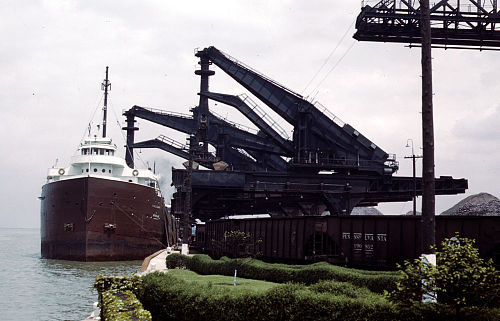
Cuyahoga County Ohio (Page 7) has 50 places on the National Register of Historic Places including 4 places of National significance and 7 places of Statewide significance. Significant places include Rocket Engine Test Facility, Shaker Square, Shaker Village Historic District, Shaker Village Historic District and Pennsylvania Railway Ore Dock.
Prehistoric cultural affiliation(s) include Early,Middle, & Late Whittl and Late Woodland dating back to 1000.
Several famous people are associated with these Cuyahoga County historic places including Mantis James Van Sweringen, Charles Schweinfurth, Alanson Pomeroy and W. P. Southworth.
Some of the country's most noteable architects helped create the Cuyahoga County places including Phillip Small, Carl Rowley, NACA, Emile M. Uhlrich, Burnham & Root, Cudell & Richardson, Ernest J. Bowditch, Wellman-Seaver-Morgan Company, Charles F. Schweinfurth and George H. Hulett. Prominent architectural styles found in Cuyahoga Country are Late 19th And 20th Century Revivals, Classical Revival and Gothic.
Historic Significance:
Event, Architecture/Engineering
Architect, builder, or engineer:
NACA
Architectural Style:
No Style Listed
Area of Significance:
Science, Engineering, Other
Period of Significance:
1975-2000, 1950-1974
Historic Function:
Education, Transportation
Historic Sub-function:
Air-Related, Research Facility
Current Function:
Education, Transportation
Current Sub-function:
Air-Related, Research Facility
The Rocket Engine Test Facility (RETF), located at the NASA Glenn Research Center (formerly the Lewis Research Center) in Cleveland, Ohio, holds national significance as a premier site for the development of rocket propulsion technology during the Space Race and the modern era of space exploration. Listed on the National Register of Historic Places and designated a National Historic Landmark in 1985, the facility was designed and constructed in the mid-1950s and became operational in 1957. It was specifically engineered to safely test full-scale rocket combustion chambers and nozzles using highly volatile, high-energy liquid propellants. The RETF's pioneering research into cryogenic fuels, particularly the combination of liquid hydrogen and liquid oxygen, proved fundamental to overcoming the immense physical challenges of thrust and propulsion required to launch heavy payloads into orbit and deep space.
The technological breakthroughs achieved at the RETF directly supported major United States space initiatives, including the Centaur upper-stage rocket, the Apollo Program's Saturn V rocket, and the Space Shuttle main engines. Through its advanced altitude-simulation capabilities and high-pressure testing systems, researchers at the facility perfected the regeneratively cooled rocket engine design, which prevents engines from melting under extreme combustion temperatures. This work solidified the United States' lead in cryogenic rocket technology and enabled historic achievements, from the landing of astronauts on the Moon to the deployment of interstellar robotic probes. Although the historic test stands were demolished in 2003 to accommodate an expansion of the adjacent Cleveland Hopkins International Airport, the legacy of the RETF remains a cornerstone in the history of aerospace engineering and American space flight.
Historic Significance:
Event, Architecture/Engineering
Architect, builder, or engineer:
Small,Phillip, Rowley,Carl
Architectural Style:
Colonial Revival
Area of Significance:
Transportation, Architecture, Commerce, Community Planning And Development
Period of Significance:
1925-1949
Historic Function:
Commerce/Trade
Historic Sub-function:
Specialty Store
Current Function:
Commerce/Trade
Current Sub-function:
Specialty Store
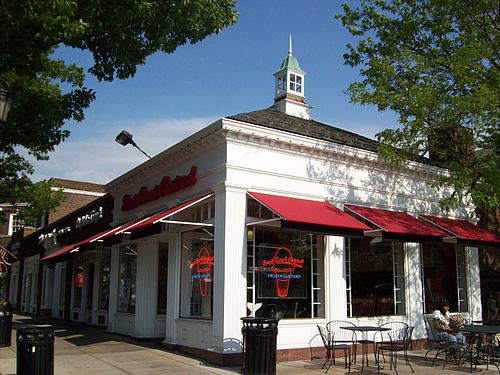
Commissioned by visionary developers Oris Paxton and Mantis James Van Sweringen, Shaker Square was constructed between 1927 and 1929 as the grand commercial gateway to the planned suburban community of Shaker Heights, Ohio. Designed by the prominent Cleveland architectural firm of Philip L. Small and Charles Bacon Rowley, the square features a striking, symmetrical octagonal layout inspired by European public squares, most notably the Place Vendme in Paris. Its buildings are executed in a unified Georgian Colonial Revival style, characterized by red brick facades, white wooden trim, gabled dormers, and slate roofs. Strategically positioned at the intersection of Shaker and Moreland Boulevards, the square was uniquely designed around the tracks of the Shaker Heights Rapid Transit line, seamlessly integrating public rail transit into the heart of a suburban retail district.
Historically, Shaker Square is nationally significant as one of the earliest planned, suburban shopping centers in the United States, and the oldest in the state of Ohio. It represents a watershed moment in American urban planning, pioneering design solutions for the emerging automobile age by placing parking lots discreetly behind the commercial blocks, thereby preserving a cohesive, pedestrian-friendly streetscape at the front. By successfully combining mixed-use retail and residential spaces with both comprehensive rapid transit access and innovative vehicular traffic management, Shaker Square served as a highly influential prototype for modern suburban commercial development across the nation.
Historic Significance:
Event, Information Potential, Architecture/Engineering
Architect, builder, or engineer:
Multiple
Architectural Style:
Late 19th And 20th Century Revivals
Area of Significance:
Architecture, Community Planning And Development, Transportation, Landscape Architecture
Cultural Affiliation:
Shaker
Period of Significance:
1925-1949, 1900-1924
Historic Function:
Domestic, Education, Landscape, Transportation
Historic Sub-function:
Multiple Dwelling, Park, Rail-Related, School, Single Dwelling
Current Function:
Domestic, Education, Landscape, Transportation
Current Sub-function:
Multiple Dwelling, Park, Rail-Related, School, Single Dwelling
The Shaker Village Historic District, spanning Shaker Heights and a portion of Cleveland Heights, Ohio, is nationally significant as one of the earliest, most completely realized, and influential planned transit-oriented garden suburbs in the United States. Developed primarily between 1912 and the late 1930s by the visionary brothers Oris Paxton and Mantis James Van Sweringen, the district was established on land once owned by the North Union Community of Shakers. The Van Sweringens meticulously designed the community to combat urban congestion, seamlessly integrating natural topography, scenic parkways, artificial lakes, and designated commercial centers. Crucial to its success was the incorporation of the Shaker Rapid Transit line, a dedicated light rail system that connected the secluded residential enclave directly to downtown Cleveland, setting a precedent for suburban transit planning nationwide.
Architecturally, the district is an exceptional repository of early 20th-century residential design, featuring high-quality examples of Colonial Revival, Tudor Revival, French Eclectic, and Neoclassical homes. To preserve the neighborhood's aesthetic harmony and elite character, the developers instituted pioneering deed restrictions, rigorous zoning ordinances, and a mandatory architectural review board that controlled everything from building materials and landscaping to paint colors. This comprehensive environmental and architectural control resulted in a remarkably cohesive and enduring landscape. Today, the Shaker Village Historic District stands as a landmark testament to the American Country Suburb movement, reflecting the peak of suburban planning, landscape architecture, and early modern community development.
Historic Significance:
Person, Event, Architecture/Engineering
Architect, builder, or engineer:
Multiple
Architectural Style:
Late 19th And 20th Century Revivals
Historic Person:
Van Sweringen,Mantis James
Significant Year:
1936, 1905
Area of Significance:
Architecture, Landscape Architecture, Community Planning And Development, Transportation
Period of Significance:
1925-1949, 1900-1924
Historic Function:
Domestic, Landscape
Historic Sub-function:
Multiple Dwelling, Park, Single Dwelling
Current Function:
Domestic, Landscape
Current Sub-function:
Multiple Dwelling, Park, Single Dwelling
The Shaker Village Historic District, located in Cuyahoga County, Ohio, holds national significance as one of the country's premier and most influential examples of a planned, transit-oriented garden suburb. Developed primarily between 1912 and the outbreak of World War II by the visionary developers Oris Paxton and Mantis James Van Sweringen, the district was established on land originally occupied by the North Union Community of Shakers. The Van Sweringen brothers envisioned a highly controlled, picturesque residential enclave that would serve as a peaceful retreat from the industrial congestion of nearby Cleveland. Crucial to its success was the integration of a dedicated rapid transit system-the Shaker Heights Rapid Transit line-which directly connected the suburban development to downtown Cleveland, establishing a national model for transit-oriented suburban design.
Architecturally, the historic district is characterized by its exceptionally high standards of design and cohesive aesthetic, which were strictly enforced through protective deeds, zoning laws, and architectural review boards. The neighborhood's layout features winding, tree-lined streets, generous residential setbacks, integrated parklands, and scenic man-made lakes designed to harmonize with the natural topography. The district's housing stock showcases an outstanding collection of early 20th-century revivalist styles-most notably Tudor Revival, Colonial Revival, French Eclectic, and Georgian Revival-designed by prominent local and national architects. Today, the Shaker Village Historic District stands as a remarkably preserved monument to the American "Garden City" movement, reflecting the social, economic, and architectural aspirations of the early suburban era.
















.jpg)


.jpg)


