Washington - Pacific County
Pacific County Washington has 18 places on the National Register of Historic Places including 3 places of National significance and 5 places of Statewide significance. Significant places include Cape Disappointment Historic District, Chinook Point, Klipsan Beach Life Saving Station, Columbia River Quarantine Station and Oysterville Historic District.

Several famous people are associated with these Pacific County historic places including Capt. Robert Grey, Robert Hamilton Espy, Fred Colbert and Guy Selwin Allison.

Some of the country's most noteable architects helped create the Pacific County places including Matthew Bros., Ritten,F.W., & Co., Wilson,C. Lewis, & Co., Northwest Bridge Works, Charles Beaver, W.T. Stapleton, Henry Christianson, J.H. Lovering, Zhetley Matthews and H.F. Wilder. Prominent architectural styles found in Pacific Country are Late Victorian, Bungalow/Craftsman and Classical Revival.

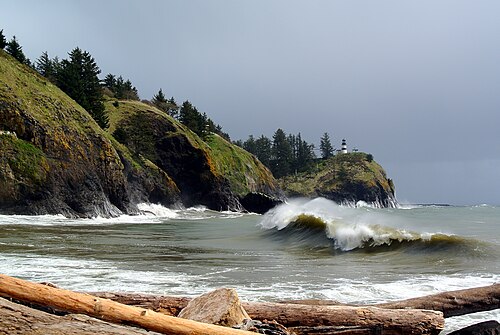
Cape Disappointment Historic District (added 1975 - - #75001864)
From 0.5 mi. S of Ilwaco to WA/OR boundary , Ilwaco
Adbar, CC BY-SA 3.0, via Wikimedia Commons
Historic Significance:
Information Potential, Event
Area of Significance:
Historic - Non-Aboriginal, Engineering, Transportation, Military, Commerce, Communications
Cultural Affiliation:
American
Period of Significance:
1900-1924, 1875-1899, 1850-1874, 1800-1824
Owner:
State, Federal
Historic Function:
Defense, Transportation
Historic Sub-function:
Fortification, Water-Related
Current Function:
Landscape, Transportation
Current Sub-function:
Park, Water-Related
More Information:
Situated at the extreme southwestern tip of Washington state where the Columbia River meets the Pacific Ocean, the Cape Disappointment Historic District is of outstanding national significance for its associations with early exploration, maritime transportation, and military history. The cape was a pivotal landmark for maritime fur traders, Spanish and English explorers, and most notably, the Lewis and Clark Expedition, which reached this destination in November 1805, marking the successful completion of their transcontinental journey. Officially listed on the National Register of Historic Places in 1975, the district encompasses a dramatic landscape that has played a vital role in the commercial and political development of the Pacific Northwest.

The district's built environment reflects over a century of maritime safety and coastal defense efforts. It features the Cape Disappointment Lighthouse, constructed in 1856 as the oldest operating lighthouse in the Pacific Northwest, and the North Head Lighthouse, built in 1898 to provide additional guidance through the treacherous waters known as the "Graveyard of the Pacific." Additionally, the district contains the remnants of Fort Canby (originally Fort Cape Disappointment), established during the Civil War to protect the mouth of the Columbia River and later expanded during World Wars I and II. Together, these historic structures and defense installations document the evolution of federal efforts to secure and facilitate commerce along one of the nation's most crucial and dangerous waterways.
Chinook Point (added 1966 - - #66000747)
5 mi. SE of Fort Columbia Historical State Park on U.S. 101 , Chinook
Murderbike~commonswiki, Public domain, via Wikimedia Commons
Historic Significance:
Event, Person
Historic Person:
Grey,Capt. Robert
Significant Year:
1846, 1792
Area of Significance:
Exploration/Settlement, Military
Period of Significance:
1825-1849, 1800-1824, 1750-1799
Owner:
State
Historic Function:
Landscape, Transportation
Historic Sub-function:
Conservation Area, Water-Related
Current Function:
Landscape
Current Sub-function:
Park
More Information:
Chinook Point, situated on the north shore of the Columbia River estuary in Pacific County, Washington, is a site of profound historical significance marking pivotal moments in the European exploration, trade, and indigenous history of the Pacific Northwest. In 1792, Captain Robert Gray, commanding the Columbia Rediviva, anchored near this prominent headland, securing his legacy as the first Euro-American to enter and document the Columbia River, which subsequently established early United States claims to the Oregon Country. A little over a decade later, in November 1805, the Lewis and Clark Expedition reached the area, establishing "Station Camp" nearby and documenting their long-awaited arrival at the Pacific Ocean. Long before these explorers arrived, Chinook Point was a vital political and commercial hub for the Chinook Indian Nation, under the leadership of the influential Chief Comcomly, who played a critical role in facilitating early maritime fur trade and diplomatic relations in the region.

In addition to its exploration-era prominence, the site transitioned into a strategic military installation at the turn of the 20th century. Established as Fort Columbia between 1896 and 1904, the post was constructed as part of the Endicott Period coastal defense system designed to safeguard the mouth of the Columbia River from foreign naval threats. The fort remained active through both World War I and World War II, housing coastal artillery batteries and serving as a vital component of the Harbor Defenses of the Columbia. Designated a National Historic Landmark in 1970, Chinook Point is today preserved within Fort Columbia State Park, where its historic military barracks, gun batteries, and unaltered natural vistas stand as a testament to more than two centuries of American exploration, indigenous sovereignty, and coastal defense.
Colbert House (added 1977 - - #77001347)
Quaker and Lake Sts. , Ilwaco
Werewombat, CC BY-SA 3.0, via Wikimedia Commons
Historic Significance:
Person, Architecture/Engineering
Architect, builder, or engineer:
Unknown
Architectural Style:
No Style Listed
Historic Person:
Colbert,Fred
Significant Year:
1883, 1870
Area of Significance:
Exploration/Settlement, Architecture, Commerce
Period of Significance:
1875-1899, 1850-1874
Owner:
Private
Historic Function:
Domestic
Historic Sub-function:
Single Dwelling
Current Function:
Domestic
Current Sub-function:
Single Dwelling
More Information:
Columbia River Quarantine Station (added 1980 - - #80004007)
Also known as Knappton Cove Camp
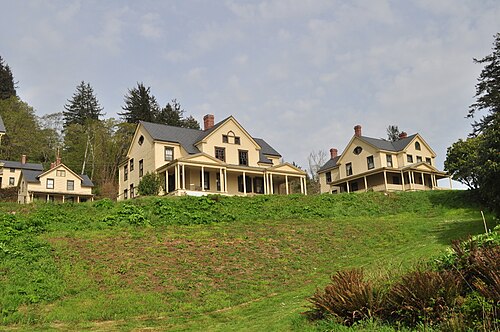
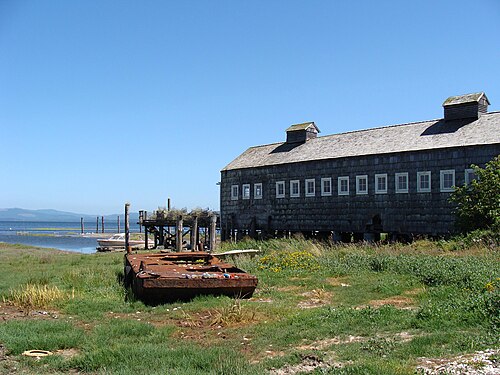
SW of Knappton on WA 401 , Knappton
Ipoellet, CC BY-SA 3.0, via Wikimedia Commons
Historic Significance:
Event
Area of Significance:
Exploration/Settlement, Health/Medicine, Industry
Period of Significance:
1900-1924, 1875-1899
Owner:
Private
Historic Function:
Government, Health Care
Current Function:
Domestic
Current Sub-function:
Single Dwelling
More Information:
Klipsan Beach Life Saving Station (added 1979 - - #79002546)
Also known as The Barracks
WA 103 , Klipsan Beach
File Upload Bot (Magnus Manske), Public domain, via Wikimedia Commons
Historic Significance:
Event
Area of Significance:
Transportation, Military, Social History
Period of Significance:
1925-1949, 1900-1924, 1875-1899
Owner:
Private
Historic Function:
Defense, Government
Historic Sub-function:
Coast Guard Facility
Current Function:
Commerce/Trade, Domestic
Current Sub-function:
Camp, Specialty Store
More Information:
The Klipsan Beach Life Saving Station, established in 1912 on the Long Beach Peninsula in Pacific County, Washington, holds immense historical significance as one of the very few surviving life-saving stations on the Pacific Coast. Positioned along a notoriously treacherous stretch of coastline known as the "Graveyard of the Pacific," the station was constructed by the U.S. Life-Saving Service to safeguard mariners navigating the hazardous waters near the mouth of the Columbia River. Operating during an era of bustling maritime commerce, the station's resident keeper and crew of surfmen performed daring rescues using specialized surfboats and beach apparatus, saving countless lives from shipwrecks until the station was decommissioned in 1947.

Architecturally, the complex is a remarkably intact representation of the standardized, Shingle-style designs utilized by the U.S. Life-Saving Service in the early 20th century. The property features the main two-story station house, which served as the keeper's quarters and administrative hub, alongside supporting structures such as the original boathouse. In 1915, the station transitioned to the newly formed U.S. Coast Guard, continuing its vital search-and-rescue and coastal defense missions through both World Wars. Today, the Klipsan Beach Life Saving Station stands as a rare physical monument to the bravery of early coastal rescue crews and the evolution of federal maritime safety in the Pacific Northwest.
Lumber Exchange Building (added 1988 - - #88000604)
Robert Bush Dr./US 101 and Willapa Ave. , South Bend
Ipoellet, Public domain, via Wikimedia Commons
Historic Significance:
Event, Architecture/Engineering
Architect, builder, or engineer:
Wilder,H.F., Lovering,J.H.
Architectural Style:
Classical Revival
Area of Significance:
Commerce, Architecture
Period of Significance:
1925-1949, 1900-1924
Owner:
Private
Historic Function:
Commerce/Trade
Historic Sub-function:
Business
Current Function:
Commerce/Trade
Current Sub-function:
Business
More Information:
Oysterville Historic District (added 1976 - - #76001898)
WA 103 , Oysterville
DarkRavag3r, CC BY-SA 3.0, via Wikimedia Commons
Historic Significance:
Person, Event, Architecture/Engineering
Architect, builder, or engineer:
Multiple
Architectural Style:
Other, Gothic Revival
Historic Person:
Espy,Robert Hamilton
Significant Year:
1878, 1907, 1865
Area of Significance:
Exploration/Settlement, Architecture, Commerce, Industry
Period of Significance:
1900-1924, 1875-1899, 1850-1874
Owner:
Private, Local
Historic Function:
Domestic, Government
Historic Sub-function:
Courthouse, Single Dwelling
Current Function:
Domestic
Current Sub-function:
Single Dwelling
More Information:
Pacific County Courthouse (added 1977 - - #77001348)
Cowlitz and Vine Sts. , South Bend
Flickr upload bot, CC BY 2.0, via Wikimedia Commons
Historic Significance:
Event, Architecture/Engineering
Architect, builder, or engineer:
Northwest Bridge Works, Wilson,C. Lewis, & Co.
Architectural Style:
Other, Late 19th And 20th Century Revivals
Area of Significance:
Politics/Government, Architecture
Period of Significance:
1900-1924
Owner:
Local
Historic Function:
Government
Historic Sub-function:
Courthouse
Current Function:
Government
Current Sub-function:
Courthouse
More Information:
Raymond Public Library (added 1979 - - #79002548)
507 Duryea St. , Raymond
Jmabel, CC BY-SA 3.0, via Wikimedia Commons
Historic Significance:
Event, Architecture/Engineering
Architect, builder, or engineer:
Stapleton,W.T., Torbitt,Arch N.
Architectural Style:
Other
Area of Significance:
Architecture, Social History
Period of Significance:
1925-1949
Owner:
Local
Historic Function:
Education
Historic Sub-function:
Library
Current Function:
Education
Current Sub-function:
Library
More Information:
Raymond Theater (added 1991 - - #91000540)
325 N. Third St. , Raymond
Jmabel, CC BY-SA 3.0, via Wikimedia Commons
Historic Significance:
Event, Architecture/Engineering
Architect, builder, or engineer:
Scheer,B.F., Grant,William R.
Architectural Style:
Renaissance
Area of Significance:
Entertainment/Recreation, Architecture
Period of Significance:
1925-1949
Owner:
Local
Historic Function:
Recreation And Culture
Historic Sub-function:
Theater
Current Function:
Recreation And Culture, Work In Progress
Current Sub-function:
Theater
More Information:
Russell House (added 1977 - - #77001349)
902 E. Water St. , South Bend
Jon Roanhaus, CC BY-SA 3.0, via Wikimedia Commons
Historic Significance:
Architecture/Engineering
Architect, builder, or engineer:
Russell,John
Architectural Style:
Queen Anne
Area of Significance:
Architecture
Period of Significance:
1875-1899
Owner:
Private
Historic Function:
Domestic
Historic Sub-function:
Single Dwelling
Current Function:
Domestic
Current Sub-function:
Single Dwelling
More Information:
Schulderman, Peter, House (added 1988 - - #88000597)
Thirty-seventh and K Sts. , Seaview
Jon Roanhaus, CC BY-SA 3.0, via Wikimedia Commons
Historic Significance:
Architecture/Engineering
Architect, builder, or engineer:
Christianson,Henry
Architectural Style:
Late Victorian
Area of Significance:
Architecture
Period of Significance:
1875-1899
Owner:
Private
Historic Function:
Domestic
Historic Sub-function:
Secondary Structure, Single Dwelling
Current Function:
Domestic
Current Sub-function:
Single Dwelling
More Information:
Shelburne Hotel (added 1978 - - #78002765)
WA 103 and K St. , Seaview
Werewombat, CC BY-SA 3.0, via Wikimedia Commons
Historic Significance:
Event
Area of Significance:
Commerce
Period of Significance:
1900-1924, 1875-1899
Owner:
Private
Historic Function:
Domestic
Historic Sub-function:
Hotel, Single Dwelling
Current Function:
Domestic
Current Sub-function:
Hotel
More Information:
South Bend Carnegie Public Library (added 1982 - - #82004269)
Also known as South Bend Timberland Library
W. 1st and Pacific Sts. , South Bend
Jon Roanhaus, CC BY-SA 3.0, via Wikimedia Commons
Historic Significance:
Event, Architecture/Engineering
Architect, builder, or engineer:
Walsh,James T.
Architectural Style:
No Style Listed
Area of Significance:
Education, Architecture, Social History
Period of Significance:
1900-1924
Owner:
Local
Historic Function:
Education
Historic Sub-function:
Library
Current Function:
Education
Current Sub-function:
Library
More Information:
Tokeland Hotel (added 1978 - - #78002766)
Kindred Ave. and Hotel Rd. , Tokeland
Jmabel, CC BY-SA 3.0, via Wikimedia Commons
Historic Significance:
Event
Area of Significance:
Commerce
Period of Significance:
1900-1924, 1875-1899
Owner:
Private
Historic Function:
Domestic
Historic Sub-function:
Hotel, Single Dwelling
Current Function:
Domestic
Current Sub-function:
Hotel
More Information:
US Post Office--Raymond Main (added 1991 - - #91000654)
406 Duryea St. , Raymond
Jmabel, CC BY-SA 3.0, via Wikimedia Commons
Historic Significance:
Event, Architecture/Engineering
Architect, builder, or engineer:
Simon,Louis A.
Architectural Style:
Colonial Revival
Area of Significance:
Politics/Government, Architecture
Period of Significance:
1925-1949
Owner:
Federal
Historic Function:
Government
Historic Sub-function:
Post Office
Current Function:
Government
Current Sub-function:
Post Office
More Information:
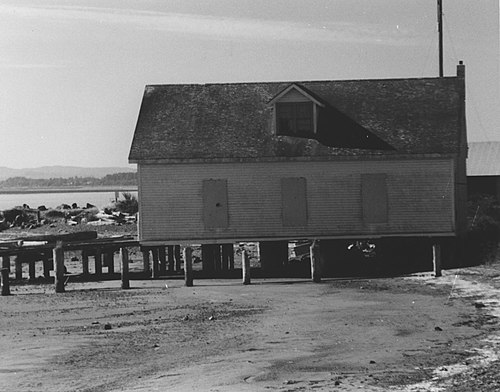
Willapa Bay Boathouse (added 1986 - - #86000358)
Also known as U.S. Coast Guard Station,Willapa Bay
US Coast Guard Station, Willapa Bay , Tokeland
Ipoellet, Public domain, via Wikimedia Commons
Historic Significance:
Event
Area of Significance:
Transportation, Maritime History
Period of Significance:
1925-1949
Owner:
Federal
Historic Function:
Transportation
Historic Sub-function:
Water-Related
Current Function:
Vacant/Not In Use
More Information:
Wreckage, The (added 1979 - - #79002547)
256th Pl. , Ocean Park
Jon Roanhaus, CC BY-SA 3.0, via Wikimedia Commons
Historic Significance:
Person, Architecture/Engineering
Architect, builder, or engineer:
Matthews,Zhetley, Allison,Guy Selwin
Architectural Style:
No Style Listed
Historic Person:
Allison,Guy Selwin
Significant Year:
1912
Area of Significance:
Art, Architecture
Period of Significance:
1900-1924
Owner:
Private
Historic Function:
Domestic
Historic Sub-function:
Single Dwelling
Current Function:
Domestic
Current Sub-function:
Single Dwelling
More Information:
Return to Top
Select a Different Washington County (map)
Adams
Asotin
Benton
Chelan
Clallam
Clark
Columbia
Cowlitz
Douglas
Ferry
Franklin
Garfield
Grant
Grays Harbor
Island
Jefferson
King
Kitsap
Kittitas
Klickitat
Lewis
Lincoln
Mason
Okanogan
Pacific
Pend Oreille
Pierce
San Juan
Skagit
Skamania
Snohomish
Spokane
Stevens
Thurston
Wahkiakum
Walla Walla
Whatcom
Whitman
Yakima
Select a Different State (map)
Alabama
Alaska
Arizona
Arkansas
California
Colorado
Connecticut
Delaware
District Of Columbia
Florida
Georgia
Hawaii
Idaho
Illinois
Indiana
Iowa
Kansas
Kentucky
Louisiana
Maine
Maryland
Massachusetts
Michigan
Minnesota
Mississippi
Missouri
Montana
Nebraska
Nevada
New Hampshire
New Jersey
New Mexico
New York
North Carolina
North Dakota
Ohio
Oklahoma
Oregon
Pennsylvania
Rhode Island
South Carolina
South Dakota
Tennessee
Texas
Utah
Vermont
Virginia
Washington
West Virginia
Wisconsin
Wyoming
Return to Home Page