Indiana - St. Joseph County - Historic Districts
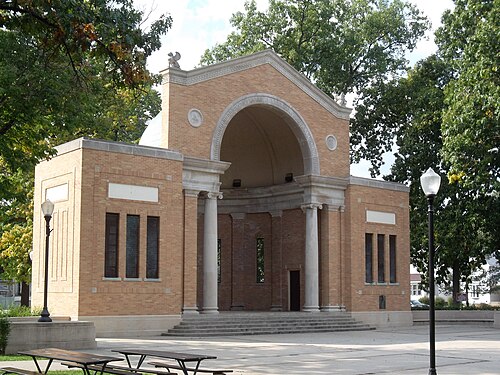
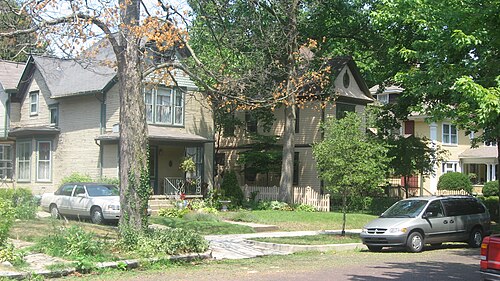
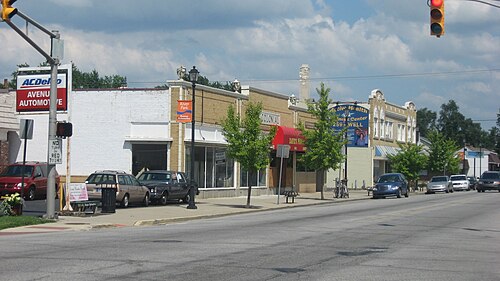
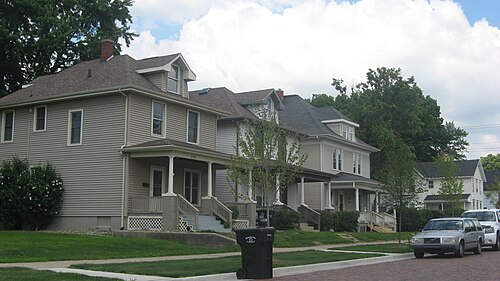
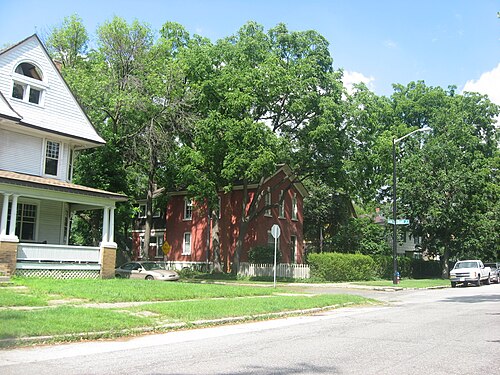
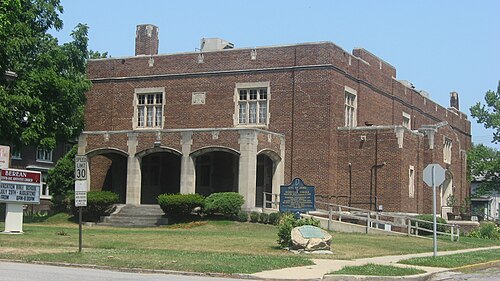
St. Joseph County Indiana (Historic Districts) has 18 places on the National Register of Historic Places including 1 place of National significance and 1 place of Statewide significance. Significant places include University of Notre Dame: Main and South Quadrangles and West Washington Historic District, Battell Park Historic District, Chapin Park Historic District and Colonial Gardens Commercial Historic District.
The famous person / is associated with one of more of the St. Joseph County historic places.
Some of the country's most noteable architects helped create the St. Joseph County places including N. Roy Shambleau, W.W. Schnieder, et al. Austin and Shambleau, WPA, Wortherman & Steinbach, George Edward Kessler, Karl Schwartz and Works Progress Administration. Prominent architectural styles found in St. Joseph Country are Queen Anne, Classical Revival and Italianate.
Historic Significance:
Architecture/Engineering, Event
Architect, builder, or engineer:
Multiple
Architectural Style:
Mixed (More Than 2 Styles From Different Periods)
Area of Significance:
Education, Architecture, Exploration/Settlement, Landscape Architecture, Religion
Period of Significance:
1825-1849
Historic Function:
Domestic, Education, Recreation And Culture, Religion
Historic Sub-function:
College, Multiple Dwelling, Religious Structure
Current Function:
Domestic, Education, Recreation And Culture, Religion
Current Sub-function:
College, Multiple Dwelling, Religious Structure
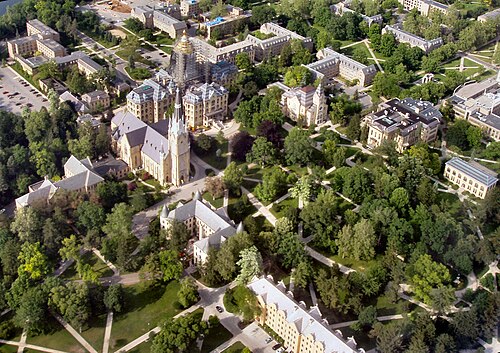
The University of Notre Dame: Main and South Quadrangles historic district, listed on the National Register of Historic Places in 1978, represents the historical and spiritual heart of one of the nation's premier Catholic institutions of higher learning. Founded in 1842 by Father Edward Sorin and the Congregation of Holy Cross, the campus developed from a modest missionary outpost in northern Indiana into a highly influential educational center. The Main and South Quadrangles delineate the university's physical evolution during the late 19th and early 20th centuries, reflecting the growth of Catholic education in the United States. The district encapsulates the ideals of its founders, balancing religious devotion, academic excellence, and community life within a carefully planned, park-like collegiate landscape.
Architecturally, the district is distinguished by an exceptional collection of late-Victorian, Gothic Revival, and Collegiate Gothic buildings that showcase the work of notable 19th-century architects. Prominent among these is the iconic Main Building, reconstructed in 1879 by Willoughby J. Edbrooke following a devastating fire its towering golden dome topped with a statue of the Virgin Mary serves as the university's most enduring symbol. Adjacent to the Main Building stands the Basilica of the Sacred Heart, a masterpiece of Neo-Gothic architecture completed in 1888, featuring exquisite stained-glass windows and murals by Vatican painter Luigi Gregori. Together with Washington Hall, Crowley Hall, and the surrounding historic residence halls, the structures of the Main and South Quadrangles form a cohesive and visually striking architectural ensemble that remains central to Notre Dame's identity and heritage.