Vanderburgh County Indiana (Historic Districts) has 7 places on the National Register of Historic Places including 1 place of National significance. Significant places include Riverside Historic District, Bayard Park Historic District, Culver Historic District, Evansville Downtown Historic District and Independence Historic District.
Some of the country's most noteable architects helped create the Vanderburgh County places including John Richard Anderson, Clarke, Levi, et al., Boyle, Harry, and Co., Henry Babcock Veatch and Anderson & Veatch. Prominent architectural styles found in Vanderburgh Country are Bungalow/Craftsman, Colonial Revival and Italianate.
Historic Significance:
Architecture/Engineering
Architect, builder, or engineer:
Multiple
Architectural Style:
Mixed (More Than 2 Styles From Different Periods)
Area of Significance:
Architecture
Period of Significance:
1900-1924, 1875-1899, 1850-1874
Historic Function:
Domestic
Historic Sub-function:
Single Dwelling
Current Function:
Commerce/Trade, Domestic
Current Sub-function:
Multiple Dwelling, Single Dwelling
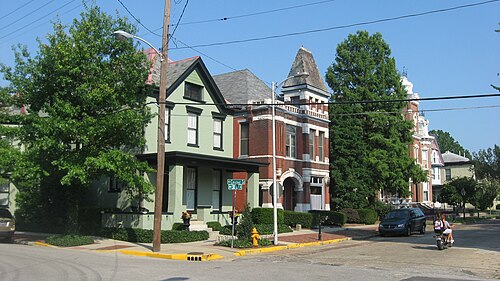
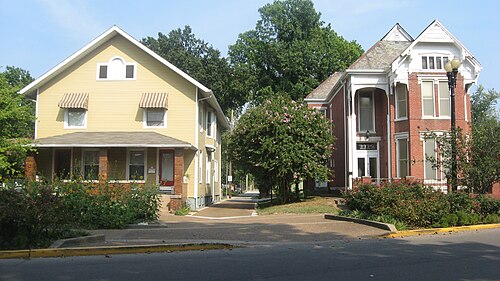
The Riverside Historic District, situated along the Ohio River in Evansville, Indiana, is a remarkably well-preserved residential enclave that serves as a premier showcase of 19th- and early 20th-century architectural styles. Added to the National Register of Historic Places in 1978, the district features a visually stunning array of high-style residential architecture dating primarily from the 1870s through the 1915s. Walking through its tree-lined, brick-paved streets, visitors can observe outstanding examples of Federal, Italianate, Second Empire, Queen Anne, Gothic Revival, and Tudor Revival styles. The crown jewel of the district is the Reitz Home, an incredibly opulent French Second Empire mansion that remains one of the state's finest examples of the style and is open to the public as a museum.
Historically, the Riverside Historic District reflects the immense wealth and rapid economic expansion Evansville experienced during its golden age of river commerce and industrial manufacturing. Positioned close to both the downtown commercial center and the bustling riverfront, this neighborhood became the preferred address for Evansville's civic leaders, merchants, and industrialists-most notably the city's powerful lumber barons who leveraged the area's rich hardwood forests. The grandeur and diverse scale of the homes within the district directly mirror the socio-economic achievements of the citizens who shaped Evansville's growth into a major regional hub. Today, the district stands as a vital physical monument to the community's prosperous past and its dedication to historic preservation.