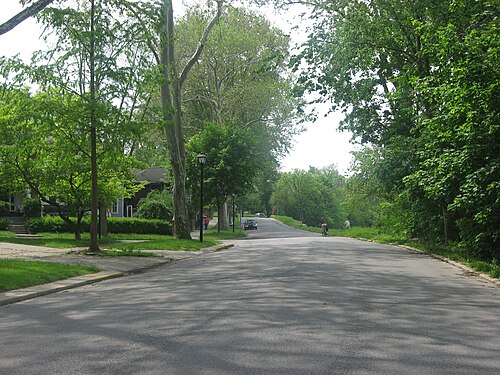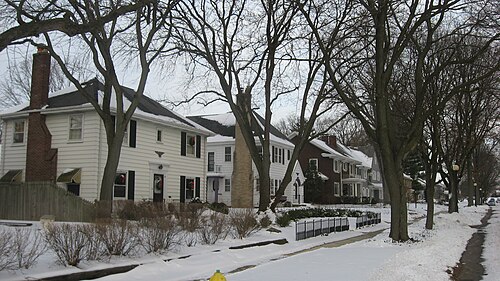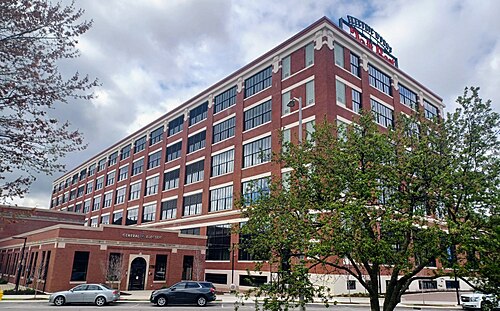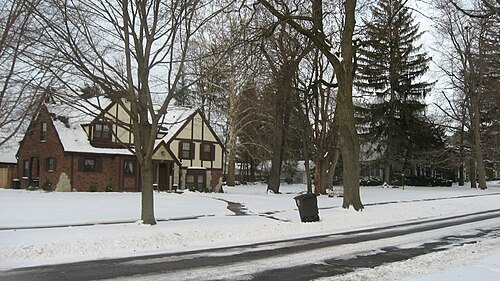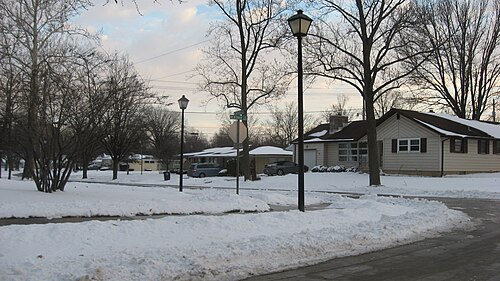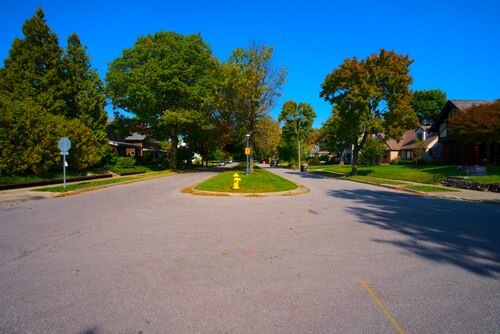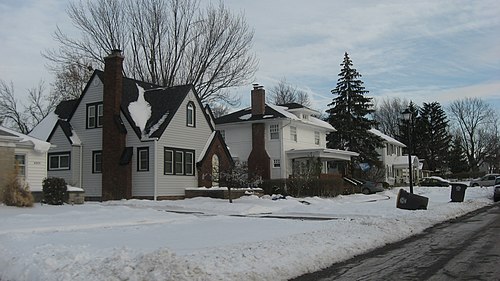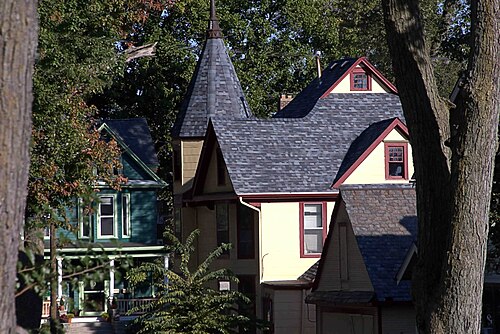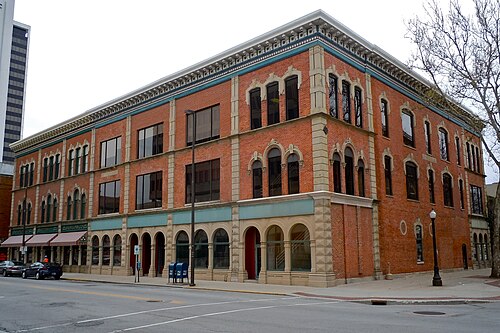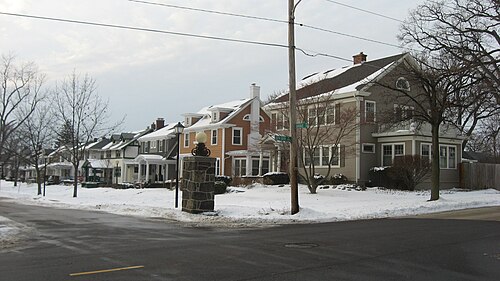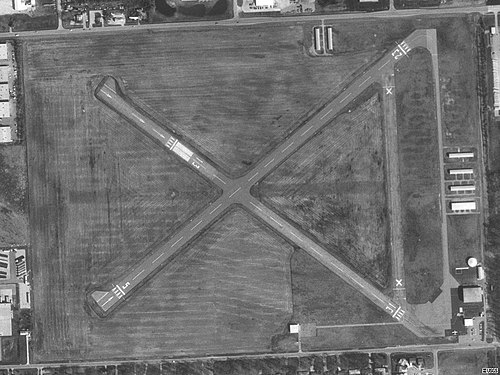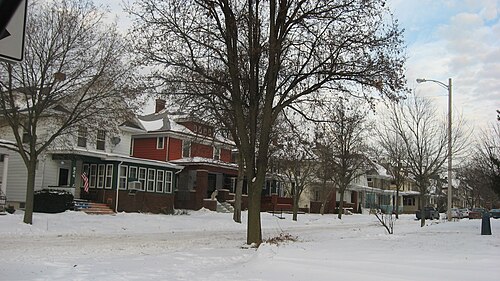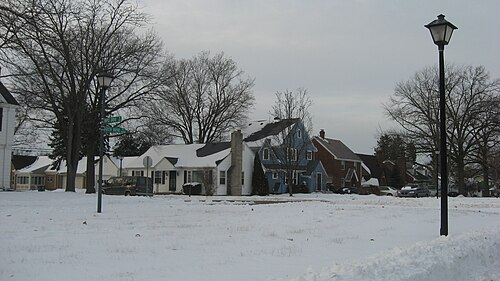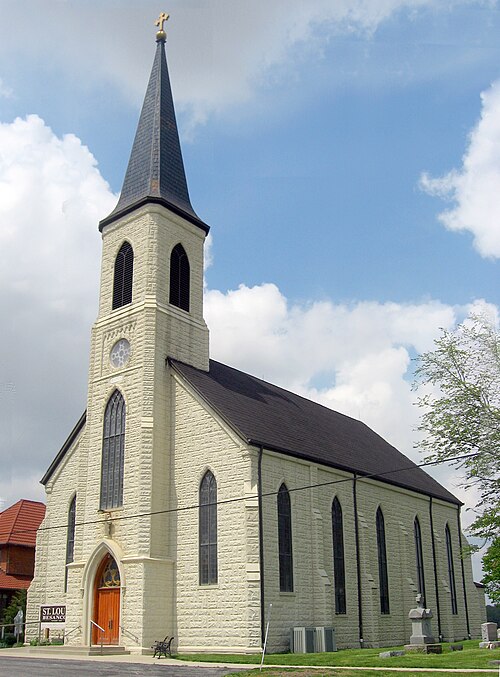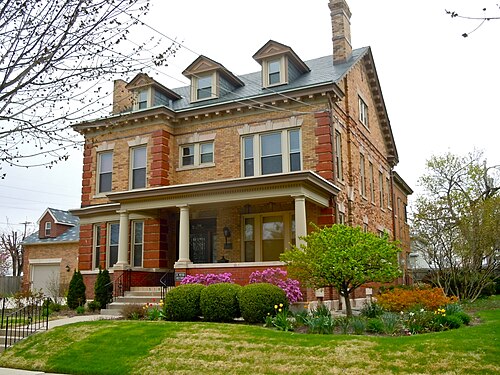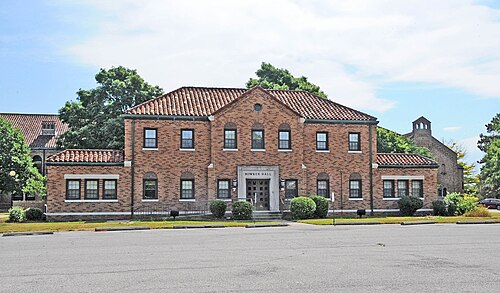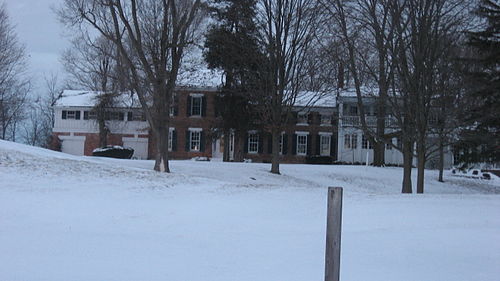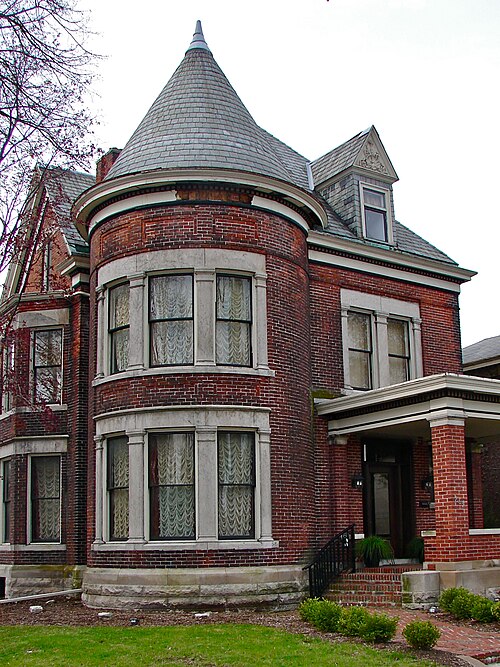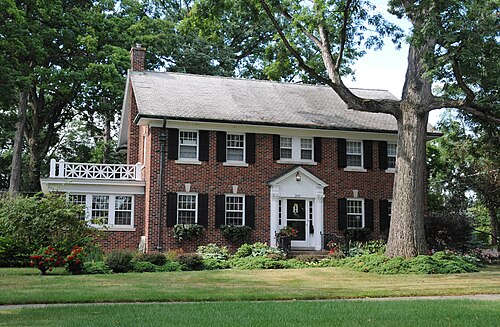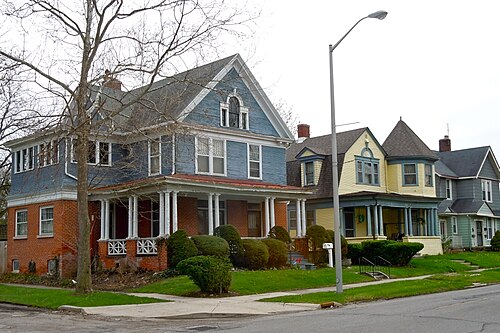
Allen County Indiana (Historic Districts) has 21 places on the National Register of Historic Places including 1 place of National significance and 1 place of Statewide significance. Significant places include Smith Field and Southwood Park Historic District, Dutch Ridge Historic District, Forest Park Boulevard Historic District and Illsley Place--West Rudisill Historic District.
The famous person Randall Perry is associated with one of more of the Allen County historic places.
Some of the country's most noteable architects helped create the Allen County places including Walter d'Arcy Ryan, A.K. Hofer, Albert H. Schaaf, Alvin M. Strauss, Marshall Mahurin, Jeese Vermilyea, Pohlmeyer & Pohlmeyer, Joel Roberts Ninde, Lloyd Larrimore and Peter Dederichs Jr.. Prominent architectural styles found in Allen Country are Colonial Revival, Late 19th And 20th Century Revivals and Bungalow/Craftsman.
Historic Significance:
Event, Architecture/Engineering
Architect, builder, or engineer:
Hofer, A.K., Ryan, Walter d'Arcy
Architectural Style:
Other
Area of Significance:
Entertainment/Recreation, Transportation, Architecture, Engineering, Education, Military
Period of Significance:
1950-1974, 1925-1949, 1900-1924
Historic Function:
Defense, Education, Industry/Processing/Extraction, Recreation And Culture, Transportation
Historic Sub-function:
Air Facility, Air-Related, Manufacturing Facility, Rail-Related, School, Sport Facility
Current Function:
Agriculture/Subsistence, Commerce/Trade, Education, Recreation And Culture, Transportation
Current Sub-function:
Agricultural Fields, Air-Related, Business, School, Sport Facility
Smith Field, historically known as the Paul Baer Municipal Airport, is a highly significant landmark in Fort Wayne, Indiana, representing the pioneering era of commercial and municipal aviation in the United States. Established in 1919, it stands as one of the oldest continuously operating airports in the state and served as Fort Wayne's primary municipal airport during the Golden Age of Aviation. Originally named in honor of Paul Baer, a Fort Wayne native and America's first World War I flying ace, the airfield was renamed Smith Field in 1947 to honor Arthur "Art" Smith, another legendary local aviator and pioneer airmail pilot. The field played a vital role in the early development of the nation's airmail service, serving as a critical stop on transcontinental routes and fostering the growth of civil aviation in the Midwest.
The historic district encompasses a remarkably preserved collection of aviation infrastructure that reflects the architectural and functional trends of early 20th-century airports. Prominent among these is the main hangar and administration building, constructed in approximately 1930, which exhibits a distinctive blend of utilitarian design with Tudor Revival and Art Deco architectural details. Along with its historic beacon tower, the site retains a high degree of physical integrity, capturing the spirit and technology of the pre-World War II aviation boom. Listed on the National Register of Historic Places in 2002, Smith Field remains an active general aviation airport and a living monument to Fort Wayne's rich aerial heritage.