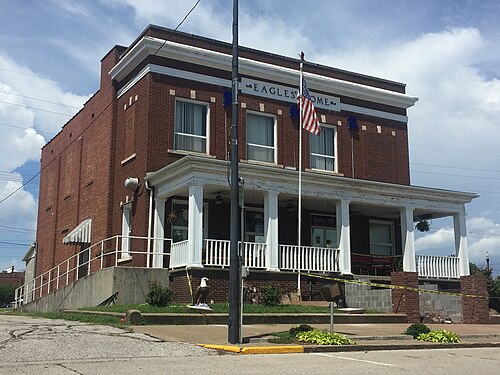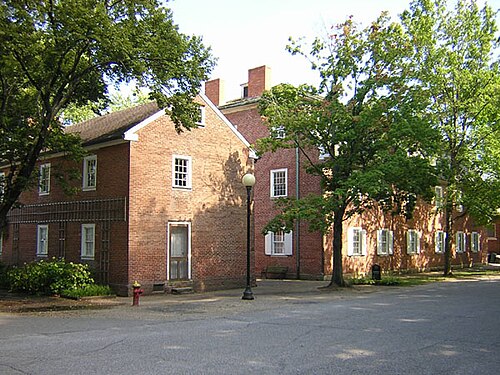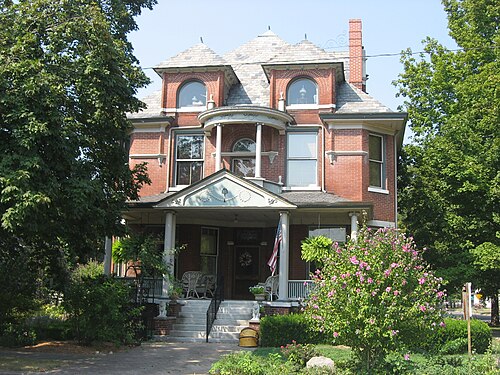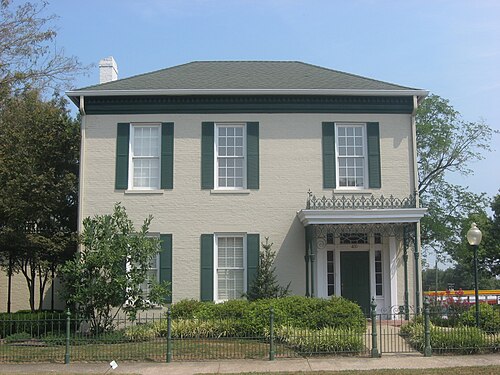
Posey County Indiana (Historic Districts) has 6 places on the National Register of Historic Places including 1 place of National significance and 2 places of Statewide significance. Significant places include New Harmony Historic District, Hovey Lake Archaeological District and New Harmony Historic District, Mount Vernon Downtown Historic District and Thomas, Amon Clarence, House.
Prehistoric cultural affiliation(s) include Caborn-Welborn Phase, Late Mississippian, American and Rural dating back to 1000.
Several famous people are associated with these Posey County historic places including Robert Owen and Robert Owen.
Some of the country's most noteable architects helped create the Posey County places including Philip Johnson and F. & Sons Behrick. Prominent architectural styles found in Posey Country are Greek Revival, Late 19th And 20th Century Revivals and Late Victorian.
Historic Significance:
Person, Event
Historic Person:
Owen,Robert
Significant Year:
1824, 1827, 1815
Area of Significance:
Social History
Period of Significance:
1825-1849, 1800-1824
Historic Function:
Domestic, Education, Funerary, Social
Historic Sub-function:
Cemetery, Civic, Multiple Dwelling, Single Dwelling
Current Function:
Commerce/Trade, Education, Recreation And Culture, Religion
Current Sub-function:
Museum
The New Harmony Historic District, designated a National Historic Landmark in 1965, is of outstanding national significance as the site of two of America's most important 19th-century utopian communal experiments. Established in 1814 by the Harmony Society, a group of German Lutheran separatists led by George Rapp, the town of Harmonie flourished as a highly organized, industrious, and deeply religious commune. During their decade of occupancy, the Harmonists constructed over 180 highly functional and distinctive buildings, combining traditional German timber-framing techniques with American frontier styles. The physical layout of the town and surviving structures, such as the massive brick Harmonist Community House No. 2 and the Rapp-Owen Granary, stand as unparalleled architectural testaments to the group's economic success, self-sufficiency, and communal lifestyle before they returned to Pennsylvania in 1825.
Following the Harmonist departure, the town was purchased by Welsh social reformer Robert Owen, who renamed it New Harmony to launch a secular, cooperative "Community of Equality" aimed at reforming society through education, science, and equal opportunity. Although Owen's social experiment dissolved within a few years due to internal factionalism, the community became a premier American intellectual center. Under the influence of partner William Maclure, New Harmony attracted many of the nation's leading scientists, educators, and reformers. The town pioneered significant social advancements, including the establishment of the first infant school, the first free public school system, and the first free public library in the United States. Additionally, it served as the headquarters for the early United States Geological Survey under David Dale Owen, cementing the district's legacy as a vital cradle of American scientific inquiry and progressive education.