Spencer County Indiana (Historic Districts) has 2 places on the National Register of Historic Places including 1 place of National significance. Significant places include Lincoln Boyhood National Memorial, Lincoln Pioneer Village.
The famous person Abraham Lincoln is associated with one of more of the Spencer County historic places.
Some of the country's most noteable architects helped create the Spencer County places including Frederick Law Olmstead, Richard E. Bishop, WPA/FERA and George Honig. Prominent architectural styles found in Spencer Country are .
Historic Significance:
Person, Architecture/Engineering, Event
Architect, builder, or engineer:
Olmstead,Frederick Law, Bishop,Richard E.
Architectural Style:
No Style Listed
Historic Person:
Lincoln,Abraham
Significant Year:
1962, 1816
Area of Significance:
Art, Politics/Government, Landscape Architecture, Agriculture, Architecture
Period of Significance:
1950-1974, 1925-1949, 1900-1924, 1875-1899, 1800-1824
Historic Function:
Agriculture/Subsistence, Agriculture/Subsistence, Domestic, Funerary, Landscape
Historic Sub-function:
Cemetery, Park, Single Dwelling
Current Function:
Agriculture/Subsistence, Funerary, Landscape, Recreation And Culture
Current Sub-function:
Agricultural Outbuildings, Cemetery, Museum, Park
The Lincoln Boyhood National Memorial preserves the farmstead where Abraham Lincoln lived for fourteen of his most formative years, from 1816 to 1830. Moving to the rugged Indiana wilderness from Kentucky at the age of seven, Lincoln grew from a young boy into a young man on this Spencer County property, experiencing the frontier hardships and triumphs that profoundly shaped his character, intellect, and worldview. It was on this land that he helped his father clear the dense hardwood forests, educated himself by firelight, and suffered the devastating loss of his mother, Nancy Hanks Lincoln, who died of milk sickness in 1818 and is buried on a wooded knoll within the park. This site holds exceptional national significance for its direct association with the youth of the nation's sixteenth president, capturing the environment that forged his legendary resilience and work ethic.
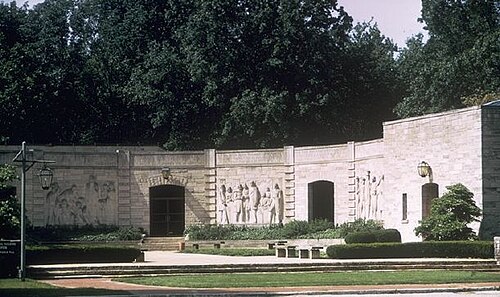
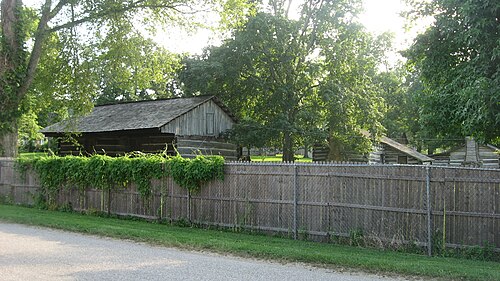
Designated as a National Historic Landmark and listed on the National Register of Historic Places in 1966, the memorial landscape features a blend of historic, commemorative, and architectural elements. Key features include the Cabin Site Memorial, which marks the archaeological footprint of the Lincoln home with a symbolic bronze casting of the cabin's sill logs and hearth, and a reconstructed living historical farm that recreates pioneer life of the 1820s. The park's commemorative heart is the Memorial Visitor Center, completed in 1943. Designed by architect Richard Adolph Lawson, the Indiana limestone building features five monumental bas-relief panels sculpted by E. H. Daniels that depict different phases of Lincoln's life, standing as a masterwork of commemorative architecture that honors the President's enduring connection to the Hoosier State.