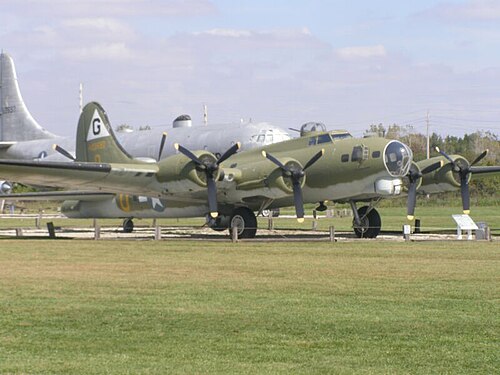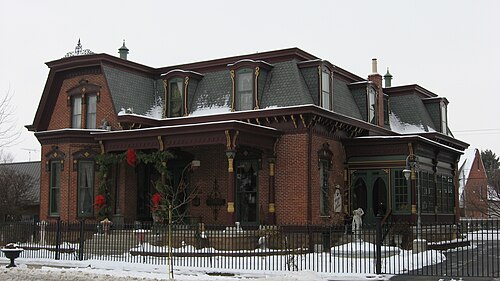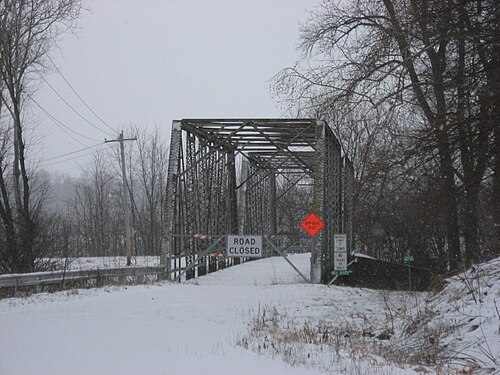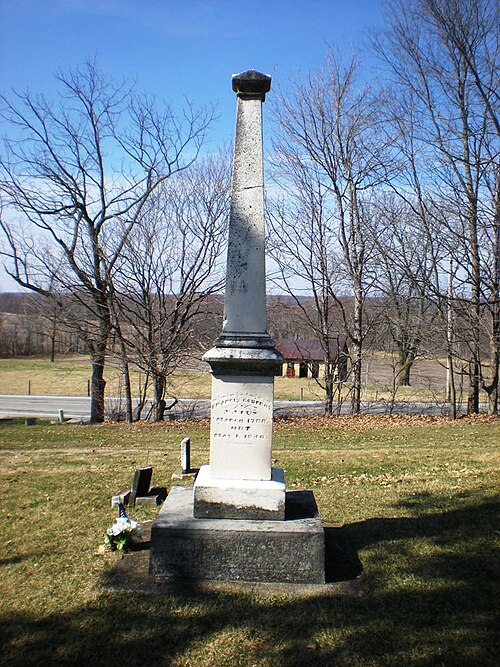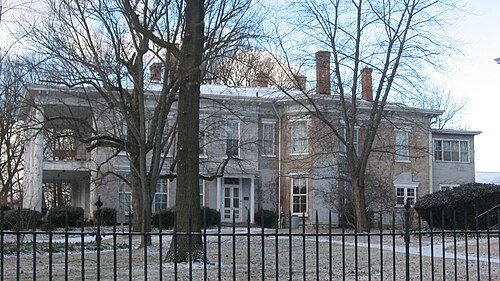
Miami County Indiana has 17 places on the National Register of Historic Places including 2 places of National significance and 3 places of Statewide significance. Significant places include B-17G "Flying Fortress" No. 44-83690, Wallace Circus and American Circus Corporation Winter Quarters, Elkenberry Bridge, Godfroy, Francis, Cemetery and Shirk--Edwards House.
Several famous people are associated with these Miami County historic places including Marie Stuart Edwards and James Omar Cole.
Some of the country's most noteable architects helped create the Miami County places including Douglas Aircraft Co., Rochester Bridge Co., Merritt Harrison, Wrought Iron Bridge Co., H.G. Bowstead, J. B. Goodall, Price and McLanahan, Lehman & Schmitt and P.H. McCormack. Prominent architectural styles found in Miami Country are Classical Revival, Italianate and Art Deco.
Historic Significance:
Event
Area of Significance:
Entertainment/Recreation
Period of Significance:
1925-1949, 1900-1924, 1875-1899
Historic Function:
Agriculture/Subsistence, Commerce/Trade
Historic Sub-function:
Animal Facility, Restaurant
Current Function:
Agriculture/Subsistence
Current Sub-function:
Animal Facility
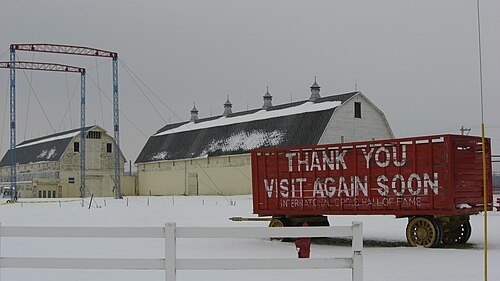
Located along the Mississinewa River near Peru in Miami County, Indiana, the Wallace Circus and American Circus Corporation Winter Quarters stands as a premier physical monument to the golden age of the American circus. Established in 1891 by legendary circus proprietor Benjamin Wallace, the sprawling property served as the winter home, training ground, and maintenance facility for some of the world's largest traveling shows. Today, the surviving complex includes several unique, massive wooden barns specifically engineered to house exotic animals, repair and store ornate circus wagons, and provide practice space for acrobats and aerialists during the off-season. Designated as a National Historic Landmark, it remains one of the exceptionally rare surviving examples of a nineteenth-century circus winter headquarters in the United States.
The site's historical significance is deeply rooted in its association with the American Circus Corporation, which by the 1920s had consolidated major shows such as the Hagenbeck-Wallace, Sells-Floto, and John Robinson circuses to become the chief rival of Ringling Bros. and Barnum & Bailey. At its peak, the Peru quarters housed over a thousand workers and hundreds of wild animals, securing the city's reputation as the "Circus Capital of the World." The property's operational era effectively ended after the Ringling syndicate purchased the corporation's assets in 1929 and subsequently consolidated operations elsewhere during the Great Depression. The winter quarters endure as a vital testament to the colossal scale, organizational complexity, and immense cultural impact of the American circus industry at its zenith.