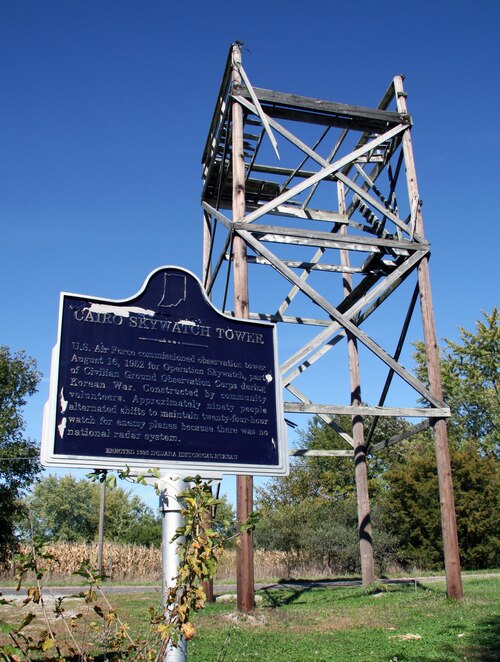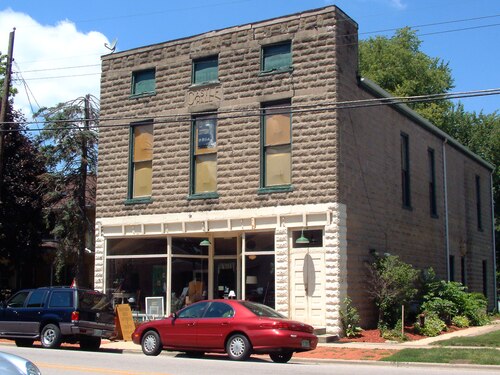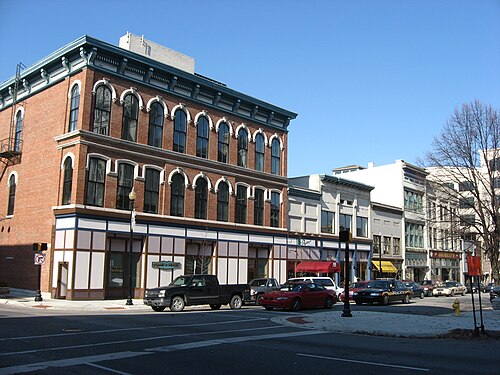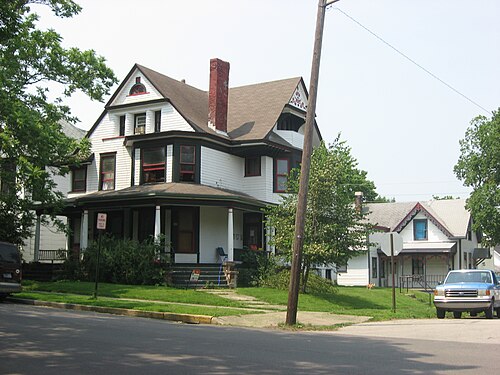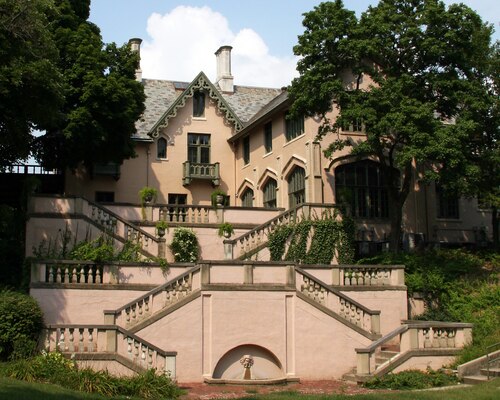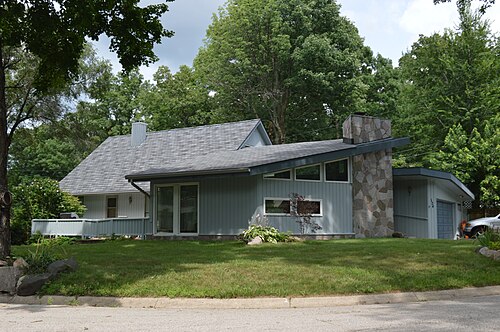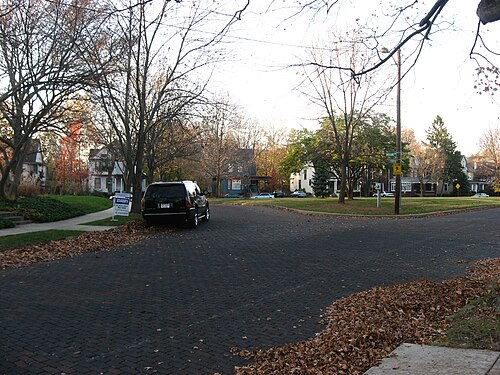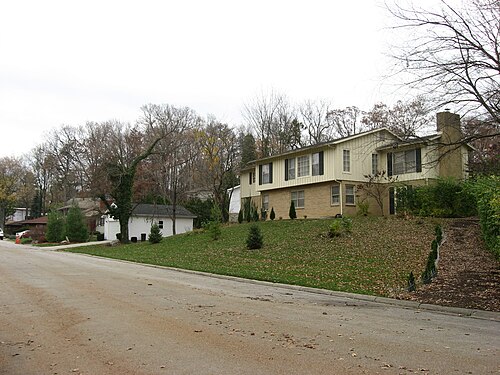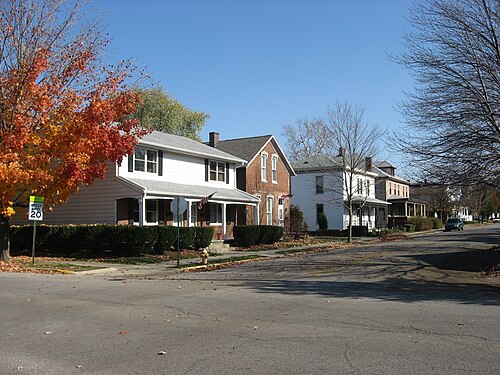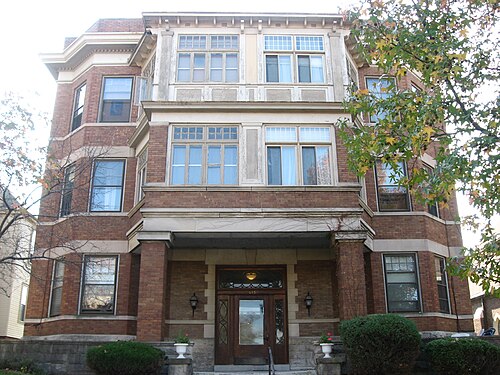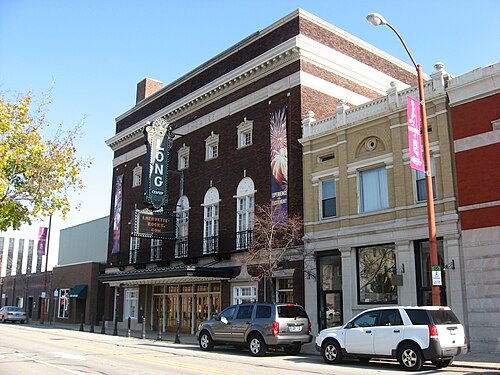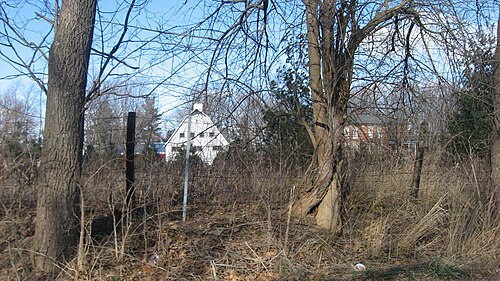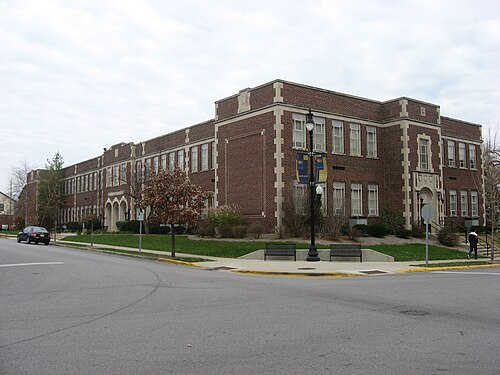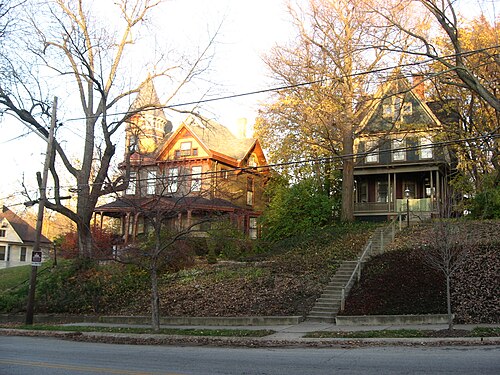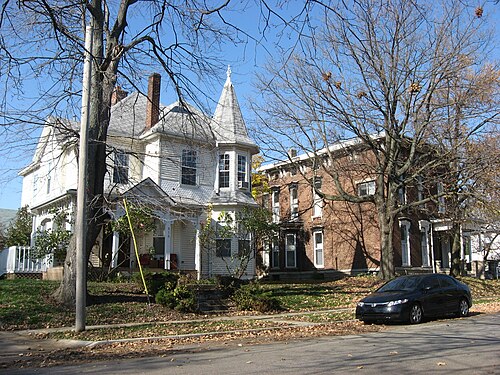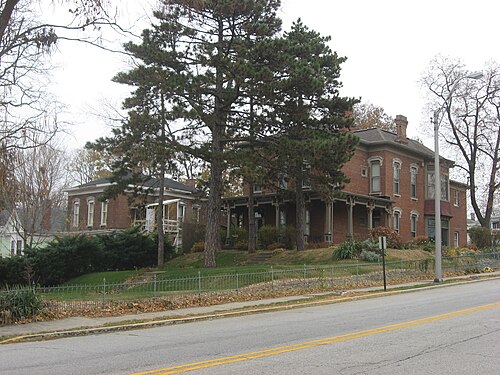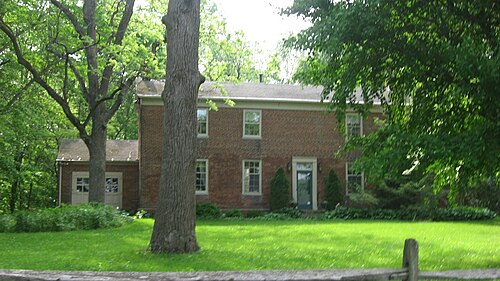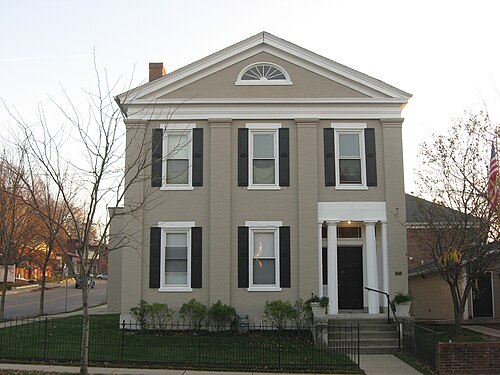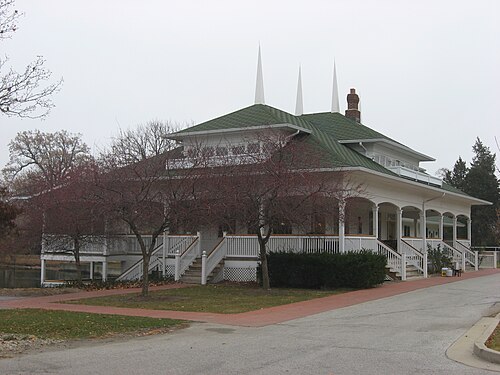
Tippecanoe County Indiana has 50 places on the National Register of Historic Places including 2 places of National significance and 7 places of Statewide significance. Significant places include Christian, John E. and Catherine E., House, Tippecanoe Battlefield, Battle Ground Historic District, Cairo Skywatch Tower and Fort Ouiatenon.
Several famous people are associated with these Tippecanoe County historic places including William Henry Harrison, Joseph Madison Hershey, Jesse Andrew and Cyrus Ball.
Some of the country's most noteable architects helped create the Tippecanoe County places including Frank Lloyd Wright, Frank Woods, Farman & Pearce, Jacob Welschbillig, James F. Alexander, Robert Frost Daggett, Oliver W. Jr. Pierce, George Halstead, Charles W. Nicol and Edna Ruby. Prominent architectural styles found in Tippecanoe Country are Italianate, Greek Revival and Queen Anne.
Historic Significance:
Architecture/Engineering
Architect, builder, or engineer:
Woods,Frank, Wright,Frank Lloyd
Architectural Style:
Other, Modern Movement
Area of Significance:
Architecture
Period of Significance:
1950-1974
Historic Function:
Domestic
Historic Sub-function:
Single Dwelling
Current Function:
Domestic
Current Sub-function:
Single Dwelling
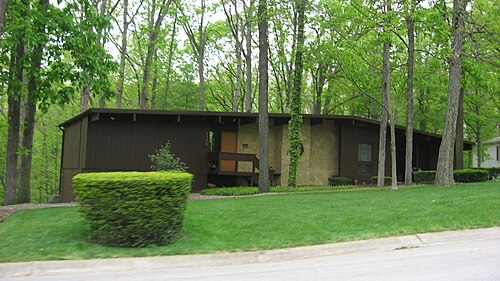
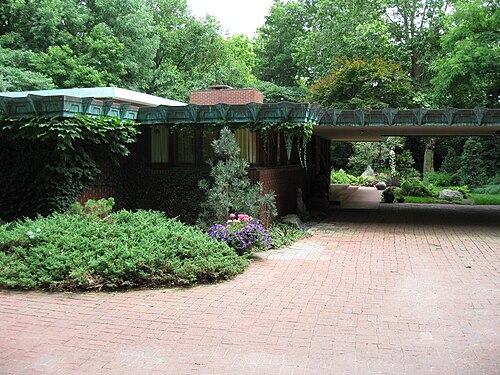
The John E. and Catherine E. Christian House, popularly known as "Samara," is a nationally significant masterpiece of mid-century residential architecture located in West Lafayette, Tippecanoe County, Indiana. Designed by the master architect Frank Lloyd Wright and constructed between 1954 and 1956, the home is one of the most fully realized and pristine examples of Wright's Usonian design philosophy. Usonian homes were envisioned by Wright as affordable, organic, and uniquely American residences for middle-class families. Recognizing its extraordinary architectural integrity and its status as a complete, late-period work of a master architect, the property was designated a National Historic Landmark in 2015.
The house was commissioned by Dr. John E. Christian, a pharmaceutical chemistry professor at Purdue University, and his wife, Catherine. Wright customized the home around the couple's specific needs and the natural landscape, naming it "Samara" after the winged seeds of the local pine and maple trees. This botanical motif is integrated throughout the home's design, appearing in the clerestory windows, copper fascia, and interior furnishings. What distinguishes Samara from many other Wright-designed homes is the sheer completeness of the commission Wright and his associates designed not only the physical structure but also the custom furniture, carpets, upholstery, linens, and even tableware. Because the Christian family lived in and meticulously maintained the residence for decades according to Wright's precise specifications, the home stands as an invaluable, three-dimensional document of Wright's holistic approach to organic design.
Historic Significance:
Event
Area of Significance:
Politics/Government, Military
Period of Significance:
1800-1824
Historic Function:
Defense
Historic Sub-function:
Battle Site
Current Function:
Landscape, Recreation And Culture
Current Sub-function:
Park
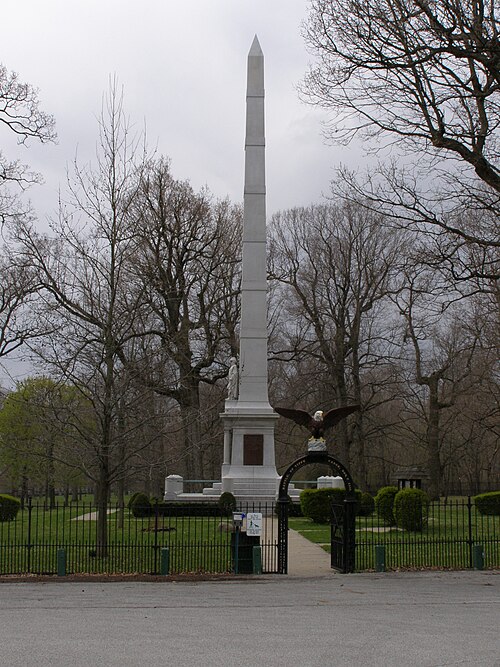
The Tippecanoe Battlefield, designated a National Historic Landmark in 1960 and listed on the National Register of Historic Places in 1966, marks the site of the pivotal Battle of Tippecanoe fought on November 7, 1811. Located in present-day Battle Ground, Indiana, this ninety-six-acre historic site witnessed the pre-dawn clash between United States forces, commanded by Indiana Territorial Governor William Henry Harrison, and warriors of the pan-tribal Native American confederacy organized by the Shawnee leader Tecumseh and his brother, Tenskwatawa (known as "The Prophet"). The conflict arose from escalating tensions over rapid American encroachment onto Native lands in the Northwest Territory. Harrison's eventual tactical victory resulted in the abandonment and subsequent destruction of the nearby Native capital of Prophetstown, severely fracturing the immediate strength of the pan-tribal alliance.
The historical significance of the battlefield extends far beyond the immediate tactical outcome, serving as a direct catalyst for the War of 1812 in the western theater, as many displaced Native American forces subsequently allied with the British against the United States. Additionally, the battle became a cornerstone of American political folklore it propelled William Henry Harrison into the national spotlight, forging a military legacy that he successfully leveraged decades later to win the presidency in 1840 under the famous campaign slogan "Tippecanoe and Tyler Too." Today, the preserved site features a towering eighty-five-foot white marble obelisk monument dedicated in 1908, a history museum, and a scenic nature area, serving as a solemn commemorative landscape that honors the fallen on both sides and interprets a critical turning point in the struggle for control of the American frontier.