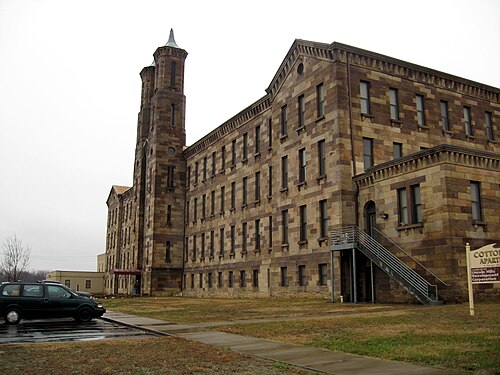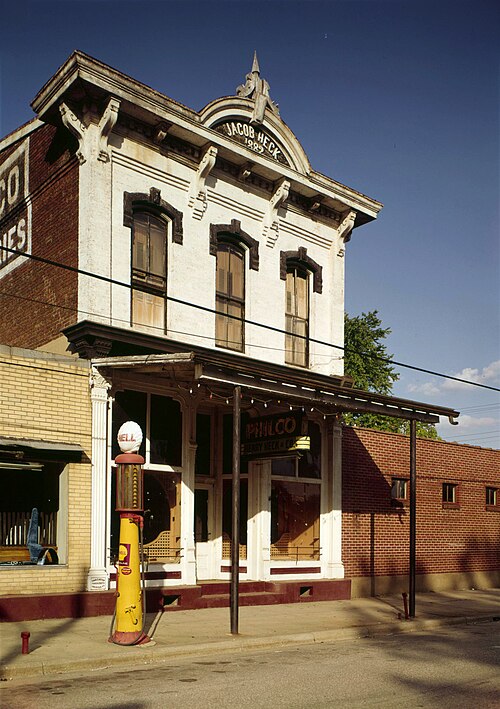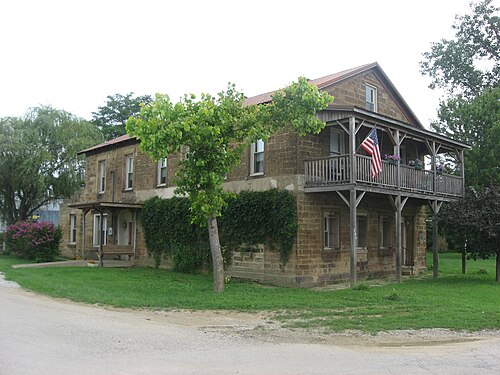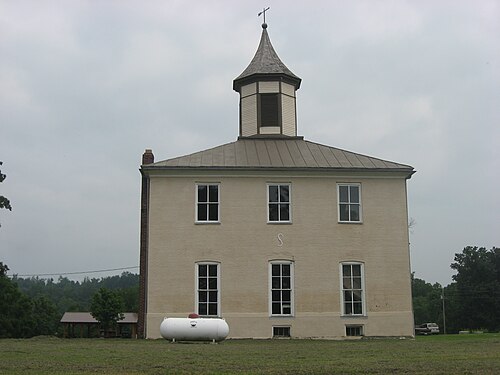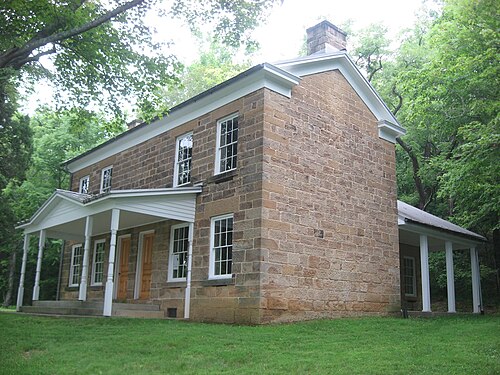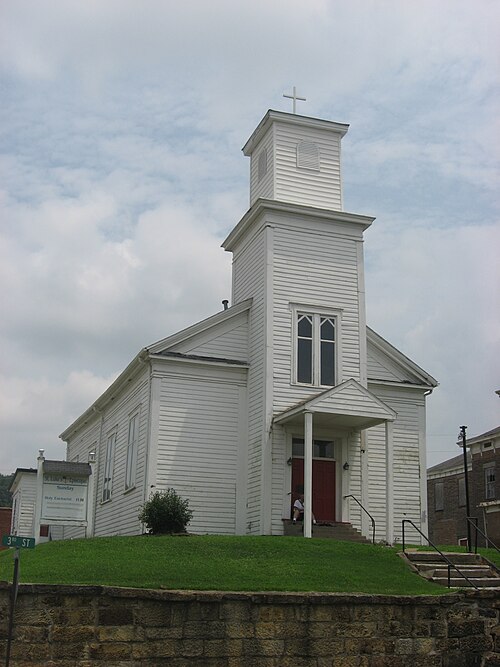
Perry County Indiana has 8 places on the National Register of Historic Places including 1 place of National significance and 2 places of Statewide significance. Significant places include Cannelton Cotton Mills, Cannelton Cotton Mills and Rockhouse Cliffs Rock Shelters (12PE98; 12PE100), Cannelton Historic District and Hall of Tell City Lodge, No. 206, IOOF.
Prehistoric cultural affiliation(s) include Woodland, Archaic and Middle Mississippian dating back to 8999 BC.
Some of the country's most noteable architects helped create the Perry County places including Thomas A. Tefft, Alexander McGregor, J.J. Bengle, Frank Schlotter and John Bacon Hutchings. Prominent architectural styles found in Perry Country are Greek Revival, Romanesque and Bungalow/Craftsman.
Historic Significance:
Architecture/Engineering, Event
Architect, builder, or engineer:
McGregor,Alexander, Tefft,Thomas A.
Architectural Style:
Other, Romanesque
Area of Significance:
Industry, Architecture
Period of Significance:
1850-1874, 1825-1849
Historic Function:
Domestic, Industry/Processing/Extraction
Historic Sub-function:
Manufacturing Facility, Single Dwelling
Current Function:
Domestic, Industry/Processing/Extraction, Vacant/Not In Use
Current Sub-function:
Manufacturing Facility, Single Dwelling
Built between 1849 and 1851, the Cannelton Cotton Mills, also known as the Indiana Cotton Mill, stands as an extraordinary masterpiece of mid-19th-century industrial architecture. Designed by the acclaimed Rhode Island architect Thomas Alexander Tefft, the massive four-story structure is constructed of locally quarried, dressed buff-colored sandstone in a striking Romanesque Revival style. The mill's most defining visual features are its pair of soaring, 100-foot octagonal towers-one serving as a stairwell and the other as a water tower and fire escape-which dominate the local skyline along the Ohio River. At the time of its completion, the mill was celebrated as the largest industrial building west of the Allegheny Mountains, representing a pinnacle of pre-Civil War engineering and architectural design.
Beyond its architectural grandeur, the Cannelton Cotton Mills holds immense historical significance as a bold experiment to transplant New England's intensive textile manufacturing system to the coal-rich regions of the Midwest. Backed by eastern capitalists, the mill sought to combine the proximity of Southern cotton fields with the cheap, abundant energy of local coalfields and the convenience of Ohio River shipping. Though the grand vision of turning Cannelton into a western rival of Lowell, Massachusetts, never fully materialized, the mill operated successfully for over a century, employing generations of local residents until its closure in 1954. Designated a National Historic Landmark in 1986, the site remains an iconic monument to early American industrialization, corporate ambition, and successful modern adaptive reuse.