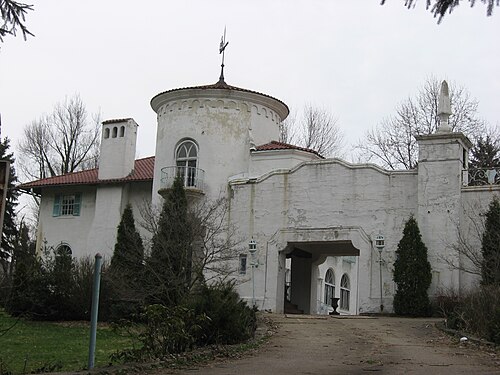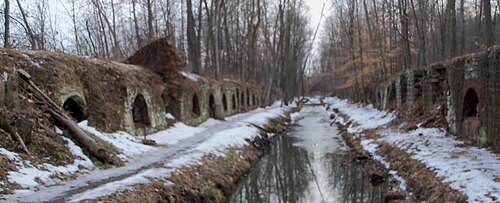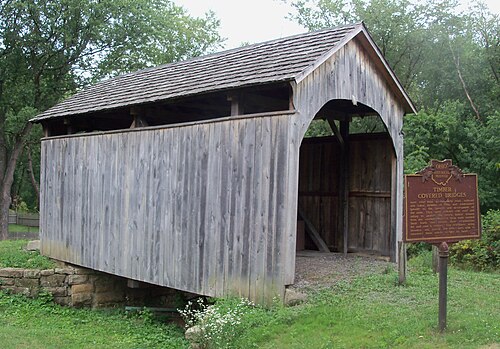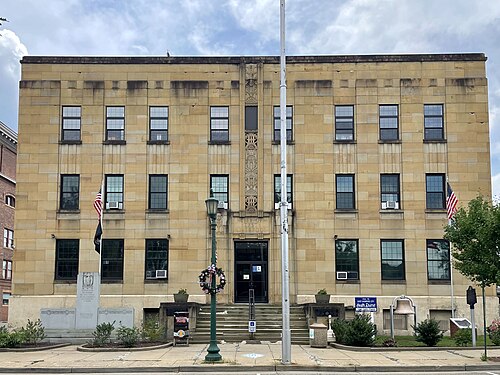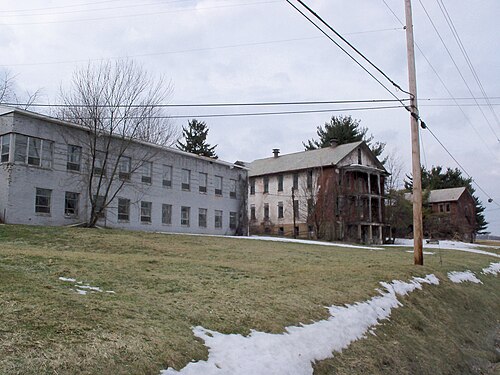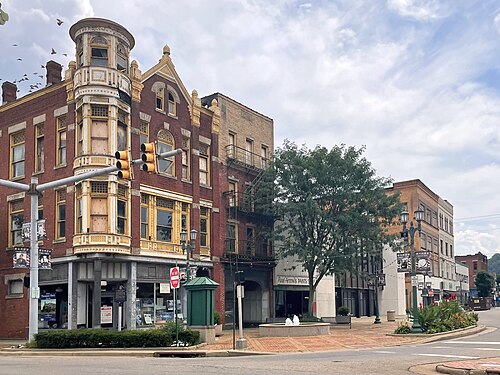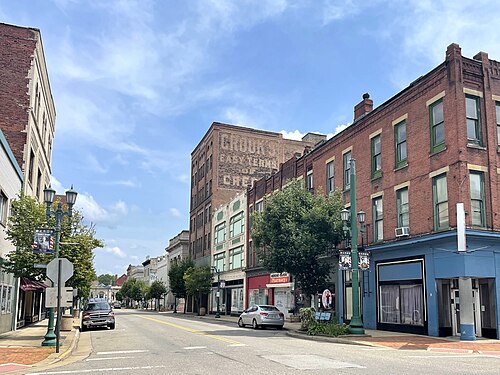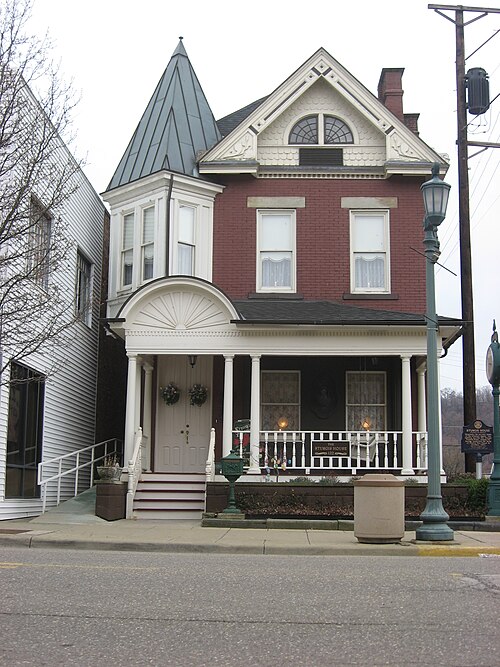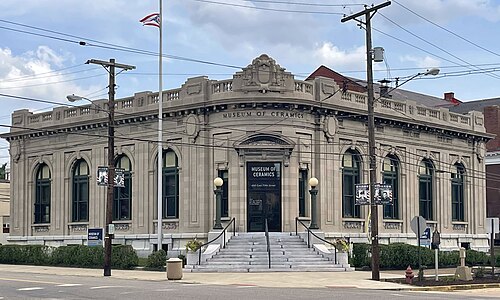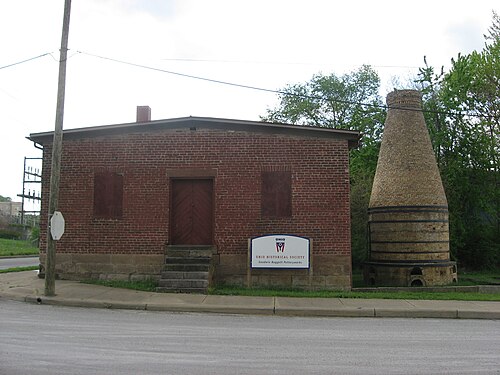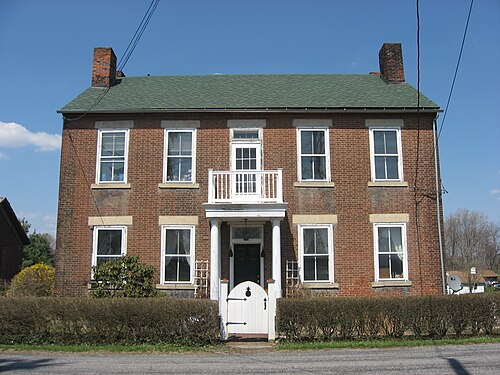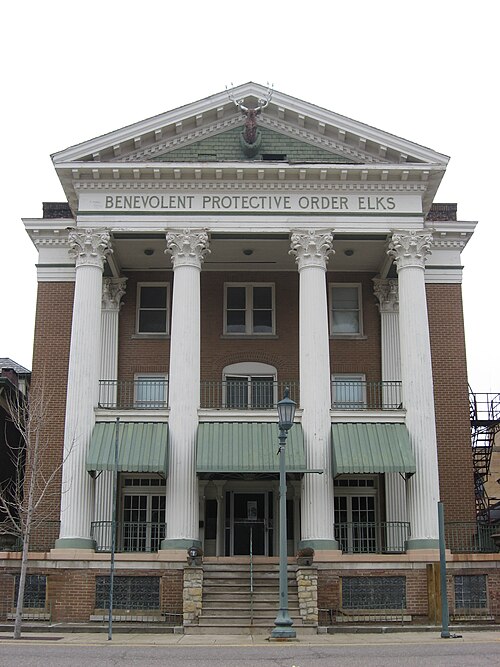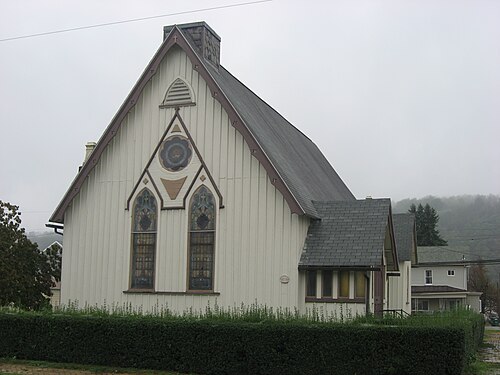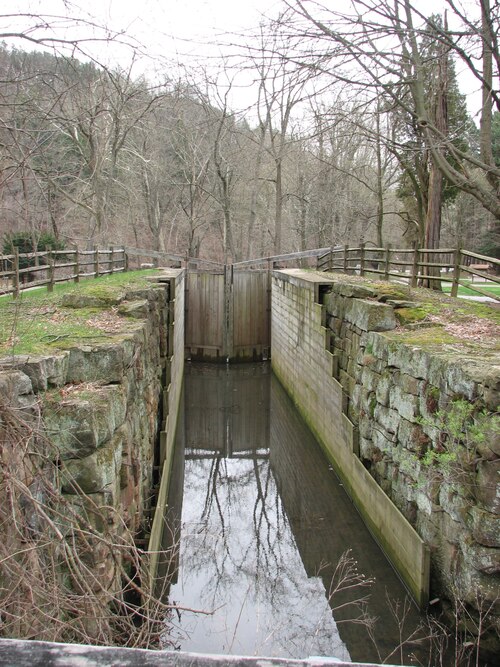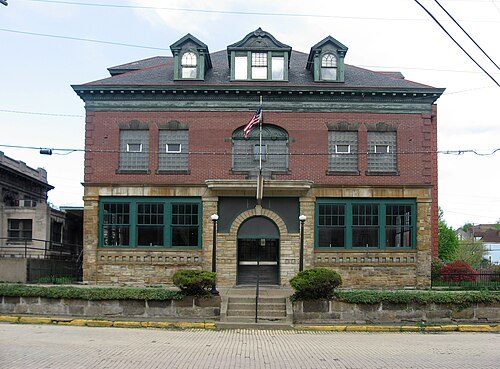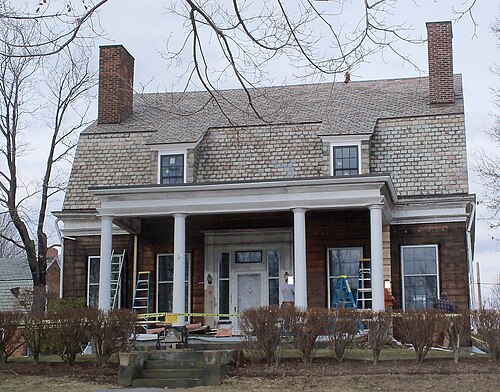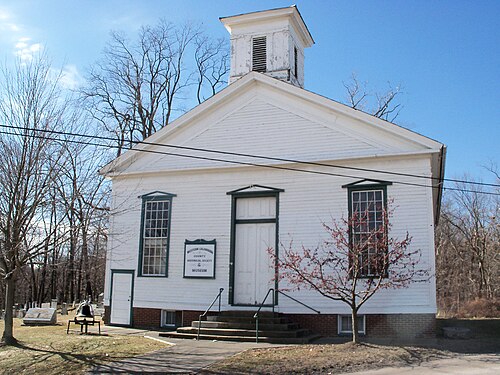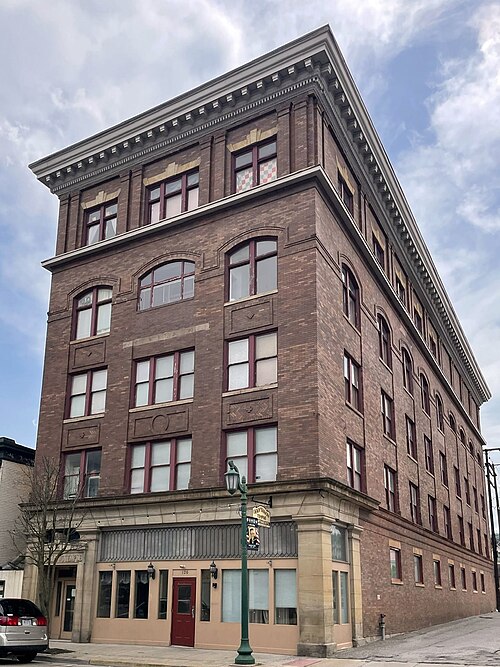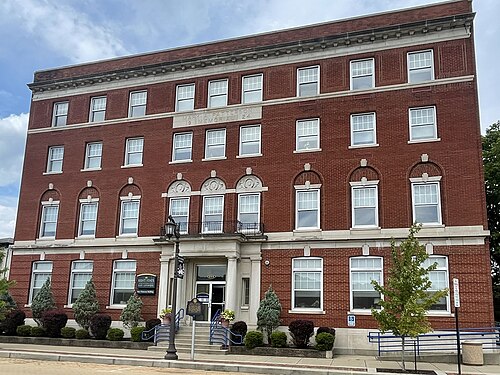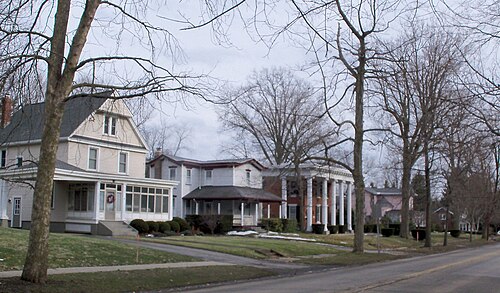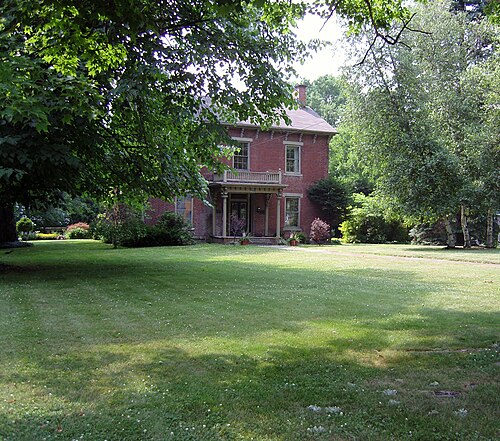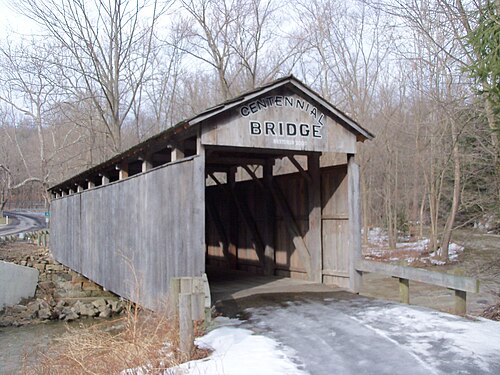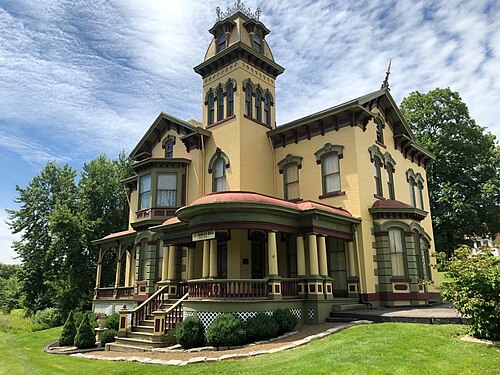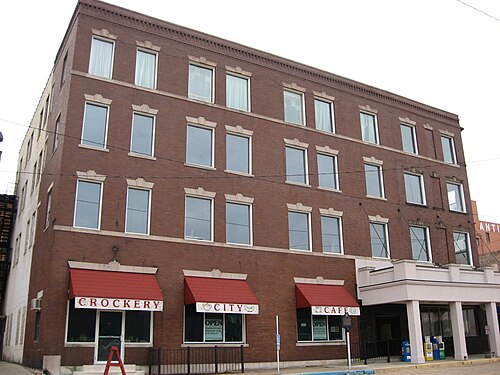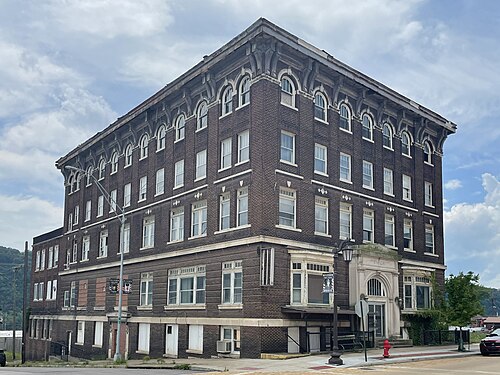
Columbiana County Ohio has 44 places on the National Register of Historic Places including 3 places of National significance and 3 places of Statewide significance. Significant places include Beginning Point of the U.S. Public Land Survey, Burchfield Homestead, Morgan, John H., Surrender Site, Church Hill Road Covered Bridge and East Liverpool Post Office.
Many famous people are associated with these Columbiana County historic places including Charles Ephraim Burchfield, Gen. John H. Morgan, J. Twing Brooks, Daniel Howell Hise, Dr. George P. Ikirt and Charles Nelson Schmick.
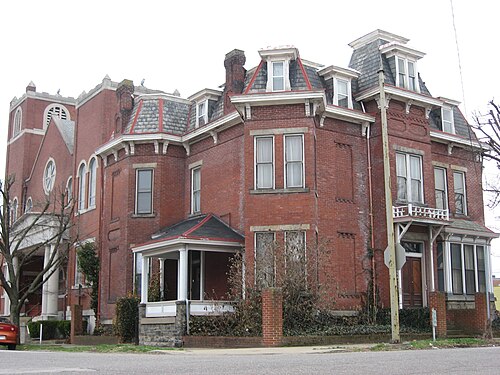
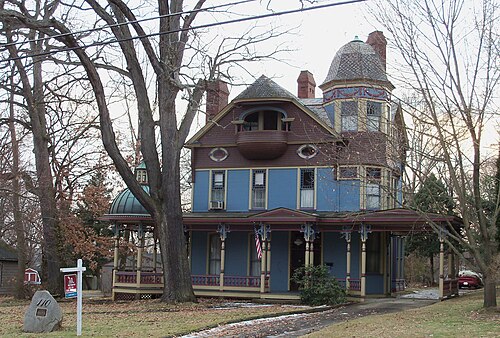
Some of the country's most noteable architects helped create the Columbiana County places including unknown, Cassius Metsch, Charles Henry Owsley, Myers, Jacob, & S.J. Fisher, Holmboe and Lafferty, Finley Hutton, Benjamin Hillman, Leetonia Iron & Coal Co., J. Jones and J.M. Bostick. Prominent architectural styles found in Columbiana Country are Colonial Revival, Queen Anne and Italianate.
Historic Significance:
Event, Architecture/Engineering
Area of Significance:
Engineering, Communications
Period of Significance:
1750-1799
Historic Function:
Industry/Processing/Extraction
Historic Sub-function:
Communications Facility
Current Function:
Recreation And Culture
Current Sub-function:
Monument/Marker
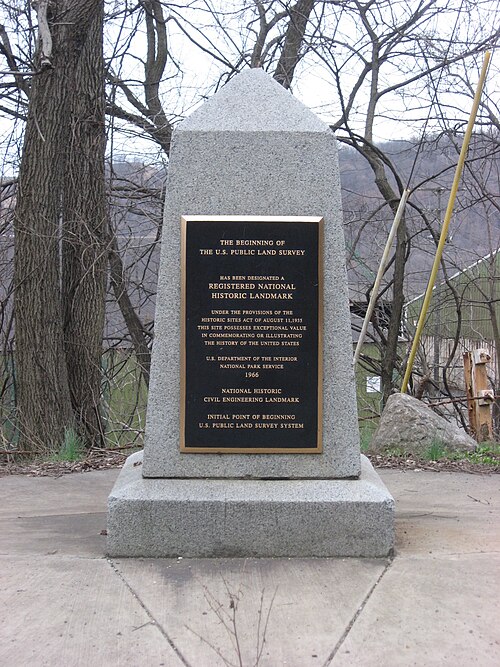
The Beginning Point of the U.S. Public Land Survey, located on the state line between Columbiana County, Ohio, and Beaver County, Pennsylvania, is a site of monumental significance in the expansion and development of the United States. Established on September 30, 1785, by Geographer of the United States Thomas Hutchins, this point marks the origin of the first mathematically designed, federally conducted land survey system in world history. Authorized by the Land Ordinance of 1785, the survey of the "Seven Ranges" initiated from this precise location on the north bank of the Ohio River. This system of rectangular townships and ranges replaced the chaotic metes-and-bounds system of the colonial era, providing an orderly, democratic method for surveying, selling, and settling millions of acres of the public domain as the nation expanded westward to the Pacific Ocean.
The physical marker commemorating this historic achievement is situated along the state line highway, just north of the original, now-submerged point of beginning on the riverbank. Erected in 1960 by the East Liverpool Historical Society and engineering associations, the granite monument serves as a tangible link to the birth of the Public Land Survey System (PLSS), which fundamentally shaped the geographic, agricultural, and urban landscapes of the American West. Designated a National Historic Landmark in 1965 and subsequently listed on the National Register of Historic Places in 1966, the site honors a foundational engineering feat that facilitated orderly westward migration and secured the property rights that underpinned early American economic growth.
Historic Significance:
Person
Historic Person:
Burchfield, Charles Ephraim
Significant Year:
1898, 1910, 1922
Area of Significance:
Art
Period of Significance:
1900-1924, 1875-1899
Historic Function:
Domestic
Historic Sub-function:
Single Dwelling
Current Function:
Recreation And Culture
Current Sub-function:
Museum
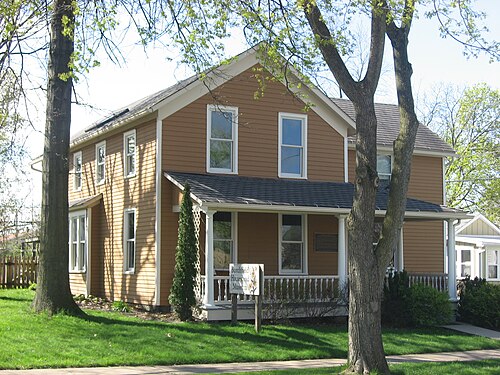
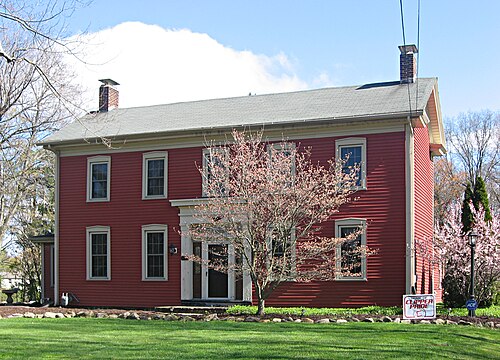
The Burchfield Homestead, located at 867 East Fourth Street in Salem, Ohio, is nationally significant under National Register Criterion B for its profound association with Charles Ephraim Burchfield (1893?1967), one of America's most celebrated and visionary watercolor artists. Burchfield lived in this modest, two-story vernacular frame house from 1898, when his family relocated to Salem following his father's death, until his marriage and departure for Buffalo, New York, in 1921. During these formative years, the residence and its immediate surroundings-including the backyard garden, neighboring houses, and nearby Post's Woods-served as both his studio and his primary source of creative inspiration. It was within these walls that Burchfield formulated his highly individualistic style, translating the sights, sounds, and emotional resonances of the Midwestern landscape into groundbreaking, expressive works of art.
The period between 1915 and 1921, spent largely at this homestead, is recognized by art historians as Burchfield's most intensely creative and fertile era, culminating in what he later termed his "Golden Year" of 1917. Many of his early masterpieces, which capturing the haunting beauty of changing seasons, childhood memories, and nature's moods, were painted in the home's small rooms or directly depicted the view from his second-story bedroom window. Now operated as a museum, the Burchfield Homestead retains an exceptional degree of historic integrity, preserving the physical and atmospheric environment that shaped the early career of a pioneer in twentieth-century American modernism.
Historic Significance:
Person, Event
Historic Person:
Morgan,Gen. John H.
Area of Significance:
Military
Period of Significance:
1850-1874
Historic Function:
Landscape
Historic Sub-function:
Garden
Current Function:
Landscape, Recreation And Culture
Current Sub-function:
Monument/Marker, Park
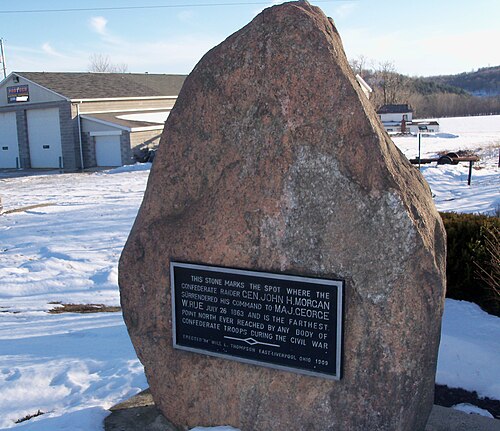
The John H. Morgan Surrender Site, listed in the National Register of Historic Places in 1973, is historically significant as the location of the northernmost penetration of organized Confederate forces during the American Civil War. On July 26, 1863, Confederate Brigadier General John Hunt Morgan surrendered here to Union forces under the command of Major George W. Rue, bringing a dramatic end to "Morgan's Raid." This daring 46-day cavalry raid had spanned over 1,000 miles across Indiana and Ohio, terrorizing Northern home guards, destroying vital infrastructure, and diverting thousands of Union troops. The capitulation at this site in Columbiana County marked the collapse of the Confederacy's most ambitious operation deep within Union territory and provided a major psychological boost to the North during a critical juncture of the war.
Located near the unincorporated community of West Point, the historic site is commemorated by a prominent stone monument erected by the State of Ohio in 1909. The monument sits in a picturesque, rural setting that retains much of the historic, open-space character of the 19th-century agricultural landscape where the surrender occurred. As a registered historic property, the site serves as a tangible link to the fears and realities of the war reaching the home front of the Old Northwest, preserving the memory of the dramatic chase and the ultimate capture of one of the Confederacy's most famous cavalry leaders.