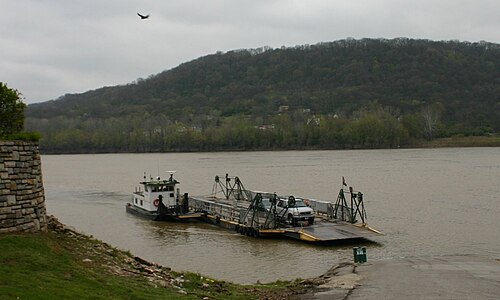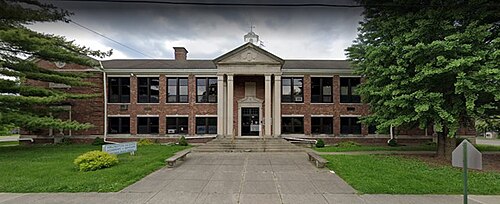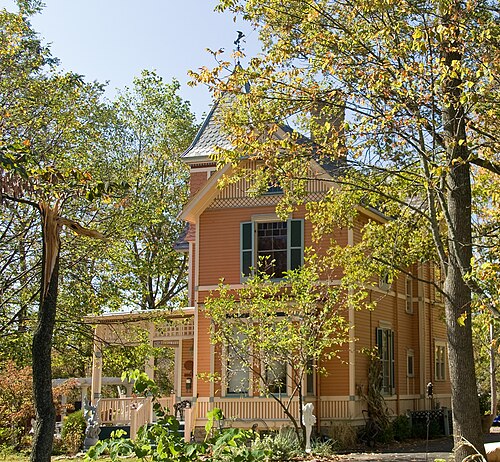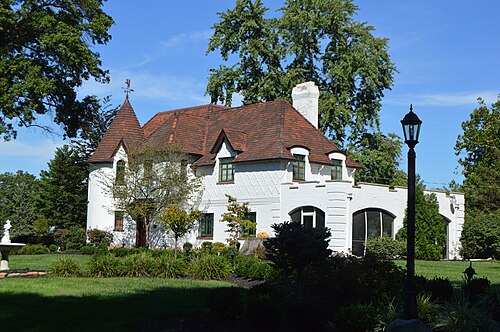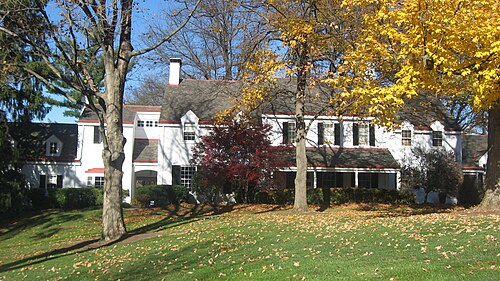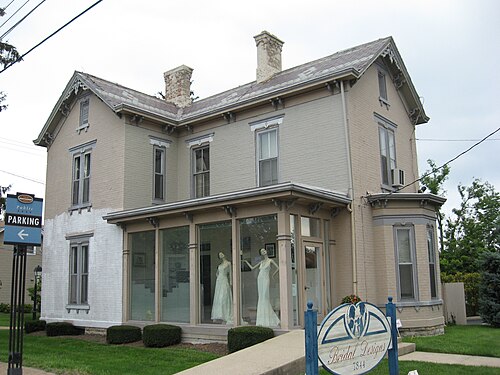
Hamilton County Ohio has 50 places on the National Register of Historic Places including 1 place of National significance and 16 places of Statewide significance. Significant places include Carew Tower, Allen Temple, Alms and Doepke Dry Goods Company, Anderson Ferry and B & O Freight Terminal.
Prehistoric cultural affiliation(s) include Hopewell, Adena, Archaic and Woodland dating back to 6999 BC.
Many famous people are associated with these Hamilton County historic places including J. Alfred Schehl, Joseph W. Baldwin, Ayres L. Bramble, Freeman Grant Cary, Jacob Bromwell and Samuel Burdsal.
Some of the country's most noteable architects helped create the Hamilton County places including Col. William A. Starrett, Starrett Investment Corp., Hannaford,Samuel,& Sons, Samuel Hannaford, Cyrus Broadwell, M.A. Long, Benjamin Dombar, Thomas J. & Joseph T. Emery, Frank Lloyd Wright, Hannaford,Samuel and & Sons. Prominent architectural styles found in Hamilton Country are Italianate, Greek Revival and Queen Anne.
Historic Significance:
Architecture/Engineering
Architect, builder, or engineer:
Starrett Investment Corp., Starrett,Col. William A.
Architectural Style:
Art Deco
Area of Significance:
Architecture
Period of Significance:
1925-1949
Historic Function:
Commerce/Trade, Domestic, Transportation
Historic Sub-function:
Business, Hotel, Road-Related, Specialty Store
Current Function:
Commerce/Trade, Domestic
Current Sub-function:
Business, Hotel
Completed in 1930, the Carew Tower is a towering masterpiece of the French Art Deco style and stands as one of the nation's earliest and most ambitious examples of a "city-within-a-city" mixed-use development. Designed by lead architect Walter W. Ahlschlager with Delano & Aldrich as associates, the massive complex seamlessly integrated a 49-story office tower, a luxury hotel (the Netherland Plaza), two major department stores, a parking garage, and an elegant shopping arcade on a single city block. Soaring 574 feet, it was Cincinnati's tallest building for eighty years and represents a pinnacle of pre-Depression urban planning, reflecting the era's optimism and the transition toward dense, transit-oriented commercial hubs.
The historical significance of the Carew Tower is further cemented by its breathtaking interior design, which showcases some of the finest craftsmanship of the Art Deco era. The public spaces of the hotel are particularly legendary, featuring exquisite metalwork, Belgian marble, murals, and custom-designed relief tiles from Cincinnati's own famed Rookwood Pottery. The complex's pioneering vertical integration and design themes were so influential that it served as a primary prototype for the planning and execution of Rockefeller Center in New York City. For its monumental architectural, cultural, and engineering contributions, the Carew Tower complex was designated a National Historic Landmark in 1994.