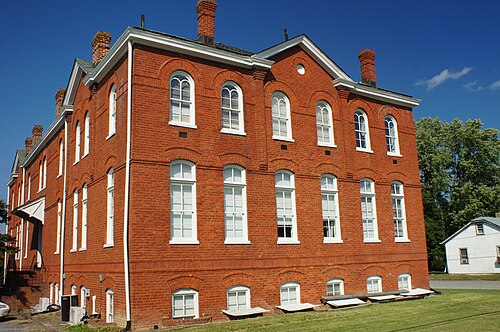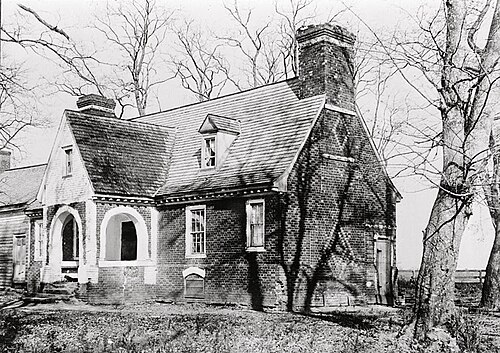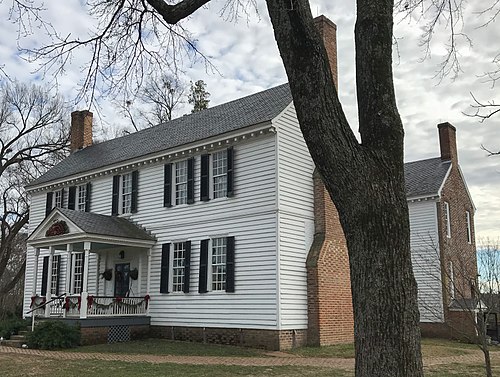
Henrico County Virginia has 38 places on the National Register of Historic Places including 7 places of National significance and 14 places of Statewide significance. Significant places include Fort Harrison National Cemetery, Glendale National Cemetery, Randolph, Virginia, Cottage, Reynolds Metals Company International Headquarters and Richmond National Cemetery.
Many famous people are associated with these Henrico County historic places including Thomas Jefferson, Virginia E. Randolph, John Rolfe, Edward Thurston Mankin, Laura Woodruff Watson and Leslie F. Watson.
Some of the country's most noteable architects helped create the Henrico County places including Montgomery C. Meigs, Montgomery C. Meigs, Gordon Bunshaft, Charles F. Gillette, unknown, W.L. Bottomley, Gillette, C.F., landscape, Edward Thurston Mankin, Herman Louis Jr. Duhring and Charles H. Senff. Prominent architectural styles found in Henrico Country are Colonial Revival, Greek Revival and Second Empire.
Historic Significance:
Architecture/Engineering
Architect, builder, or engineer:
Bunshaft, Gordon, Gillette, Charles F.
Architectural Style:
International Style
Area of Significance:
Architecture
Period of Significance:
1950-1974
Historic Function:
Commerce/Trade
Historic Sub-function:
Professional
Current Function:
Commerce/Trade
Current Sub-function:
Professional
In 1958, Richmond got something weird. Skidmore, Owings & Merrill architect Gordon Bunshaft dropped a shimmering, low-slung glass and aluminum temple right into the suburbs of Henrico County. This wasn't just an office. It was a massive, 1.2-million-pound advertisement for foil. Reynolds Metals wanted to prove that aluminum could do more than wrap leftovers, so they built their entire international headquarters out of the stuff. It worked. Giant, 14-foot blue anodized aluminum louvers geared up to rotate automatically with the sun, tracking its path across the southern sky to keep the interior cool. Inside, they even wove aluminum threads into the carpets and office draperies.
But the building's significance goes way beyond shiny metal. It spearheaded a massive shift. In the late 1950s, big companies started fleeing dirty, cramped downtowns for sprawling suburban estates. Reynolds bought 121 acres of old farmland. Then they hired legendary garden designer Charles Gillette to frame Bunshaft's metallic box with weeping willows and a massive reflecting pool. It looked like a sci-fi palace. When Alcoa bought the company in 2000, locals panicked, fearing demolition. Instead, the site earned its spot on the National Register, preserving a moment when corporate America truly believed the future was made of silver.