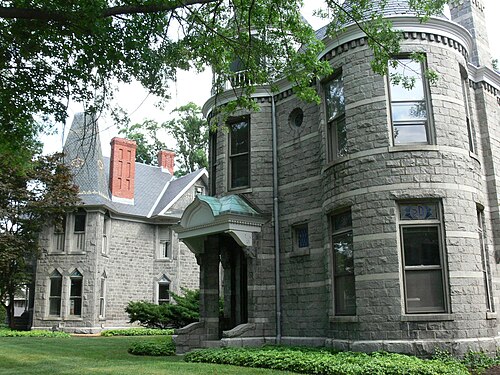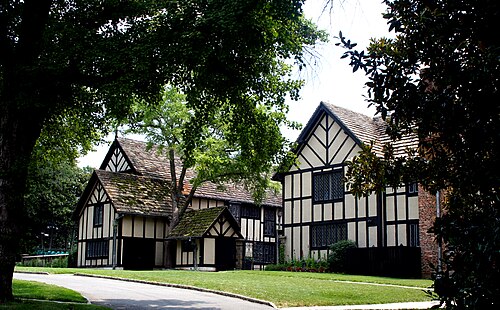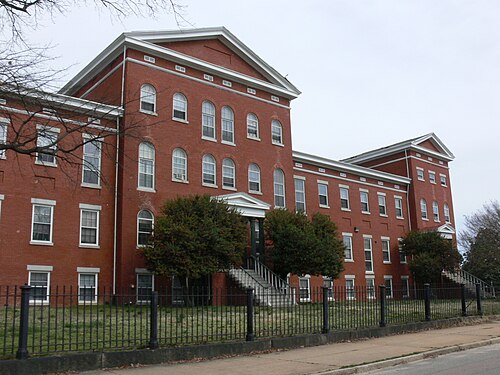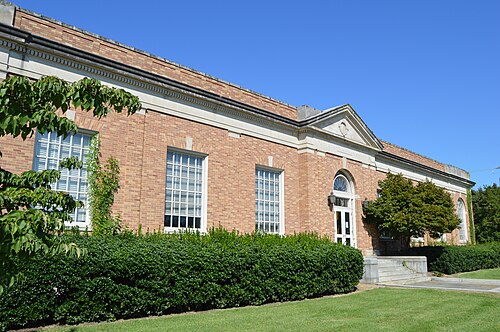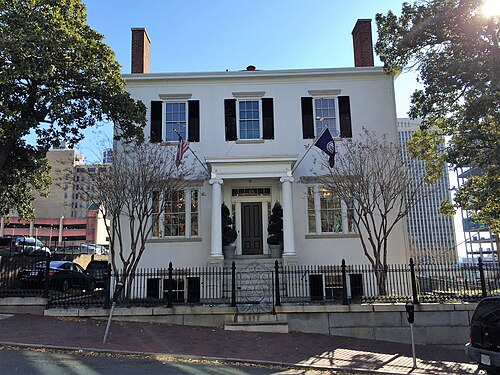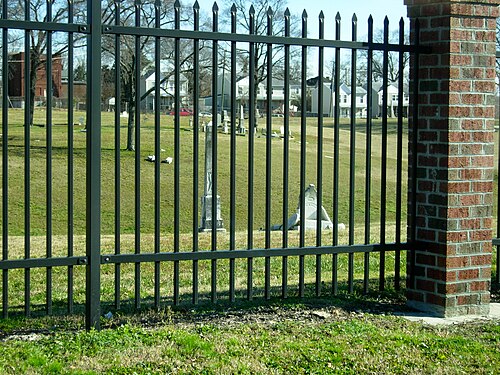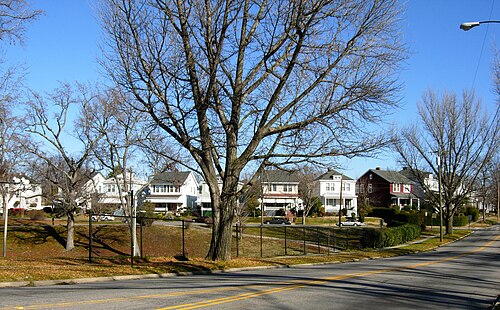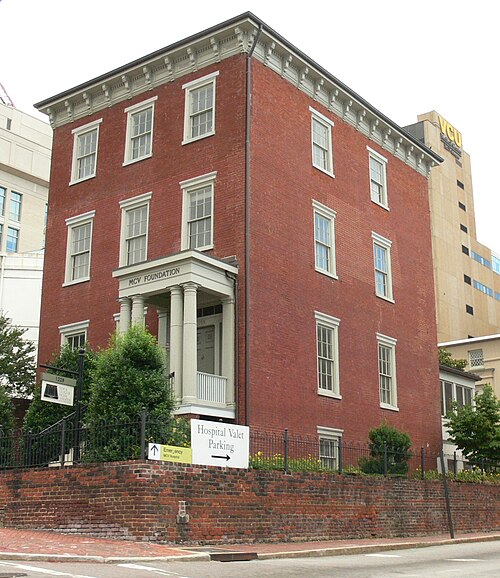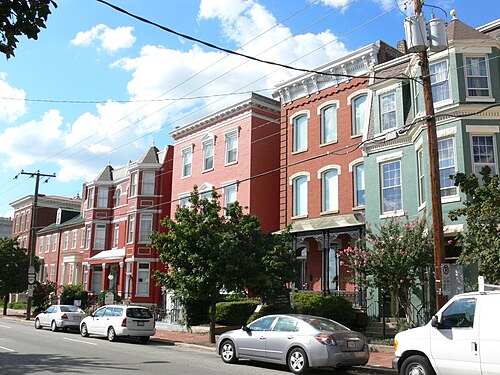
Richmond County Virginia has 50 places on the National Register of Historic Places including 2 places of National significance and 23 places of Statewide significance. Significant places include Belgian Building, Belle Isle, 2900 Block Grove Avenue Historic District, Agecroft and Almshouse, The.
Several famous people are associated with these Richmond County historic places including William Barret and Col. Wilfred E. Cutshaw.
Some of the country's most noteable architects helped create the Richmond County places including Victor Bourgeois, Leo Stijnen, John Russell Pope, John Freeman, Albert L. West, Levi Swain, Homer G. Morse, Washington Jr. Gill, Fred Bishop and John Eberson. Prominent architectural styles found in Richmond Country are Greek Revival, Colonial Revival and Late 19th And 20th Century Revivals.
Historic Significance:
Architecture/Engineering
Architect, builder, or engineer:
Stijnen, Leo, Bourgeois, Victor
Architectural Style:
International Style
Area of Significance:
Architecture
Period of Significance:
1925-1949
Historic Function:
Education
Historic Sub-function:
Library
Current Function:
Education
Current Sub-function:
Library
It started as a pavilion. Specifically, Belgium's showcase for the 1939 New York World's Fair. Henry van de Velde designed the structure alongside Victor Bourgeois and Lon Stynen, wrapping the exterior in dark Belgian slate and red terracotta reliefs. But then the Nazis invaded Belgium in 1940. This left the Belgian delegation stranded in New York with a massive, masterfully crafted modernist building and no safe way to ship it back home. So, they chose to gift it to Virginia Union University, a historically Black institution in Richmond. Though some federal records mistakenly file this under Richmond County, the building actually sits in Richmond City.
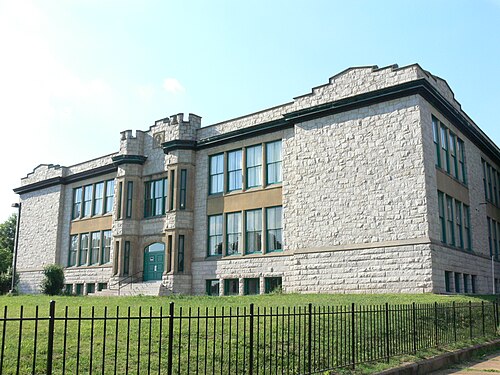
Moving the structure was brutal. Workers painstakingly dismantled tons of steel, glass, and stone, trucking the entire lot down to the Virginia campus in 1941. They rebuilt it as a gymnasium and library. This transfer carried immense political weight during the Jim Crow era. In the heart of the segregated South, a European government handed its prized architectural achievement to Black students. That mattered. Today, the building's stark, geometric lines still slice through the campus skyline. It remains a wild cross-continental relic.