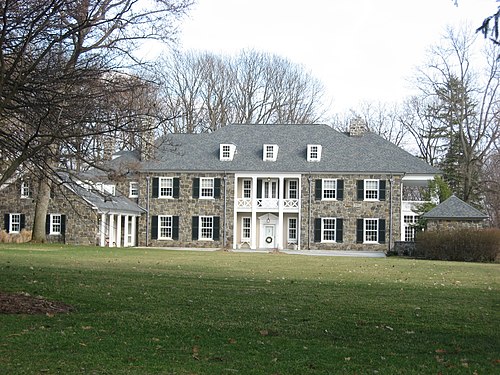
Marion County Indiana (Page 5) has 50 places on the National Register of Historic Places including 2 places of National significance and 6 places of Statewide significance. Significant places include U.S. Arsenal (Arsenal Technical High School), Walker, Madame C. J., Building, Scottish Rite Cathedral, Speedway Historic District and State Soldiers and Sailors Monument.
Many famous people are associated with these Marion County historic places including Madame C.J. (Sarah Breedlove) Walker, William N. Thompson, Horace Schonle, Eli Lilly and Gustav Schnull.
Some of the country's most noteable architects helped create the Marion County places including Rubush & Hunter, W. Jungclaus, George F. Schreiber, Maurice Thornton, Hunkin-Conkey Construction Compa, Bruno Schmitz, Frank B. Hunter, Lawrence George, Bass,Knowlton, & Company and Roy C. Bryant. Prominent architectural styles found in Marion Country are Classical Revival, Tudor Revival and Bungalow/Craftsman.
Historic Significance:
Architecture/Engineering, Event
Architect, builder, or engineer:
Multiple
Architectural Style:
No Style Listed
Area of Significance:
Military, Education, Architecture
Period of Significance:
1950-1974, 1925-1949, 1900-1924, 1875-1899, 1850-1874
Historic Function:
Defense
Historic Sub-function:
Arms Storage
Current Function:
Education
Current Sub-function:
School
The United States Arsenal, today known as Arsenal Technical High School, holds exceptional historical and architectural significance as a premier Civil War-era military installation turned educational landmark. Authorized by Congress in 1862 and constructed between 1863 and 1867, the arsenal was established to store, prepare, and distribute munitions and military equipment for the Union Army. Designed primarily by noted architect Isaac Hodgson, the complex is a remarkable example of mid-19th-century military architecture, characterized by its sturdy brick construction, Romanesque Revival details, and the imposing three-story Arsenal Building featuring a prominent central clock tower. Serving as an active federal military site until 1903, the 76-acre wooded campus remains one of the few intact, preserved Civil War-era arsenal sites in the nation.
The site transitioned to its second phase of historical significance in 1912 when it opened as Arsenal Technical High School, eventually growing into one of the largest public high school campuses in the United States. Rather than demolishing the original military structures, the school system adapted them for classroom and vocational use. The iconic Arsenal Building, the Barracks, the Powder Magazine, and the Guard House were seamlessly integrated into the high school campus, preserving their exterior historic integrity while serving generations of Indianapolis students. This adaptive reuse represents a pioneering achievement in historic preservation and educational history, allowing the campus to maintain its dual legacy as a vital Civil War ordnance depot and a cornerstone of secondary education in Indiana.
Historic Significance:
Architecture/Engineering, Person, Event
Architect, builder, or engineer:
Rubush & Hunter, Jungclaus,W.
Architectural Style:
Late 19th And Early 20th Century American Movements
Historic Person:
Walker,Madame C.J. (Sarah Breedlove)
Area of Significance:
Commerce, Entertainment/Recreation, Black, Education, Industry, Social History, Invention, Performing Arts, Architecture
Period of Significance:
1925-1949
Historic Function:
Commerce/Trade, Recreation And Culture, Recreation And Culture
Historic Sub-function:
Specialty Store
Current Function:
Commerce/Trade, Recreation And Culture
The Madame C. J. Walker Building, constructed in 1927 in Indianapolis, Indiana, stands as a monumental tribute to the legacy of Madame C. J. Walker, America's first self-made female millionaire and a pioneering African American entrepreneur. Planned by Walker before her death in 1919 and completed by her daughter, A'Lelia Walker, the four-story triangular brick building served as the international headquarters of the Madame C. J. Walker Manufacturing Company. Situated along Indiana Avenue, the historic heart of the city's Black community, the multi-use complex became a vibrant social, cultural, and economic hub. During the era of segregation, it provided a welcoming space for the community, housing the hair care company's offices and manufacturing plant, alongside a majestic theater, a beauty salon, a ballroom, a drugstore, and professional offices for African American doctors, lawyers, and civic organizations.
Architecturally, the building is a rare and highly distinctive example of Art Deco design integrated with African, Egyptian, and Moorish decorative motifs. Designed by the prominent Indianapolis firm Rubush & Hunter, the building's exterior and interior feature elaborate terra cotta embellishments, geometric patterns, and vibrant colors that deliberately celebrate African heritage-a groundbreaking architectural choice during the height of the Harlem Renaissance. Designated a National Historic Landmark in 1991, the Madame Walker Building remains an enduring national symbol of African American entrepreneurship, artistic achievement, and community resilience.