Marion County Indiana (Page 4) has 50 places on the National Register of Historic Places including 4 places of National significance and 9 places of Statewide significance. Significant places include Nickel Plate Road Steam Locomotive No. 587, Old Pathology Building, Oldfields, Riley, James Whitcomb, House and Marion County Bridge 0501F.
Many famous people are associated with these Marion County historic places including Lilly, Josiah Kirby, Jr, Percival; Olmstead Brothe Gallagher, James Whitcomb Riley, Benjamin Harrison, Hugh McK Landon, Lilly, J.K. and Jr..
Some of the country's most noteable architects helped create the Marion County places including Olmsted Brothers, Baldwin Locomotive Works, Lewis Ketchem Davis, William Prosser, Lewis Ketcham Davis, B.E. Building Co. Curry, Craftsman Home Builder's Club, Jungclaus, William P., Co., Osbon and Sons and William Jungclaus. Prominent architectural styles found in Marion Country are Late 19th And 20th Century Revivals, Bungalow/Craftsman and Italianate.
Historic Significance:
Event, Architecture/Engineering
Architect, builder, or engineer:
Baldwin Locomotive Works
Area of Significance:
Engineering, Transportation
Period of Significance:
1950-1974, 1925-1949, 1900-1924
Historic Function:
Transportation
Historic Sub-function:
Rail-Related
Current Function:
Vacant/Not In Use
Built in 1918 by the Baldwin Locomotive Works, Nickel Plate Road Steam Locomotive No. 587 is a highly significant example of a United States Railroad Administration (USRA) Light Mikado (2-8-2) wheel arrangement steam locomotive. Originally ordered for the Lake Erie and Western Railroad as No. 5541, it was renumbered to 587 after the line was absorbed by the New York, Chicago and St. Louis Railroad, popularly known as the "Nickel Plate Road." The locomotive represents a pivotal era in American transportation history when the federal government standardized locomotive designs during World War I to maximize efficiency and industrial mobilization. As one of the few surviving intact USRA Light Mikados, No. 587 stands as a testament to the engineering standards of early 20th-century freight transportation that helped fuel the nation's industrial growth.
After a loyal service life of nearly four decades hauling freight across the Midwest, the locomotive was retired in 1955 and donated to the city of Indianapolis, where it was placed on display in Broad Ripple Park. In 1983, a dedicated group of preservationists undertook a massive restoration effort, successfully returning the locomotive to operational status by 1988, after which it was utilized for excursion services. Listed on the National Register of Historic Places in 1984, Locomotive No. 587 is historically significant under Criterion C for its engineering integrity as a rare, unaltered survivor of the USRA standardized steam program, and under Criterion A for its association with the development of the railroad network in Indiana and the broader United States.
Historic Significance:
Event
Area of Significance:
Education, Health/Medicine
Period of Significance:
1900-1924, 1875-1899
Historic Function:
Education, Health Care
Historic Sub-function:
Hospital, Research Facility, School
Current Function:
Recreation And Culture
Current Sub-function:
Museum
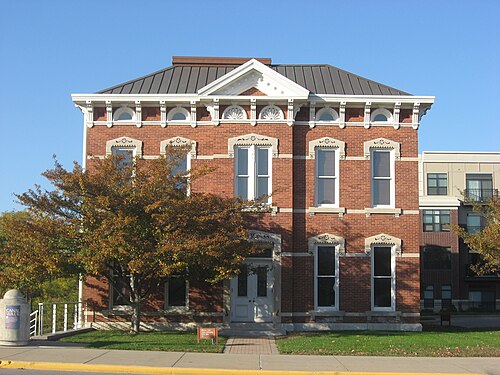
Constructed in 1895 and designed by prominent Indianapolis architect Adolf Scherrer, the Old Pathology Building-now the Indiana Medical History Museum-is a remarkably preserved late nineteenth-century scientific facility located on the grounds of the former Central Indiana Hospital for the Insane. The two-story brick and limestone structure is architecturally significant as an outstanding, highly specialized medical education and research facility of its era, exhibiting an eclectic design with Romanesque Revival influences. Inside, the building retains its virtually unaltered original layout, which includes a state-of-the-art, sky-lit amphitheater for lectures, bacteriological and chemical laboratories, an autopsy room, and a photographic darkroom. Its exceptional state of preservation offers an unparalleled physical record of late-Victorian medical architecture, scientific equipment, and institutional design.
Historically, the Old Pathology Building is of national significance for its pioneering role in the evolution of psychiatric medicine, scientific research, and medical education. Commissioned by hospital superintendent Dr. George F. Edenharter, the facility was established to transition the treatment of mental illness from mere custodial asylum care to rigorous, modern pathological research into the physical causes of mental diseases. As the oldest surviving systematic pathology laboratory of its kind in the United States, it served as a premier teaching hub where generations of medical students and physicians studied the correlation between clinical symptoms and physical brain pathology. Today, housing an extensive, untouched collection of original scientific instruments, anatomical specimens, and historic records, the building stands as a monumental testament to the birth of modern neuropsychiatry and scientific medicine.
Historic Significance:
Person, Architecture/Engineering
Architect, builder, or engineer:
Olmsted Brothers, Davis, Lewis Ketchem
Architectural Style:
Late 19th And 20th Century Revivals
Historic Person:
Gallagher, Percival; Olmstead Brothe, Lilly, Josiah Kirby, Jr
Significant Year:
1913, 1923, 1940
Area of Significance:
Landscape Architecture, Health/Medicine
Period of Significance:
1925-1949, 1900-1924
Historic Function:
Domestic, Landscape
Historic Sub-function:
Garden, Secondary Structure, Single Dwelling
Current Function:
Recreation And Culture
Current Sub-function:
Garden, Museum
Oldfields, also known as the Lilly House and Gardens, is a magnificent 26-acre historic estate located in Indianapolis, Indiana, that exemplifies the American Country Place Era of the early twentieth century. Built between 1910 and 1913 for businessman Hugh McKennan Landon, the centerpiece of the estate is a stately 22-room French Chateauesque-style mansion designed by architect Lewis Ketcham Davis. In 1932, the property was purchased by Josiah K. Lilly Jr., collector, philanthropist, and president of the pharmaceutical giant Eli Lilly and Company. Lilly meticulously maintained and updated the residence, which served as his family's home until his death in 1966. Following his passing, the Lilly family donated the entire estate to the Art Association of Indianapolis, laying the groundwork for the modern Indianapolis Museum of Art (now Newfields) campus.
Beyond its architectural and historical associations, Oldfields is nationally renowned for its masterfully designed landscape, created by the prestigious landscape architecture firm of Olmsted Brothers. Between 1920 and 1925, landscape architect Percival Gallagher transformed the property's rugged topography into a harmonious series of formal and informal outdoor spaces, including the dramatic Ravine Garden, a formal perennial garden, a grand alle, and sweeping views of the White River valley. Designated a National Historic Landmark in 2003, Oldfields stands as one of the most intact and beautifully preserved examples of an early twentieth-century country estate in the United States, seamlessly blending outstanding architecture, historic association, and world-class landscape design.
Historic Significance:
Person
Historic Person:
Riley,James Whitcomb
Significant Year:
1916, 1893
Area of Significance:
Literature
Period of Significance:
1900-1924, 1875-1899
Historic Function:
Domestic
Historic Sub-function:
Single Dwelling
Current Function:
Recreation And Culture
Current Sub-function:
Museum
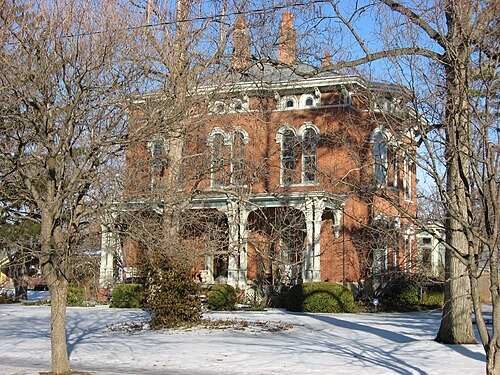
The James Whitcomb Riley House, located at 528 Lockerbie Street in Indianapolis, Indiana, holds exceptional national significance as the long-term residence of James Whitcomb Riley, one of America's most celebrated late-19th and early-20th-century poets. Known affectionately as the "Hoosier Poet" and the "Children's Poet," Riley lived in this home for the final twenty-three years of his life, from 1893 until his death in 1916. During his residency here as a guest of his close friends, Major Charles Holstein and his wife Sallie, Riley produced much of his later work and enjoyed a level of national fame that made him a beloved cultural icon. The home stands as the primary physical monument to Riley's literary legacy, representing the peak of his career and his profound impact on American popular literature.
Architecturally, the home is an outstanding and remarkably intact example of the Italianate style. Constructed in 1872 by baking magnate John R. Nickum, the two-story brick dwelling features characteristic bracketed eaves, arched windows, and a prominent side porch. Following Riley's death, the home was meticulously preserved by the James Whitcomb Riley Memorial Association, retaining its original Victorian furnishings, the poet's personal library, and his writing desk. Designated a National Historic Landmark in 1966, the property serves as the anchor of the Lockerbie Square Historic District and offers an exceptionally authentic, unaltered glimpse into the daily life of a major American literary figure during the late Victorian era.