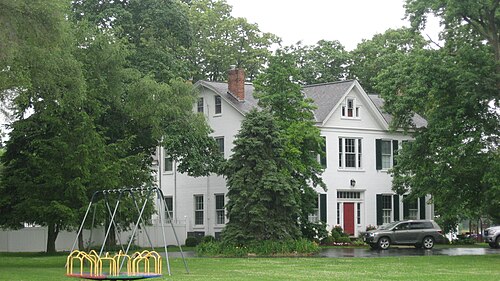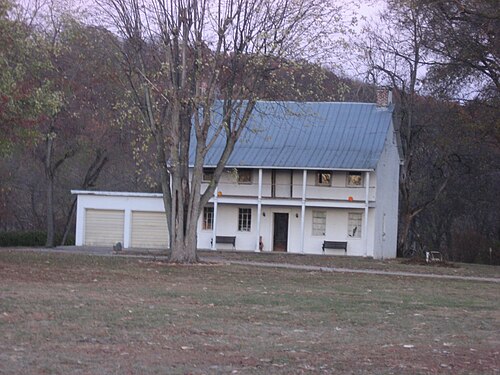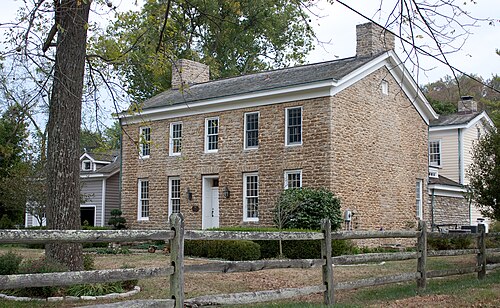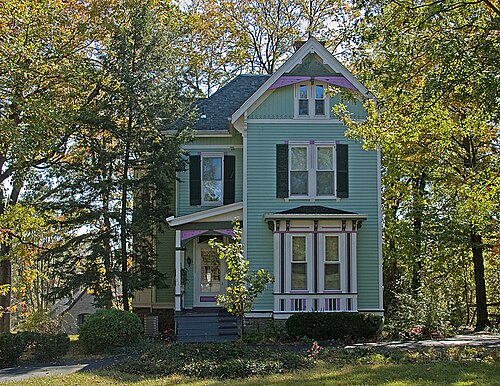
Hamilton County Ohio (Page 3) has 50 places on the National Register of Historic Places including 4 places of National significance and 11 places of Statewide significance. Significant places include Glendale Historic District, Greenhills Historic District, Gwynne Building, Hatch, George, House and Eighteen Mile House.
Prehistoric cultural affiliation(s) include Fort Ancient and Late Woodland dating back to 500.
Many famous people are associated with these Hamilton County historic places including William Henry Harrison, Samuel Hannaford, Elmer Hess, Abraham J. Friedlander, Joseph A. Hemann and Sargent William Brown.
Some of the country's most noteable architects helped create the Hamilton County places including Isaiah Rogers, Ernest Flagg, Samuel Hannaford, Charles Hannaford, Hannaford,Samuel,& Sons, Harry Bevis, Hannaford,Samuel, & Sons, Thomas Emery's Sons, James C. McLaughlin and Albert Kahn. Prominent architectural styles found in Hamilton Country are Queen Anne, Romanesque and Greek Revival.
Historic Significance:
Architecture/Engineering, Event
Architect, builder, or engineer:
Multiple
Architectural Style:
Mid 19th Century Revival, Late 19th And 20th Century Revivals, Late Victorian
Area of Significance:
Architecture, Transportation, Community Planning And Development
Period of Significance:
1875-1899, 1850-1874
Historic Function:
Domestic, Transportation
Historic Sub-function:
Rail-Related, Single Dwelling
Current Function:
Domestic, Transportation
Current Sub-function:
Rail-Related, Single Dwelling
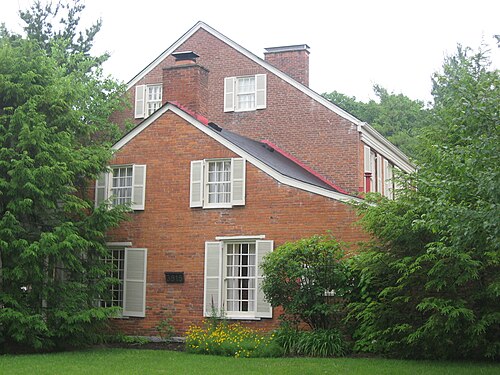
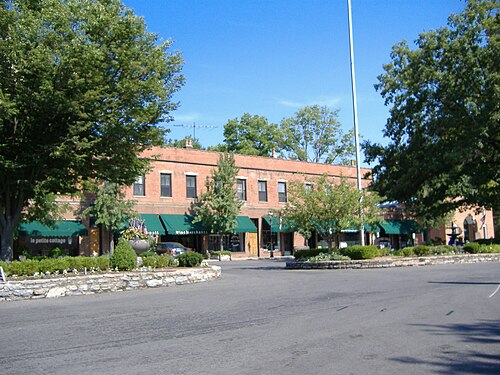
The Glendale Historic District, designated as a National Historic Landmark in 1977, holds paramount national significance in the history of American urban planning as the first planned subdivision in the United States to utilize a curvilinear street pattern integrated with the natural topography. Platted in 1851 by civil engineer Robert Creighton Phillips for the Glendale Association, the village was envisioned as a picturesque, romantic refuge from the industrial clamor of nearby Cincinnati. Enabled by the newly constructed Cincinnati, Hamilton, and Dayton Railroad, Glendale pioneered the concept of the elite commuter railroad suburb. Its innovative design, which predates Frederick Law Olmsted's famous plan for Riverside, Illinois, rejected the traditional rigid gridiron pattern in favor of winding, tree-lined avenues that followed the undulating terrain, setting a profound precedent for suburban landscape design across the nation.
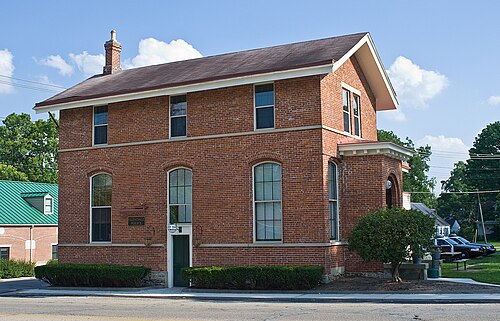
The district encompasses a remarkably preserved collection of mid-to-late 19th-century architecture that harmonizes with its carefully designed landscape. Spanning hundreds of acres, the village features an outstanding array of architectural styles popular during its formative years, including Gothic Revival, Italianate, Queen Anne, and Bracketed villas, many of which serve as stately residences set back on spacious, wooded lots. Complementing these residential treasures are historic civic, religious, and commercial structures, including the 1854 railroad depot. The enduring cohesion of Glendale's park-like setting, historic canopy of trees, and Victorian-era architecture continues to illustratively represent the mid-19th-century "suburban ideal" of romantic country living combined with urban accessibility.
Historic Significance:
Event
Area of Significance:
Community Planning And Development
Period of Significance:
1925-1949
Historic Function:
Commerce/Trade, Domestic, Education, Social
Historic Sub-function:
Civic, Multiple Dwelling, School, Single Dwelling, Specialty Store
Current Function:
Commerce/Trade, Domestic, Education, Religion
Current Sub-function:
Multiple Dwelling, Religious Structure, School, Single Dwelling, Specialty Store
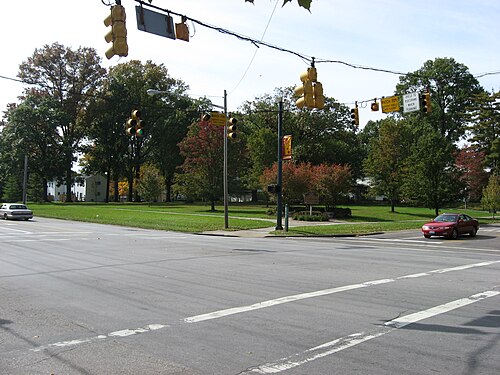
The Greenhills Historic District, located in Hamilton County, Ohio, is nationally significant as one of only three "Greenbelt Towns" established by the federal government's Resettlement Administration during the New Deal era. Conceived under the direction of Rexford G. Tugwell and initiated in 1935, Greenhills was designed to address the dual crises of the Great Depression by providing modern, sanitary housing for low-to-moderate-income families and creating immediate construction jobs for the unemployed. Inspired by Ebenezer Howard's turn-of-the-century "Garden City" movement, the town's innovative layout integrated residential development with nature. It featured a protective encircling "greenbelt" of woodlands and agricultural fields, a pedestrian-friendly system of interior footpaths that separated foot traffic from automobile roadways, and a central community hub that concentrated commercial, educational, and civic services in a single walkable commons.
Architecturally, the district is defined by its original International Style and vernacular modern residences, designed by lead architect Roland A. Wank and town planner Justin R. Hartzog. Constructed between 1936 and 1938, the housing units-consisting of multi-family townhomes and modest single-family dwellings-emphasize functionalism and clean lines, utilizing durable materials like concrete block, brick, and redwood siding. Greenhills represents a pioneering American experiment in cooperative living and federal suburban planning, demonstrating a radical departure from traditional gridiron municipal layouts of the era. Designated a National Historic Landmark in addition to its listing on the National Register of Historic Places, the district remains an exceptionally preserved monument to mid-20th-century social engineering, economic relief efforts, and progressive urban design.
Historic Significance:
Architecture/Engineering
Architect, builder, or engineer:
Flagg,Ernest
Architectural Style:
Beaux Arts
Area of Significance:
Architecture
Period of Significance:
1900-1924
Historic Function:
Commerce/Trade
Historic Sub-function:
Business
Current Function:
Commerce/Trade
Current Sub-function:
Business
The Gwynne Building, located at 602 Main Street in downtown Cincinnati, is an outstanding example of early twentieth-century Beaux-Arts and Renaissance Revival commercial architecture. Designed by the renowned New York architect Ernest Flagg and completed in 1914, the twelve-story skyscraper is distinguished by its innovative use of a reinforced concrete skeleton clad in a richly detailed, cream-colored glazed terra cotta facade. Flagg, famous for his design of the Singer Building in New York City, utilized a classical tripartite vertical division for the Gwynne Building, culminating in an elegant, temple-like penthouse. The building's refined proportions, expansive window bays designed to maximize interior natural light, and ornate classical motifs-including bracketed cornices, delicate ironwork, and decorative medallions-reflect the peak of the City Beautiful movement's influence on American high-rise design.
Beyond its architectural distinction, the Gwynne Building holds significant historical associations with prominent figures in both local and national history. The building was commissioned by Alice Gwynne Vanderbilt, wife of Cornelius Vanderbilt II, on land that had been owned by her family since the early nineteenth century, and was named in honor of her father, Abraham Evan Gwynne. Upon its completion, the building served as the world headquarters for the Procter & Gamble Company from 1915 until 1956, a pivotal era of global expansion for the consumer goods giant. As the long-term corporate home of one of Cincinnati's most influential businesses and a lasting monument to the Gwynne-Vanderbilt legacy, the Gwynne Building stands as a vital landmark of the city's commercial and economic development.
Historic Significance:
Architecture/Engineering
Architect, builder, or engineer:
Rogers, Isaiah
Architectural Style:
Greek Revival
Area of Significance:
Architecture
Period of Significance:
1875-1899, 1850-1874
Historic Function:
Domestic
Historic Sub-function:
Single Dwelling
Current Function:
Work In Progress
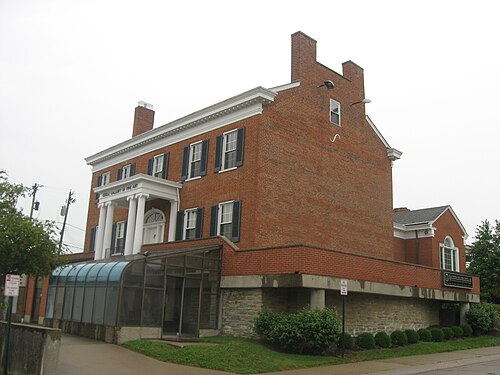
The George Hatch House, located at 830 Dayton Street in Cincinnati, Ohio, is historically significant for its direct association with George Hatch, a prominent local politician who served as the Mayor of Cincinnati during the critical early years of the American Civil War (1861?1863). Hatch's tenure was defined by his leadership during the 1862 Confederate threat to the city, during which he worked closely with Union General Lew Wallace to declare martial law, mobilize citizens, and construct fortifications that successfully deterred a Confederate assault. Situated on Dayton Street, which was famously known as "Millionaires' Row" due to the high concentration of wealthy beer brewers, pork packers, and industrialists who resided there, the house stands as a physical testament to the political and civic leadership that guided Cincinnati through one of the nation's greatest crises.
Architecturally, the George Hatch House is an exceptional example of the transition between the Greek Revival and Italianate styles, which dominated Cincinnati's high-style residential architecture during the mid-19th century. Built around 1850, the grand brick mansion features classic Italianate characteristics, including a symmetrical facade, heavy decorative lintels, and an ornate bracketed cornice. The interior boasts high ceilings, elaborate plaster moldings, and exquisite woodwork that reflect the immense wealth of the Dayton Street historic district during Cincinnati's golden age. Individually listed on the National Register in 2008, the property remains a vital contributing anchor to the surrounding Dayton Street Historic District, representing both the zenith of the city's 19th-century economic prosperity and its architectural sophistication.