Hamilton County Ohio (Page 7) has 50 places on the National Register of Historic Places including 4 places of National significance and 10 places of Statewide significance. Significant places include Taft Museum, Tonkens, Gerald B. and Beverley, House, Village of Mariemont, Warder, John Aston, House and Spring Grove Cemetery Chapel.
Prehistoric cultural affiliation(s) include Ft. Ancient and Adena dating back to 1499 BC.
Many famous people are associated with these Hamilton County historic places including John Aston Warder, Peter G. Thomson, Harriet Beecher Stowe, John Aston Warder, George Palmer and Nathaniel Armstrong.
Some of the country's most noteable architects helped create the Hamilton County places including et.al Atterbury;Cellarius;Dana;Howe, G. Nolan;Emery;Livingwood;Anderson, Benjamin Latrobe, Frank Lloyd Wright, John Aston Warder, James Hoban, Samuel Hannaford, Henry Walter, J. Griffith and George W. Rapp. Prominent architectural styles found in Hamilton Country are Queen Anne, Greek Revival and Romanesque.
Historic Significance:
Architecture/Engineering
Architect, builder, or engineer:
Latrobe,Benjamin, Hoban,James
Architectural Style:
Federal
Area of Significance:
Art, Architecture, Landscape Architecture
Period of Significance:
1925-1949, 1800-1824
Historic Function:
Domestic, Recreation And Culture
Historic Sub-function:
Museum, Single Dwelling
Current Function:
Recreation And Culture
Current Sub-function:
Museum
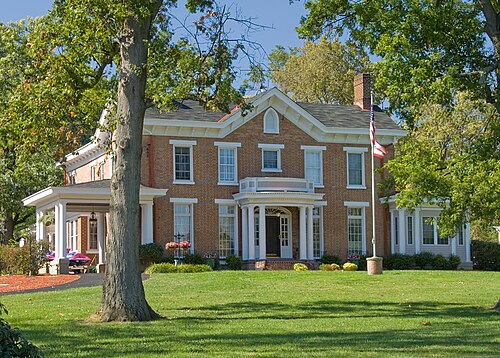
Built circa 1820 for Cincinnati's first millionaire, Martin Baum, the Baum-Longworth-Sinton-Taft House-now home to the Taft Museum of Art-is widely recognized as one of the finest surviving examples of domestic Greek Revival architecture in the United States. This Palladian-inspired mansion, characterized by its symmetrical proportions, delicate fanlights, and grand central portico, serves as a monumental testament to the early cultural and economic prosperity of Cincinnati. Following Baum's ownership, the estate was purchased by Nicholas Longworth, a prominent horticulturist and real estate magnate who dubbed it "Belmont" and commissioned the renowned African American artist Robert S. Duncanson to paint a series of majestic landscape murals directly onto the plaster of the entry hall. These murals remain one of the most significant pre-Civil War public art installations in the nation.
In 1871, the property was acquired by industrialist David Sinton, whose daughter, Anna Sinton, married Charles Phelps Taft, the half-brother of President William Howard Taft. The Tafts transformed the residence into a cultural hub, famously serving as the backdrop where William Howard Taft formally accepted the Republican nomination for President from the home's front portico in 1908. Deeply committed to philanthropy and the arts, Charles and Anna Taft amassed a world-class collection of fine and decorative arts, including masterworks by Rembrandt, Hals, Turner, and Gainsborough. In 1927, they bequeathed their historic home, along with their invaluable art collection, to the people of Cincinnati, leading to the opening of the Taft Museum in 1932. The property was designated a National Historic Landmark in 1973 for its outstanding architectural pedigree and its association with some of Ohio's most influential historical figures.
Historic Significance:
Architecture/Engineering
Architect, builder, or engineer:
Wright,Frank Lloyd, Et al.
Architectural Style:
Other, Modern Movement
Area of Significance:
Architecture
Period of Significance:
1950-1974
Historic Function:
Domestic
Historic Sub-function:
Single Dwelling
Current Function:
Domestic
Current Sub-function:
Single Dwelling
The Gerald B. and Beverley Tonkens House, located in Amberley Village, Hamilton County, Ohio, is historically significant as an outstanding and remarkably intact example of Frank Lloyd Wright's "Usonian Automatic" architectural design. Commissioned in 1954 and completed in 1956, the residence represents one of only a select few homes Wright designed using his innovative Usonian Automatic system, which aimed to provide affordable, high-quality, and organic housing for the American middle class. The house is constructed from thousands of custom-cast, three-dimensional concrete blocks that were patterned and assembled without mortar, utilizing steel reinforcing rods and grout instead. This modular construction method allowed the home to seamlessly integrate with its heavily wooded, three-acre site, reflecting Wright's core philosophy of organic architecture.
Architecturally, the Tonkens House is distinguished by its complex, geometric plan and its exceptional craftsmanship, which includes extensive Philippine mahogany paneling, soaring ceilings clad in gold leaf, and custom-designed brass hardware. The design features a dramatic, double-height living room flanked by a gallery of floor-to-ceiling glass doors and windows that overlook a natural ravine. Unlike many other Usonian Automatic homes that suffered from construction difficulties or subsequent alterations, the Tonkens House remains in exceptionally pristine, original condition, preserving its original Wright-designed furniture, lighting, and built-ins. Listed on the National Register of Historic Places in 1991, the house stands as a masterwork of Wright's late career, illustrating his lifelong quest to democratize beautiful architecture through industrial materials and innovative engineering.
Historic Significance:
Architecture/Engineering, Event
Architect, builder, or engineer:
Atterbury;Cellarius;Dana;Howe, et.al, Nolan;Emery;Livingwood;Anderson,G.
Architectural Style:
Late 19th And Early 20th Century American Movements, Late 19th And 20th Century Revivals
Area of Significance:
Landscape Architecture, Architecture, Community Planning And Development
Period of Significance:
1950-1974, 1925-1949, 1900-1924
Historic Function:
Commerce/Trade, Domestic, Education, Funerary, Government, Religion, Social
Current Function:
Agriculture/Subsistence, Commerce/Trade, Domestic, Government, Landscape, Recreation And Culture, Religion
The Village of Mariemont, designated a National Historic Landmark in 2007, is a remarkably preserved and highly influential planned community in Hamilton County, Ohio. Conceived in the early 1920s by philanthropist Mary Emery and her business manager Charles Livingood, the village was designed by the renowned landscape architect and town planner John Nolen. Inspired by the English "Garden City" movement, Mariemont was envisioned as a self-contained, walkable suburb that would provide an exceptional quality of life for families of various income levels. Nolen's master plan seamlessly integrated a picturesque mix of English Tudor, Georgian, and Norman Revival architecture with extensive public parks, a central town square, tree-lined boulevards, and dedicated zones for residential, commercial, and civic use.
Mariemont is of national significance as one of the premier and most complete examples of early twentieth-century American town planning. Unlike the chaotic, automobile-centric suburban sprawl that characterized later eras, Mariemont was meticulously engineered to prioritize pedestrian safety, community cohesion, and aesthetic harmony, featuring advanced infrastructural innovations for its time, including buried utility lines and a centralized heating plant. Its successful realization served as a major prototype for the "New Urbanism" movement decades later. Today, the village retains an extraordinary level of historic integrity, serving as a living monument to Nolen's visionary design and the progressive social ideals of the Garden City philosophy.
Historic Significance:
Person, Architecture/Engineering
Architect, builder, or engineer:
Warder,John Aston
Architectural Style:
No Style Listed
Historic Person:
Warder,John Aston
Area of Significance:
Architecture, Agriculture
Period of Significance:
1850-1874
Historic Function:
Domestic
Historic Sub-function:
Single Dwelling
Current Function:
Domestic
Current Sub-function:
Single Dwelling
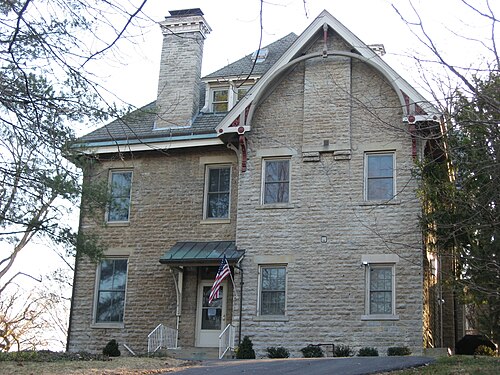
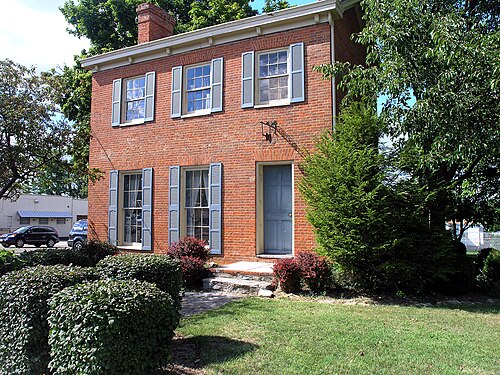
The John Aston Warder House, located in North Bend, Ohio, is a historic residence of immense significance to the history of American forestry and horticulture. Constructed around 1845 on a scenic ridge overlooking the Ohio River, the two-story native limestone house reflects the rural, picturesque architecture favored by mid-19th-century intellectuals. Known as "Aston," the estate served as both a family home and a living laboratory for its owner, Dr. John Aston Warder, who transformed the surrounding acreage into an experimental farm and arboretum where he imported and tested numerous species of trees, shrubs, and fruits.
The property is historically significant under National Register Criterion B for its direct association with Dr. Warder (1812?1883), a pioneering physician who became one of the nation's foremost early foresters and conservationists. It was at this estate that Warder conducted the groundbreaking botanical research that fueled his influential publications, including Hedges and Evergreens (1858) and his work with the American Horticultural Review. His efforts at "Aston" helped catalyze the early forest conservation movement in the United States, culminating in his founding of the American Forestry Association in 1875. The John Aston Warder House stands as a physical monument to his enduring legacy as a champion of scientific forestry, pomology, and the preservation of American woodlands.